


 After a long drought, Financings of the Fortnight is back with the rain you crave. And after an even longer drought, a drizzle of biotech IPOs in late 2009 has raised hopes for a good crop of newly public companies in 2010.
At the top of the list, Movetis’ IPO took in €97.75 million [$147 million], propelling the GI-focused Belgian biotech/J&J spin-off to easily win this year’s Deal of the Year award in the Exit/Financing category. Some analysts are hopeful (check out our annual review of the industry’s financing environment from this week’s Pink Sheet and be on the look out for our general overview on 2009 biopharma trends in the January issue of IN VIVO), but the truth is there’s still a long way to go, especially given the post-IPO performance of some of these companies (besides Movetis, which is trading above its IPO price).
Omeros for example debuted stock at $10 in early October, but is now selling in the high $6s, tumbling as low as $5.40 (The company, which has a surgical drug delivery platform, has also been fighting accusations from its former CFO that it improperly billed the NIH for grants). So M&A still seems to be the ideal choice for investors looking for an exit, even if capital is hard to come by and disagreements over valuation may delay the transaction.
Nevertheless since our last installment of FOTF we’ve seen Aveo and Tengion file S-1s, bringing the total in 2009 to six biotechs making their first attempts at IPOs, joined by a few--including Alimera Sciences, Aldagen, and Codexis (on December 28)--which are trying for an initial public offering for the second time.
So what does this S-1 class of 2009 look like? Well, with the exception of a few, most of them are fairly young, between 5-7 years old. And a handful of these youngsters have raised close to or at least $100 million in venture capital, so there are likely many hungry backers waiting for a return on their investments. Regenerative medicine firm Tengion, for instance, has brought in $143 million since inception.
None of the 2009 S-1 filers have any products on the market, but rather late-stage candidates in the Phase II-III range. One interesting theme among the 2009 group was in-licensing from Asian partners. Cancer drug company Aveo Pharmaceuticals, Anthera Pharmaceuticals, which is involved in the cardio space, and antibiotics developer Trius Therapeutics have each established their pipelines or built them up through licensing agreements with Asian companies. Anthera, for example, has taken a couple of anti-inflammatory phospholipase A2 inhibitors shelved by Japanese pharma Shionogi and partner Eli Lilly and developed them for cardiovascular indications.
One final note—remember the days when the must have accessory for any IPO hopeful was the so-called validating deal with a Big Pharma? Well, none in the 2009 class has formed a collaboration with a Big Pharma or Big Biotech partner for a drug candidate. Sure Aveo has partnered its Human Response Platform with the likes of Merck and Biogen Idec, and Codexis has provided biomanufacturing services to several of these firms, but none of the biotech IPO filers have out-licensed any drug assets to these major players. --Amanda Micklus
Paul Capital Healthcare/Phase III Development Co.: Known for dozens of uniquely structured deals where it pays cash to a biopharma company--often in need of and having a tough time raising capital--and in return gets the rights to future royalties or revenues on drugs, Paul Capital Healthcare is now making a new venture in alternative financing for drug developers. PCH, which was founded ten years ago and currently manages $1.6 billion in dedicated funds and debt facilities, is staking newly formed Phase III Development Co. SARL (P3D) with up to $100 million. Not much has been disclosed about P3D, which was apparently set up to financially support and manage European clinical trials for pharmaceutical and biotech partners. Despite efforts to provide simplified and unified regulations for clinical trials in Europe, the adoption of the European Union’s Clinical Trials Directive in 2001 has instead caused more confusion, put a burden on research, and increased costs in order to comply. (According to a survey conducted by Applied Clinical Trials, the European clinical trials market was estimated at €20.3 billion in 2008 and will reach €30.4bn by 2012.) In return for its investment, P3D will receive some kind of compensation from its partner, such as milestones or revenue sharing whie it's partners access development capital and hedge development risk. And one firm is already taking advantage--P3D has signed its first deal with an unknown “major” pharma player to conduct studies for additional indications on an approved product.--AM
ZymoGenetics: On January 11, protein drug developer ZymoGenetics netted $90.9 million in a FOPO of 16.1 million shares (including the overallotment) at $6, lower (but not by much) than what the company’s stock has been trading at since late December. Proceeds will likely be directed towards commercialization of Zymo's recombinant human thrombin Recothrom. During 2008, its first year on the market, the drug only had sales of $8.8 million. But Q3 2009 sales alone were $8.5 million and ZymoGenetics estimates Recothrom currently has 15% of the topical thrombin market in the US, so maybe that Citizen Petition it filed with the FDA back in August questioning the safety of main competitor, King’s Thrombin-JMI, did the trick. The FOPO money should help Zymo with its newly procured responsibilities for Recothrom. Effective at the beginning of 2010, ZymoGenetics restructured its 2007 deal with Bayer, which originally had ex-US rights to the hemostat plus co-promote rights in the US post-launch for three years. Under the revised agreement, ZymoGenetics reacquired all geographic rights except in Canada, where Bayer will continue to market. As a result, ZymoGenetics will no longer receive $16 million from Bayer in ex-US regulatory milestones, but the biotech is also not responsible for $20mm in US sales bonus payments to Bayer. ZymoGenetics appears to be in a pretty good cash position. In fact, through the reworking of the Bayer deal as well as reviving a 2002 Novo Nordisk tie-up, ZymoGenetics says it expects to save $40 million. On September 30, the biotech had $91.3 million in cash and cash equivalents, plus it signed a very lucrative deal with BMS exactly a year ago for HCV candidate PEG-interferon lambda. Zymo received $85 million up front plus an additional $20 million fee, and to date has realized $95 million in development milestones.--AM
Regado Biosciences: This privately held biotech focused on developing aptamers as anti-thrombotics completed a $40 million Series D on Dec. 17. The round was led by a new investor, Edmond de Rothschild Investment Partners, with participation from previous investors Domain Associates, Quaker Bioventures, Aurora Funds and Caxton Advantage Life Sciences Fund. Regado said it would use the funds primarily to continue development of its lead program – REG1 for acute coronary syndrome – with an emphasis on completing a Phase IIb study already underway. Like all of Regado’s candidates, REG1 is a two-component drug system, combining an aptamer (RB006) with its complementary oligonucleotide active control agent (RB007), enabling both anticoagulation and then the restart of healthy clotting to avoid therapy-related bleeding complications. Last August, the Basking Ridge, N.J.-based biotech announced that REG1 demonstrated safety and efficacy in a Phase IIa trial comparing the candidate against unfractionated heparin in patients undergoing elective percutaneous coronary intervention. Regado previously raised $23 million in a Series C financing led by Caxton in 2007, and before that brought in $20 million in a Series B round co-led by Domain and Quaker.--Joseph Haas
BIND Biosciences: This largely under-wraps nanotechnology company made news on a pair of fronts recently, landing former Sequus Pharmaceuticals President Scott Minick as its new president and CEO on Jan. 11 and then announcing an $11 million Series C on Jan. 13 led by David H. Koch’s DHK Investment, with participation from prior investors Polaris Venture Partners, Flagship Ventures, ARCH Venture Partners and NanoDimension. As a managing director at ARCH, Minick was serving on BIND’s board of directors when the board asked him to take over as CEO. In an interview from the J.P. Morgan Healthcare Conference, Minick told IN VIVO Blog that his firm plans to use the Series C money to get BIND’s lead candidate, BIND-014 – a formulation of the oncologic Taxotere contained in a nanoparticle shell – into clinical development by the end of 2010. BIND uses its Medical Nanoengineering platform to attempt to develop safer and/or more efficacious versions of oncology, cardiovascular and anti-inflammatory drugs through differential delivery and controlled drug exposure to diseased tissue. “The idea being we get very high concentrations of a known, proven drug to the site of the tumor and, in preclinical models, [we] have demonstrated increased efficacy as well as improved safety,” Minick said. The involvement of Koch, an engineer, businessman and philanthropist heavily involved in the cancer research community, will give BIND access to a network of leading oncology clinicians, he added. “These are leading people that we want to work with as we design and execute our clinical trials, [and] as we consider the next products we want to bring forward,” Minick said. Established in 2006 around research into therapeutic targeted nanoparticles from Harvard and MIT, BIND previously raised $16 million in a 2007 Series B round led by Polaris and Flagship.--JH
image from flickr user millzero used under a creative contents license
Friday, January 15, 2010
Financings of the Fortnight: S-1 Storm

Thursday, January 14, 2010
Teva’s Hedge on Complex Generics
 Who says you can’t have your cake and eat it too?
When it comes to the follow-on biologics space, there are plenty of companies who are likely to try. As we’ve written before, the looming new pathway for abbreviated approval of biosimilars opens up opportunities for lots of companies—brand, generic and biotech—to consider whether to play as a true “follow-on” supplier, focus on improved “biobetters,” or do both.
But no one is in quite the same position as Teva. Not only is the company doing that analysis for the longer term biosimilar opportunity (you can read more about its latest thinking in “The Pink Sheet” DAILY here), but it is on both sides of the issue for two near-term decisions on complex molecules that are regulated as drugs.
Teva is one of three companies (along with Momenta and Amphastar) with pending applications to market a generic version of Sanofi Aventis’ enoxaparin (Lovenox). In that case, Teva wants FDA to agree that, while enoxaparin is a relatively complex molecule, it is not too complex to allow for a fully substitutable generic approval.
On the other hand, Teva’s largest and most important product is the branded multiple sclerosis therapy glatimir (Copaxone). There are two would-be generics pending, Momenta’s and Mylan's.
In that case, Teva is arguing that Copaxone is far too complex a molecule to be copied closely enough to allow for substitutability—and is even suggesting that other manufacturers may have trouble even getting a non-interchangeable product approved without full clinical studies.
Teva, of course, is aware that this may sound like trying to have your cake and eat it too. But they don’t see a contradiction. Here is how Teva CEO Bill Marth put it during the Goldman Sachs CEO “unplugged” conference Jan. 6:
“When you think about Copaxone, many people try to equate it to Lovenox. It isIn other words, Teva thinks it can kept its Copaxone cake and take a huge slice of Sanofi-Aventis’ Lovenox cake too.
much, much different—vastly more complex—than Lovenox will ever be. We have not characterized it. We don't believe it can be fully characterized.
If one cannot fully characterize Copaxone, I'm not sure how you get it approved without a clinical study since the method of action is not well understood and exactly what the active sequence is. And, by the way, we think there are multiple methods of action, and potentially multiple reasons for that. We think that it is virtually impossible to prove your efficacy without a clinical study. So it really falls into more of that sweet spot of the biologics....
I think it is much different with Lovenox than it is with Copaxone because with Lovenox, the active sequence has been identified by us. It hs been identified by the
innovators. It has been identified of course by Momenta and Amphistar.
So it is defined. It is a sugar. When you look at those sugars and you look at the active sequence, then what you really have to do is understand what is the other stuff or junk that is within your protein or sugar, and there make sure that you don't have improper immunogenicity. They have asked us for immunogenicity testing. We have done that. And it seems to be acceptable so far.”
But there are other outcomes. From Teva’s perspective, an outright rejection of substitutable Lovenox wouldn’t be so bad, since it would underscore the company’s position that substitutable Copaxone is a pipe dream.
And while Teva would dearly love to tap into the $2 billion Lovenox market, at best it will only get a percentage of a big generic opportunity. With Copaxone, Teva hopes to maintain its own multi-billion dollar brand in something like perpetuity.
How important is that to the company? During its January 7 investor day, Teva’s bullish forecasts for growth for 2015 included what the company called a “conservative” forecast for Copaxone, with sales peaking at $3 billion and then eroding over time to $2 billion in 2015. But the erosion, in Teva’s view, will come only in the face of competition from other MS agents (including Teva’s own oral product)—not from any substitutable generic competition.
So call it a hedge: if generic Lovenox is rejected, Teva’s Copaxone franchise is more secure. If Copaxone can’t be protected, at least Teva will have some generic enoxaparin revenues to fill in the hole.
There’s really only one scenario where Teva loses. If one of the other applicants (Momenta being the most likely candidate) actually has superior technology, it could potentially get approval for generic Lovenox and generic Copaxone, while no one else can.
For Teva, that would be more like a pie in the face.
Sweating Out the Massachusetts Senate Race
 Health care reform advocates will be sweating bullets Tuesday, watching the returns in the Massachusetts Senate race. What was expected to be a non-event suddenly got interesting, with early January polls suggesting a tight race between Democratic nominee Martha Coakley and Republican Scott Brown in the race to replace the late Ted Kennedy.
Now, most people are still betting on Coakley to win.
Even if she loses, giving the Republican’s the 41st seat they need to sustain a filibuster, health care reform isn’t dead.
The Senate could simply wait to certify Brown for the seat until health care is safely passed. That would be ugly, but not passing reform probably seems uglier.
Or the House could just hold its nose and pass the Senate bill unamended. That wouldn’t make many House dems happy, but—again—it would probably make them happier than seeing health care reform crash and burn.
But it could also derail the whole thing.
Even a surprisingly close raise will have consequences for reform. As we’ve pointed out, the implementation process will depend heavily on who does the implementing. And if members of Congress conclude that the people of Massachusetts are sending a message about the reform bill, they will run away from it as fast as they can.
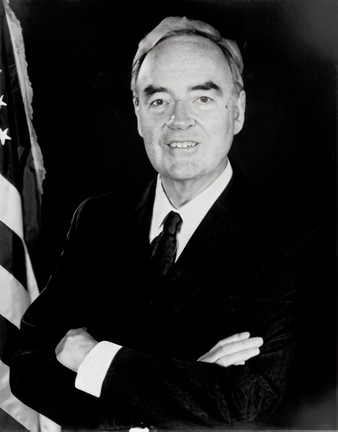
Call it a Reverse-Harris-Wofford.
It was Wofford’s stunning Senate victory in Pennsylvania in November 1991 that catapulted health care reform to the top of the political agenda in Washington two decades ago. Wofford came out of nowhere to beat Richard Thornburgh, with health care viewed as the key issue.
Of course, the reform debate didn’t end well for the Democrats in that case: voters threw them out of office in 1994, Wofford along with them.
So don’t expect the sweating to stop even if Coakley does win.
top image by flickr user Mark Sardella used under a creative commons license
Wednesday, January 13, 2010
Notes from JPM: Daschle Disses DTC
 Tom Daschle's keynote address on health care reform began with an overview of the system (or lack thereof) and its limitations. We admit our attention wandered a bit when he got into a list of areas where there is a "broad consensus" about the problem. You know, lack of transparency for consumers, too little coordination of care, the menace of DTC advertising.
Wait, what was that last one?
One of the problems with the health care system, in Daschle's telling, is that "people see things on TV they like and demand their doctor give it to them. Especially drugs."
We're not sure how broad the consensus is on that point. At least in the Grand Ballroom of the Westin St. Francis....
Notes from JPM: Don't Expect Buybacks from Sanofi
 Here at the IN VIVO Blog we've never really been a fan of share buybacks--surely companies can find a better use of their cash?--but we do get an earful from time to time from people who want to assure us of the wisdom of spending billions on these transactions. So we were happy to hear there are pharma executives in high places who share our opinion.
During the breakout session after his talk here at the JP Morgan conference Sanofi CEO Chris Viehbacher was asked if Sanofi would consider a buyback. His answer was a resounding "no."
After explaining that his company was "clearly mindful of shareholder value" and citing Sanofi's dividend as an example of that commitment, he gave his opinion on buybacks.
Tuesday, January 12, 2010
Notes from JP Morgan: Mullen's Last Laugh
 For his final appearance at JP Morgan as Biogen Idec CEO, Jim Mullen didn't have close to a full house in the big ballroom at the St. Francis late Tuesday afternoon. But far from Slim Jim to go out with a whimper. He highlighted Tysabri hitting the $1 billion mark in sales in 2009 and gloated, in his own low-key way, that the multiple sclerosis treatment will "continue to surprise people." Not to mention help them do yoga.
Mullen got in a tongue-in-cheek parting shot at the conference itself. He not only complained about the typical claustrophobia in the narrow hotel hallways that make you scared you'll "burn to death if there's a fire," he then pivoted to note that it's not nearly as crowded this year. Then in his post-speech Q&A, Mullen tweaked the roomful of investors and media when no one ventured a first question. "It's a docile crowd this year," he said, mindful no doubt that some of the people in the room were probably responsible for Biogen's little stock bump the day Mullen announced he would step down in June.
He also got in a parting shot at health care reform -- at least the comparative effectiveness part of it. The idea is great on paper, he said, but then it turns into something like Great Britain's NICE, which in Mullen's view is a big bureaucratic swamp that slows down drugs and separates physicians from the decisions they need to make about their patients.
He won't get a parting shot at Facet Biotech, the Biogen licensing partner that successfully resisted Biogen's hostile bid last year. Any chance for another run at Facet, Jim? "We have no plans to do more than we've done or said publicly at this point."
So what will Biogen look for in its next CEO? Mullen said he's not on the four-member search committee, but he recommended someone "who looks exactly like me but with more hair." He who can laugh at himself can truly laugh last.
Limiting Stock For Docs On Boards Could Crimp Pharma

And so Partners HealthCare, which owns Massachusetts General Hospital and Brigham and Women’s Hospital, decided not to allow its top people to accept gifts, participate in speaker bureaus or engage in ghostwriting. There are some other restrictions involving institutional purchasing and institutional royalties. But one stipulation is very interesting – senior officials can serve on a board, but are not permitted to receive more than $5,000 a day for board-related work, or accept any stock. And this last prohibition may make life difficult for drug makers.
Why? Corporate governance experts have been arguing for years that board members should hold stock. The reason is simple – in this way, a board member is more likely to feel the pain or gain as much as other shareholders. You know, their interests will be aligned with investors. Under Partners’ rules, a doctor would have to purchase shares on the open market, rather than take stock as compensation, in order to become aligned with shareholders. As a result, drug makers who solicit doctors from these two widely respected teaching hospitals may find themselves running afoul of shareholder activists.
“A director who doesn’t own stock has no business being on a board,” says Charles Elson, who chairs the John Weinberg Center for Corporate Governance at the University of Delaware. “They’re supposed to take cash compensation to buy the stock. And they’re supposed to represent shareholders, so no longer being able to accept stock would be problematic. I think it’s ridiculous. If they feel there’s a conflict, they shouldn’t be on a board. I think they have to choose – either be a director or work for the hospital.”
One doctor – Dennis Ausiello, chief of medicine at MassGen and Partners’ chief scientific officer - apparently made his choice. He told The New York Times that he’ll continue to serve on Pfizer’s board, even if it means forsaking compensation that amounted to $220,000 last year. “I’m very proud of my board work,” he told the paper. “I’m not there to make money. I certainly think I should be compensated fairly and symmetrically with my fellow board members, but if my institution rules otherwise, as they have, I will continue to serve on the board.”
Of course, he can continue to hold previously purchased Pfizer stock, since the new Partners rules don’t require him to sell existing holdings. And Ausiello may have the means to purchase shares on the open market. Presumably, other doctors could afford to do so as well. But it’s not hard to imagine that some doctors may not relish the prospect of being appointed to a board, but receiving limited compensation and being forced to use their own money to purchase stock.
This may sound like a trifling matter. After all, just two hospitals are affected by this policy. But it could become a trend. That’s because the Association of American Medical Colleges has recommended tighter restrictions on potential conflicts of interest. Ann Bonham, the AAMC’s chief scientific officer, tells us that limits on stock holdings will likely be decided on a case-by-case basis by each institution. “Some institutions could decide to limit the salary cap or stock options or something in between,” she tells us. “Some are considering this.”
And if more academic medical centers do institute such rules, this could become a dilemma for drug makers and biotechs, who actively court physicians to join their boards. After all, the pharmaceutical industry wants and needs physicians who have certain expertise and a unique perspective on research and patient treatment. But if it becomes harder to attract physicians, the industry will lose potentially valuable input.
Notes From JP Morgan: Rochentech

Was he convincing? Not entirely--although far be it from IN VIVO Blog to gainsay magazines such as Working Mother and Science. Hunziker went out of his way in both his prepared remarks and the Q&A session to tell the audience that Roche is still a number one place to work despite the disappearance of the DNA ticker symbol. The goal, he said, is not just to keep people on board, but create a culture. (There's that "c" word again.) We're sure the new building going up on the South San Francisco campus is beautiful. And has a big impact on retention.
Speaking of which...There's been a lot of speculation about the ability of retention bonuses to retain DNAers. Half the money's been paid out already, with employees due their remaining share at the end of March. Hunziker insisted in the breakout session that retention bonuses weren't a central component in retaining valuable employees, however. "We do not expect a big exodus," he said.
Guess we'll know April 1.
Notes From JP Morgan: Sliding Toward Innovation?

What did this blogger learn?
Celgene put up some pretty astonishing numbers: 20% revenue growth ; 30% earnings growth; $1 billion in operational cash flow. And it was all, unsurprisingly, thanks to its multiple myeloma drug Revlimid.
Roche, meanwhile, has been preparing for the "rough seas" for some time. With Erich Hunziker as CFO, cash flow continues to be a focus. Of course taking your little sibling private requires a lot of cash. But playing to his base, Hunsiker emphasized that the company has already paid down 13% of the money owed, and expects to settle up another 12% in the coming months.
Nor will liquidity be a strong challenge for Roche.Thanks to strong sales of Tamiflu--which isn't tagged with the same buyer's remorse as H1N1 vaccines--Roche is in a stronger cash position than ever.
And you know what that means. It's time to focus on Innovation with a capital "I". Indeed, both Celgene and Roche execs made a point of talking up their R&D focus. "It's about the culture," says Sol Barer, CEO of Celgene. "No company is better than its pipeline for the future."
And Hunsiker clearly agreed. The biggest pharm---er, sorry, we meant to say the biggest biotech ('cuz we aren't allowed to call Roche a pharma any more)--"needs to invest in innovation now. You are only successful if you can refill your pipeline," stated Hunziker.
Without naming names, he threw icy water on the diversifiers, accusing pretty much everyone in the industry except Bristol-Myers Squibb of "cold feet", for inking deals in the consumer/generic space. "We are interested in pure pharma" development, Hunziker maintained during his opening spiel. "This may be higher risk but if successful will generate higher returns."
Now there's innovation--and then there's Innovation. We've been hearing for months now that healthcare reform, plus regulatory and reimbursement hurdles, are driving companies to emphasize unmet medical need no matter what a drug's market size. Is innovation with a capital "I" the theme of this year's JPM?
Just like belief in the markets, hope springs eternal.
Tune in post conference for our assesment and potential responses from the Pfizer and GSK types.
Monday, January 11, 2010
Notes from JPMorgan: Gilead's Combos
 HIV powerhouse Gilead Sciences reminds us of a razor company. Just when you're getting used to a three-drug combination, here comes Mach Four. In Gilead's case, it's the "quad" pill, a combo of four Gilead drugs: Viread (tenofovir disoproxil fumarate) and Emtriva (emtricitabine) -- marketed as the fixed-dose combination Truvada -- plus the experimental integrase inhibitor elvitegravir and the booster GS9350. Gilead will start advanced trials for the quad this year, which investors here at JP Morgan focused on in the company's Monday morning session.
