


 When we checked news on health care stocks and saw that Sangamo Biosciences was up following a press release announcement of a paper pointing to the potential use of its zinc finger nuclease technology to modify human stem cells, we did a double take. It took us a little while to settle back into work mode after the long Labor Day weekend. But we could have sworn we had discussed this paper with colleagues already, several weeks ago.
Indeed, the paper's official release date was August 13, when Nature Biotechnology announced the study's advance online publication (AOP). And the study was accompanied by a press release from the Whitehead Institute at MIT, where the work was done by Rudy Jaenisch’s group. So why did Wall Street only react to it yesterday?
Because Sangamo only put out its PR on the “news” Tuesday morning, when the print edition of NBT came out. According to Sangamo, whose scientists were among the paper's coauthors (but not correspondents with the actual journal editors), the company was first alerted to the AOP the day before it went live. The company was also caught off guard because the paper had only been accepted two days before that, on August 10 – a remarkable and unexpected turnaround time.
With such short notice and summer schedules – and maybe doldrums too – they saw no reason to scramble. (And frankly, it was our view at the time that the paper, although good science and relevant to Sangamo’s platform partner Sigma-Aldrich, was not of any immediate import to drug developers.) That said, the AOP was picked up in a timely fashion by various blogs and press release cut-and-paste services.
Apparently, however, the publication escaped the attention of movers and shakers on the Street until today. There was no blip in price or volume in Sangamo’s stock in mid-August. But on Tuesday, shares rose on the opening and closed up almost 8% on 3x the average volume.
Given the timing of the original AOP, we're not accusing Sangamo of manufacturing or manipulating news. Nor was this a huge movement for a small-cap stock. Surely some trader types would make sophisticated arguments about the need to understand how momentum impels the movement of stocks more than the strength of the underlying news itself. Maybe it was just a handful of traders moving in and out.
But why did it take a company PR to trigger the attention? Aren’t analysts supposed to work hard and dig deep, and that’s why they are paid the big bucks? Or is it that common for the tail to wag the dog? We’re just sayin’.
Wednesday, September 09, 2009
Sangamo Surprise: Tail Wags Dog

Tuesday, June 23, 2009
When Is A Billion Dollars Not a Billion Dollars?
 When you read about it in a press release. And today's award for most egregious use of a biodollar deal total goes to Chroma Therapeutics.
Don't get us wrong. Chroma no doubt signed an interesting, solid option-alliance with the King of All Option Alliances, GSK. The deal is in an exciting area of inflammatory disease research, using Chroma's esterase-sensitive motif (ESM) technology to create compounds targeting macrophages. Macrophages are central to inflammatory cascades that give rise to a variety of conditions. The undisclosed upfront and some early milestones will likely--if they're akin to payments in other GSK option-alliances--allow Chroma to fund the disco-development programs through POC.
Fantastic!
But there is zero clarity in Chroma's press release on the financial details. There's only one figure: $1 billion dollars. That's what Chroma gets "in milestone and option payments in the event that all four programs are successful." Cue "$1 billion dollar deal!" headlines. [UPDATE: here's one from Reuters!]
Is it impossible for Chroma to get $1 billion of GSK's cash-money? No. Is it highly friggin' improbable they get anywhere close? Yes.
Of course the improbable happens on occasion. For instance (if you'll allow us to go off on a tangent): on Sunday night the US men's national soccer team was up against Egypt in FIFA's Confederations Cup, in the last match of the group stage. For USA to advance to the semi-final, they needed to win BIG against a highly favored Egypt. In fact their margin of victory combined with Brasil's margin of victory over Italy (thanks to the tournament's goal differential rule to break ties in the standings) had to be six goals. And they weren't exactly playing very well going into the game.
What happened? Brazil beat Italy 3-0. Improbable, but not overwhelmingly so. And USA beat Egypt 3-0. Very improbable. USA advances to play Spain tomorrow. Taken all together? Extremely improbable!
The stars do align, sometimes. We were cheering for USA from our couch on Sunday night and we wish Chroma the best too. But lets see what has to happen for Chroma to reach that ten-digit number.
Chroma's macrophage-targeting compounds don't exist yet. The company "will undertake four discovery and development programs" to identify the small molecules. OK, so that has to work out. They need to identify lead compounds, optimize, start preclinical development programs, the whole nine yards.
Those four compounds need to make it to the clinic. Then those four compounds need to be successful up through Phase II proof of concept studies (after they've been deemed safe in Phase I). Then GSK will have to like each one of them enough to pull the trigger on its option.
Now keep in mind that success in the clinic doesn't necessarily translate into an option getting exercised (nor is that necessarily bad for Chroma). See, for example, GSK's deal with Exelixis, where GSK decided not to option Exelixis' Phase III XL184. Bad news for Exelixis? Hardly--BMS came in and paid top-dollar for the program only weeks later.
OK so say the programs are all successful through POC, and GSK options all of 'em. Well then each compound needs to be successful in large Phase III clinical studies, and eventually all four need to get approval. Probably (the release doesn't say) in multiple markets like the EU, the US, Japan, maybe even some developing countries like the BRIC markets? And then we're probably talking sales milestones as well. Do all four drugs need to become blockbusters? Do they need to avoid generic competition for a set amount of time? This is no six-goal differential. It's a sixty goal differential.
We don't think Chroma management is deluding itself. Maybe the up-front is better than some other GSK option-alliances and they'd rather not piss off current partners by having Chroma shout their windfall from the rooftops. But inflationary biodollar figures like $1 billion for a discovery alliance are just, well, silly.
image from flickr user peat bakke used under a CC license
Tuesday, April 28, 2009
Pandemic Flu: Opportunities and Opportunism
 Just in case you hadn’t noticed by now, swine flu is not just a public health threat, it’s also a business opportunity.
Now that can be a legitimate business opportunity – for example, companies like Roche, with its antiviral Tamiflu (oseltamivir), and GlaxoSmithKline, with its Relenza (zanamivir), have already capitalized through the stockpiling of their products in preparation for pandemic flu. After this weekend’s spread of the swine flu news, on Monday both manufacturers made public their efforts to provide more supply for the swine flu outbreak, and to make clear that they can ramp up production (as the WSJ reports).
Although those are the only products approved at the moment that can be of assistance for the outbreak, other manufacturers are jumping on the opportunity to start developing a H1N1 vaccine. Novartis and Baxter are each reportedly working with the World Health Organization to get samples of the swine flu strain and start on vaccines, which will take probably in the neighborhood of six months. Other companies are getting a warm embrace from the market because of the recognition of the potential for their technologies to be harnessed for swine flu (or just because of the newfound appreciation of the value of vaccine technology), such as Novavax and BioCryst.
Novavax shares were up a whopping 150% or so before closing up (merely) 80% on the day, at $2.55. Only four weeks ago Novavax raised a $11 million, a needed "capital infusion" from the sale of shares at $0.88. BioCryst jumped too, ending the day up about 75%, at $3.88. Neither of these companies falls into the category of "troubled biotechs," (BioCryst even reported net income last year--how very un-biotechlike) though it would seem logical for either company to raise money while raisin' is good. If that isn't too unseemly.
Other technology companies hoping to ride the wave that Novavax and BioCryst have caught include Vical (hey, check out our technology too!, says today's release--Vical shares rose yesterday, but only a more pedestrian 6.7%.).
But then there’s also a cadre of companies playing up the ability of their goods and services to meet the needs of the swine flu situation that don’t exactly seem in the spirit of helping out in a public health threat – let’s call them the opportunists. Here are some of IVB’s current favorites, please let us hear about your own faves in the comments.
- Coming out of the “steer clear of swine” field is Capsuline, a kosher-friendly gelatin capsule manufacturer that acknowledges it “is strangely benefiting” from the porcine flu outbreak. “Whether warranted or not, the Porcine Flu outbreak gives a bad rap to all pork-based products,” the Pompano Beach, Florida-based firm’s April 27 press release notes. Capsuline’s hard gelatin capsules are bovine, not porcine-based. Since the news of the swine flu situation broke, the company has seen a 300% increase in call volume. That’s a welcome respite for a company that usually has more to fear from mad cow concerns – fear of bovine spongiform encephalopathy has had a dampening effect on gelatin products in the past. Of course, Capsuline may be out at the forefront of the pig-product backlash because of their past experience being on the other side.
- Another blog favorite is Cannabis Science, “an emerging pharmaceutical cannabis company” that rushed out with a press release on its whole-cannabis lozenge. We’re not entirely clear on the relevance – something about the endocannabinoid system and hyper-inflammatory responses triggered by influenza. Citing preliminary anecdotal results about the anti-inflammatory properties of their lozenges, Cannabis Science suggests the whole-cannabis lozenges could present an effective and non-toxic treatment for minimizing the symptoms and harm from influenza infections. And, they note, because there is “no time for the usual bureaucratic process,” they could legally access the supply of medical marijuana available in California “to produce millions of life saving doses within a relatively short period of time.” The press release, sent out at 8:41 a.m. EDT on April 27, does include a caution that while the beneficial pharmacological agents are present in marijuana, smoking it will not effectively prevent the excessive inflammatory response, and, in fact, may make things worse.
photo by invivoblog.
Tuesday, October 07, 2008
What's the Secret of Comedy ... and PR?*
 Our colleagues at the Tan Sheet think the Consumer Healthcare Products Association, the trade group representing over-the-counter drug manufacturers, has a handle on the latter, given the timing of their announcement today that their members plan to relabel OTC pediatric cough cold products “do not use” in children under 4.
The announcement garnered industry headlines like this: Drug companies: No cold medicines for kids under 4. The relabeled products including some in Novartis’ Triaminic Line, McNeil’s Tylenol line and and some from Procter & Gamble, Reckitt Benckiser and Wyeth Consumer Healthcare (a full list is here) will be on shelves within weeks, under a plan the association worked out with FDA's blessing - well before the agency's Part 15 hearing held last Thursday to gather information on the products.
Notably, both the agency and the association kept mum at the hearing about the relabeling plan.
As a result, petitioners seeking to have pediatric cough/cold products off the market for children under 6 didn’t get a chance to pick at the plan at the widely covered event, and industry is able to announce a public safety initiative that appears to address at least part of the program in the next news cycle.
Which had some reporters griping at FDA today when the agency held a press call on CHPA’s plan. “Why couldn’t you have brought this little tidbit up during the nine-hour meeting on exactly this topic last week?” was the gist of the complaint. FDA’s director of the Office of New Drugs, John Jenkins, and drug center head Janet Woodcock said they deferred to CHPA on the announcement and split a hair, saying the meeting was about proposed changes to the OTC monograph, not about short term industry efforts. Given FDA’s recent track record on public relations, this isn’t too surprising.
For an in depth look at FDA’s meeting and some clues to agency thinking about revising the OTC monograph for the products, see “The Tan Sheet” here.
--Chris Walker
*(timing.)
Thursday, October 02, 2008
FDA Hires a PR Firm to Tarnish its Image
 It’s only appropriate that on the day of the Vice Presidential debate,
But it’s not for the reason you may think.
The Washington Post has a top story today on how FDA circumvented the government competitive contracting rules in order to ensure that Qorvis Communications received a $300,000 public relations deal.
Alaska Newspapers served as the middleman. How’s that, you ask?
The group doesn’t have to compete for federal contracts because it qualifies for special set-asides. So, ANI would get the deal and hand it off to Qorvis. And that’s exactly what they did, according to the WashPost.
FDA deputy commissioner for operations John Dyer, a former CMS official, said in the story that the contract has been suspended and that the agency has launched an internal investigation.
FDA Commissioner Andrew von Eschenbach and other senior officials did not know about the no-bid contract, Dyer says in the story.
Von Eschenbach has been besieged with criticism of the agency from various sides for two years. He must be feeling the wear and tear but this is the kind of project that should have been brought to his attention.
It would be a good idea for the commissioner to know the FDA had hired the same PR firm that works for PhRMA “to create and foster a lasting positive public image of the agency for the American public,” as the Washington Post describes.
As I recall, FDA’s perceived “cozy” relationship with the drug industry has been an issue of public concern lately.
The fact that the FBI raided Qorvis for work the company did on behalf of the
Former FDA associate commissioner for external affairs Peter Pitts has some interesting behind-the-scenes insight on outsourcing PR. To read it, click here.
This most recent development has four major impacts on FDA:
1) Further supports the public perception that FDA is dysfunctional.
2) Undermines the leadership of von Eschenbach. Where was he on this thing?
3) Needlessly stigmatizes FDA by lumping the agency with other politicized no-bid contracts. Is FDA synonymous with Halliburton?
4) Triggers yet another Congressional probe by the House Energy & Commerce Committee.
Chairman John Dingell (D-Mich.) says his committee will investigate the matter, which could result in a high-profile hearing. Here’s what happened last time von Eschenbach went up to Capitol Hill.
It's a sign of FDA's fortunes when the agency goes out of its way--and budget--to hire a PR firm to improve its public image, tarnishes its image in the process, gets a Congressional investigation out of it, and still doesn't have a PR agency.
Wednesday, July 16, 2008
Big Pharma as the “Good Guys”: One Reason to Embrace Tropical Disease Research
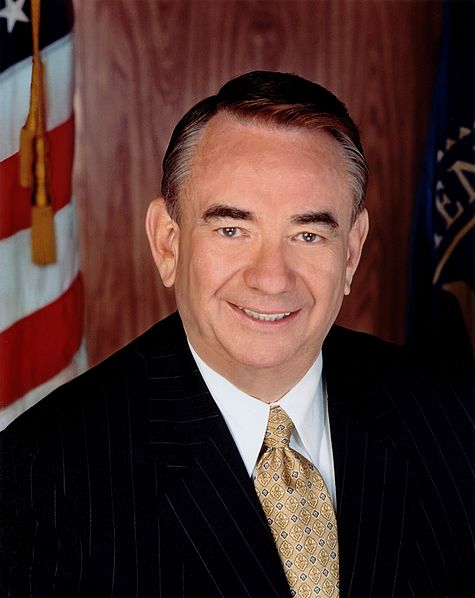 Here are words you don’t hear too often at Washington, DC press conferences (ed. note: or anywhere else for that matter): “The pharmaceutical companies are really the good guys.”
But that is what Global Network for Neglected Tropical Diseases executive director Peter Hotez said July 16 during a briefing at the National Press Club to announce the appointment of former Health & Human Services Secretary Tommy Thompson (pictured right) as the non-profit partnership’s new “global ambassador.”
Thompson was equally effusive in his praise for industry. “The pharmaceutical companies…are doing a wonderful job,” he said.
At a time when industry needs all the good press it can get, Hotez and Thompson sure made involvement in the campaign to eradicate rare tropical diseases (think hookworm, etc.) sound like a case where industry can do well by doing good.
We would add another reason for industry to pay attention to tropical diseases: a new incentive program that rewards sponsors of drugs approved to treat a qualifying condition with a priority review voucher—good, in theory at least, for a faster FDA review of another, more commercially vital, project.
The RPM Report has just published an analysis of the new voucher program. (Non-subscribers can click here for a free trial.)
That voucher program is not the focus of the Global Network, per se. They are concentrating on raising awareness (and funds) to get already approved medicines to the afflicted patient population.
Thompson singled out four companies in particular—Pfizer, Merck, Novartis and Johnson & Johnson—for donating drugs to treat infectious diseases as part of a “rapid impact package,” making it possible for the program to treat the seven most common tropical diseases for just 50 cents per person per year.
He gave special praise to a fifth company—Sanofi Aventis—which “is not even an American company” but sent executives from France to attend and support the initiative. He praised Sanofi at length for setting up a dedicated division to fight neglected diseases.
Thompson has not always had such kind words for industry: he jawboned Bayer over the pricing of Cipro after the anthrax attacks in the US in 2001 and memorably lamented the fact that the Medicare prescription drug benefit did not give HHS the authority to negotiate prices more broadly as he left the agency in 2004.
In the context of the Global Partnership, though, Thompson has nothing but good things to say about the industry. For instance, he recalled a trip to Africa he took as HHS Secretary, where he visited an orphanage along with then-Pfizer CEO Hank McKinnell. Thompson recalled seeing McKinnell being moved to tears while holding an HIV-positive newborn. “He was so moved he wrote a check,” Thompson said.
Talk about putting a caring face on Big Pharma!
Still, the combination of the voucher program and the public relations opportunity to join in a global campaign to alleviate tropical disease is already causing companies to look more closely at tropical disease research. Hotez says one goal of the Global Network is to raise awareness so that the names of the most common diseases of poverty are "household words." That may be ambitious, but it sure sounds like there is a strong case to make them boardroom words.
Tuesday, July 15, 2008
Jumping the Gun on Nplate
 Whoops.
It seems like that’s all that can be said about the premature announcement of FDA's still-pending approval of Amgen’s platelet drug romiplostim (Nplate).
Business Wire erroneously sent out a press release yesterday morning announcing that the biologic had been approved for the treatment of thrombocytopenia. Amgen quickly retracted the release, saying that the Nplate application was still under FDA review, and Business Wire acknowledged its error.
It's pretty obvious that FDA and Amgen are wrapping up final details on Nplate and that approval is imminent. But that shouldn’t come as much of a surprise, given that FDA was handed a unanimous recommendation for approval by the Oncologic Drugs Advisory Committee in March.
FDA still has more than a week to approve Nplate by its July 23 user fee deadline; the review was extended by three months to allow time for the agency to consider Amgen’s Risk Evaluation & Mitigation Strategies (REMS) plan, which was submitted as a major amendment to the BLA in March.
So what, if anything, can be gleaned from the retracted release? Well, as reported in “The Pink Sheet” DAILY this morning, Amgen’s REMS program for Nplate will include the Network of Experts Understanding and Supporting Nplate and Patients, or NEXUS, program. We’ve written extensively about the lessons learned from the first REMS in The RPM Report; you can access those stories here and here.
But perhaps the best news out of the Nplate slip-up is for branding firms: NEXUS pretty much guarantees that REMS programs (like major clinical trials) will continue to be referred to as acronyms-that-are-not-quite-acronyms. (Some of our favorites include TOUCH, IDEAL and CIMplicity.)
While some might liken that craft to seeing religious figures in pancake batter, we suppose someone has to come up with those clever (silly?) names.
Photo courtesy of Flickr user dejajib under a creative commons license.
Friday, January 25, 2008
The Best Defense Is a Good Offense, Or Something Like That
Merck and Schering-Plough put out a release a few minutes ago responding to critics of ENHANCE and the trial results' fallout:WHITEHOUSE STATION, N.J. & KENILWORTH, N.J.--(BUSINESS WIRE)--Merck and Schering-Plough said today that they strongly object to mischaracterizations about the ENHANCE (Effect of Combination Ezetimibe and High-Dose Simvastatin vs. Simvastatin Alone on the Atherosclerotic Process in Patients with Heterozygous Familial Hypercholesterolemia) trial. “While the ENHANCE trial was time consuming and took longer than originally anticipated to complete, our companies acted with integrity and good faith in connection with the trial. We took numerous actions to assure the quality of the reading of the ultrasound images,” said Thomas Koestler, Ph.D., president, Schering-Plough Research Institute.
And from there it gets more defiant. So, dear readers, what do you think? Read the whole release. Is this an effective defense for Merck and Schering-Plough? Please take our poll:
Thursday, November 01, 2007
Press Release of the Week: Drug Delivery!
 Most of the releases we receive are from dedicated health care PR pros. If the topics aren't right up our alley, then they tend to be at least tangentially related to what we cover. But yesterday we got a doozy. Put it this way: we never thought we'd be considering the question "Which Air Cannon is right for me?" At least not during our day jobs.
- next-generation Exubera inhaler
- tired of waiting for your prescription to be filled at the pharmacy? Just give the pharmacist your coordinates and wait for your statins to land on your front lawn
- spice up panel discussions by shooting "My vice president of business development went to Pharmaceutical Strategic Alliances and all i got was this lousy T-shirt" shirts into an unsuspecting audience
Thursday, October 18, 2007
Musical Chairs at Novartis, Except When the Music Stops, 1250 Fewer Chairs
 Novartis posted its third quarter results this morning and missed its profit guidance. Genericization, delays to Galvus, and the withdrawal of Zelnorm all contributed to a 12% decline in earnings. And so out comes the axe. Oddly enough, the press release was titled "Novartis delivers record earnings in first nine months of 2007 thanks to strong operational performance and divestment gains." Is it time to revive IN VIVO Blog's 'press release of the week' feature?
This unit will unify and expand the expertise within Novartis by bringing together the key elements necessary for fast and high-quality R&D activities and to help attract top talent. Biologics comprise 25% of the pre-clinical research pipeline at Novartis and are increasingly a priority in R&D activities.
Nevertheless, can the decision be seen in the broader context of the general shrinkage of Big Pharma sales forces, thanks to a variety of factors including but not limited to the rise of biologics and a shift toward specialist medicines? Which brings us back to the pharma/consumer reshuffle; both execs' backgrounds are more grounded in consumer marketing than pharmaceuticals. To say the least appointing Jimenez to the pharma post goes against the grain of the specialist marketing trend.

Monday, July 23, 2007
Confused Communications
 I suppose it’s tempting to try to spice up the news during slow summer months. But Northwest Biotherapeutics should have known better than to issue a press release earlier this month declaring its delight in being “the first company to reach the market with a personalized therapeutic vaccine for brain cancer.”
The release stated that Switzerland’s Institute of Public Health had issued an Authorization for Use for the product. Exciting news, it seemed. The wires and papers picked it up. Even VCs and analysts were fooled--London-based house brokers Collins Stewart issued a report that talked about “history in the making”, with this first approval for “a new class of product called personalized vaccines.” This, the analyst said, was a “high value event.”
So in flocked the investors—Northwest’s stock, listed on the OTC bulletin board in the US and on London’s AIM since June this year, more than tripled.
Trouble is, it wasn’t an approval at all. The ‘news’ was an import-export authorization for the product in Switzerland, and one with conditions attached, which the company is still fulfilling. Northwest won’t seek product approvals in the US and EU before 2009.
All of this was clarified in a release issued a week later (why not clarify it properly in the first one?) prompting the stock to fall back to where it started.
Now, we’re not saying Northwest set out to deceive or confuse—you can judge that one for yourself. But we are saying that positioning an import-export order as equivalent to “reaching the market”—which is what Northwest did—is just silly. And suggesting, as the second release did, that the media is to blame isn’t very clever either.
Yes, cancer vaccines are indeed an exciting, promising area where a handful of companies may be on the cusp of a breakthrough. (Dendreon’s Phase III Provenge, an active cellular immunotherapy treatment for prostate cancer, received an approvable letter from FDA in May 2007.)
But the sector already has to battle with the disappointment caused by over-optimistic mainstream press reports about cures for cancer and Parkinson’s disease being around the corner. It doesn’t need its own members fuelling that fire. Nor does it need another report of misleading behavior, whether in promotional activities or in corporate communications.
Northwest has come back from the edge once already—it was saved by VC fund Toucan Capital after bombing out following its December 2001 Nasdaq listing. This episode won’t reassure its new investors. It wouldn't be surprising at all if the SEC took a long look at the announcements, given the share price movements. Nor will it help anyone else in the space, either—least of all the brain cancer patients with only a handful of inadequate treatments currently available to them.
Wednesday, April 25, 2007
Press Release of the Week
To paraphrase The Late Show With David Letterman (and Perry Como), we get press releases! Stacks and stacks of press releases!
And don't get us wrong, The IN VIVO Blog is all for a good pun--sometimes, even a bad one. But this release from Datamonitor is a bit much. Roll your eyes with us, below.
If we hadn't regularly received press releases from this guy before, we'd guess even his name was in on the act. In any case, let this be the first in an ongoing series highlighting the good, the bad and the ugly (and the pun-riffic) of biopharma industry press releases. As if you hadn't seen enough.
