Pages

Thursday, July 17, 2008

The Enemies You Keep

Former Rep. Bill Thomas sure has it in for Amgen.

First, as chairman of the House Ways and Means Committee, Thomas made life difficult for Amgen by siding with sworn enemy Johnson & Johnson during the now-resolved EPO bundling dispute.

Thomas wasn’t particularly happy with allegations that Amgen gave large rebates for Aranesp (which competes with J&J’s Procrit) when purchasers committed to buying Neulasta and Neupogen.

And just before retiring from public service in 2006, Thomas teamed up with Rep. Pete Stark to criticize the Centers for Medicare & Medicaid Services’ reimbursement policy for Aranesp, in the hopes of making anti-Amgen changes in the way that the product was covered under Medicare Part B.

But while the Amgen/J&J feud has finally ended with a $200 million payout to J&J, Thomas can’t quite bury the hatchet.

This time around, he’s working against Amgen on the issue of follow-on biologics. Thomas has teamed up with Insmed Inc.—a company you might remember from a moderately infamous YouTube video—but that also just announced the results of a study demonstrating bioequivalence between its INS-19 and....wait for it...Amgen’s Neupogen.

Insmed has a long way to go on INS-19—that bioequivalence study was a Phase I trial. But the company says it is planning to petition FDA to commence Phase III studies of INS-19, and wants to move another “me-too” biologic, INS-20, which Insmed says is a “generic form” of Amgen’s Neulasta, into Phase I. (Are you sensing a pattern here yet?)

How Thomas’ vision for a follow-on biologics framework is different than the bipartisan legislation that’s already out there is unclear. It’s also unclear how the Congressional Budget Office’s scoring of the Senate’s version of the bill will affect the chances for near-term passage of any legislation.

But what is clear is that there’s no love lost between Thomas and Amgen. Conventional wisdom would suggest that it took a pretty sweet fee for Insmed to get Thomas on board as a strategic advisor. But given Thomas’ history with Insmed’s main target in the war on follow-on-biologics, maybe it didn’t take too much convincing.

Wacky World of Generics: Painful Historical Parallels Edition

New details about a pending Justice Department investigation of Ranbaxy recall some painful memories from veterans of the generic drug scandal in the US at the end of the 1980s.

It is amazing to think—at a time when generic drugs are the political golden child, everybody’s favorite starting point for reining in costs, and everybody’s hope for controlling spending on biologics—that it was just two decades ago that generic drugs were perceived as inherently suspect. Company after company was accused of fraud, and dozens of products were withdrawn from the market.

So no one in the generic sector wants to read that the government is alleging “systematic fraudulent conduct” on Ranbaxy’s part.

Ranbaxy, of course, wants to read that least of all—certainly not while a $4.6 billion merger with Daiichi Sankyo is pending. (PharmAsia News has all the details on what is known about the investigation, and the speculation that it might affect the pending merger of the two companies.)

The companies say the deal is not in jeopardy. The bottom line for proceeding: Ranbaxy says the scope of the investigation is fully understood by Daiichi and the risks to the business as a whole aren’t worth worrying too much about.

Daiichi better hope so.

The alternative is not pretty. The downside risk may best by captured by considering what happened to Fujisawa went it bought out Lyphomed in 1989. The transaction came after a Lyphomed faced a round of manufacturing compliance issues that had seemingly been resolved.

The deal was a disaster on every level for Fujisawa. It turned out that FDA wasn’t done with Lyphomed by a long shot, not as the full extent of issues related to fraud in the generic drug sector started to come to light.

How big a disaster? Well, Fujisawa paid about $1 billion to buy Lyphomed, and ended up writing off $575 million when it finally unloaded the business in 1998. (The buyer? APP, which is being acquired itself a decade later.) Fujisawa spent millions cleaning up the business along the way, including withdrawing many products it acquired because of questions about potential fraud in the applications. Worst of all, Fujisawa’s own products were held up as a result of FDA’s concerns, putting its relationship with Medco Research for Adenoscan in jeopardy.

And strategically, it certainly didn’t help Fujisawa achieve its primary goal of building in the US. Fujisawa has since merged with Yamanouchi, and the new company—Astellas—is still working on that goal.


Painting by Renee Dixon

It's Not DTC, It's HBO


GlaxoSmithKline Consumer Healthcare and its team that promotes the over-the-counter weight loss drug alli have to be rooting for HBO’s recently announced pilot “Fat Sells” to make it to the air.

The cable network will air “Fat Sells” (get it?), a “one-hour family drama set in the world of the $46 billion herbal supplement weight loss industry,” with Academy Award winner Forest Whitaker to executive produce.

"Everyone is looking for that Magic Pill to change their lives ... We're taking a world not regulated by the FDA and breaking it wide open," says co-creator Dave Broome.

According to a report from Variety, the story “will center on the head of a weight loss behemoth (and his family) and how his life starts to unravel when the FDA begins investigating the company's claims.”

We can only hope the show can even begin to capture the excitement of a real-life FDA inspection.

Depicting weight-loss supplements as being sold as “magic pills” fits right in with Glaxo’s pitch for alli, our colleagues at “The Tan Sheet” report here. But we’re predicting we won’t see any product placement.

Glaxo, which launched alli (an Rx-to-OTC switch of orlistat, Roche’s Xenical in the prescription market) in 2007 has marketed the drug as part of a program that includes lifestyle changes such as diet and exercise. Glaxo positions alli as as “the only FDA approved” OTC weight-loss product, and an alternative to products in the supplement market that do not have to go through pre-market approval and that make more aggressive weight-loss claims.

In fact, in a move back in April that would take a large number of competitors off the market if successful, Glaxo filed a citizen petition in May asking FDA to require pre-market approval for supplements making weight-loss claims. Read about that here.

Supplement firms likely won’t be happy if Fat Sells airs, considering creator Broome, also an executive producer, has already called it an unregulated industry, an impression widely repeated in the press, and one that companies and trade groups are constantly trying to correct. And from the description of the show, it sounds like the firm depicted will be exactly the kind of company that mainstream supplement industry members have been working hard to distance themselves from, via self-regulation and public relations efforts.

On the other hand, if the show is the next “Six Feet Under,” supplement firms –and hopefully FDA – could see the same kind of uptick in job applicants that the funeral industry saw from that show.

Meanwhile, we’ll be here trying to pitch HBO some follow-on hits from the exciting world of FDA-regulated products. Keep an eye out for “The Detailers,” “Hoodia Love” and “GMPs: Miami.”

--Christopher Walker

Wednesday, July 16, 2008

Big Pharma as the “Good Guys”: One Reason to Embrace Tropical Disease Research

Here are words you don’t hear too often at Washington, DC press conferences (ed. note: or anywhere else for that matter): “The pharmaceutical companies are really the good guys.”

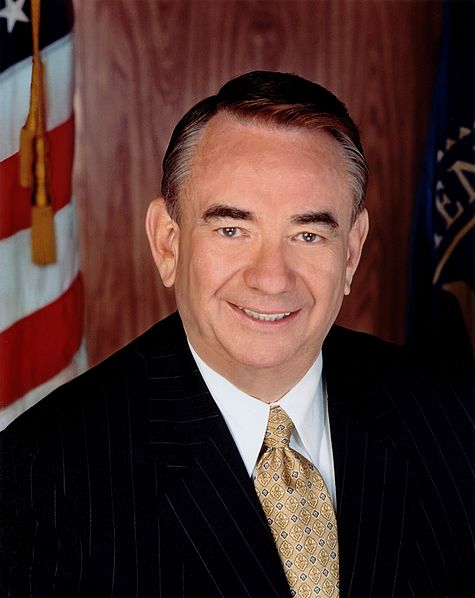
But that is what Global Network for Neglected Tropical Diseases executive director Peter Hotez said July 16 during a briefing at the National Press Club to announce the appointment of former Health & Human Services Secretary Tommy Thompson (pictured right) as the non-profit partnership’s new “global ambassador.”

Thompson was equally effusive in his praise for industry. “The pharmaceutical companies…are doing a wonderful job,” he said.

At a time when industry needs all the good press it can get, Hotez and Thompson sure made involvement in the campaign to eradicate rare tropical diseases (think hookworm, etc.) sound like a case where industry can do well by doing good.

We would add another reason for industry to pay attention to tropical diseases: a new incentive program that rewards sponsors of drugs approved to treat a qualifying condition with a priority review voucher—good, in theory at least, for a faster FDA review of another, more commercially vital, project.

The RPM Report has just published an analysis of the new voucher program. (Non-subscribers can click here for a free trial.)

That voucher program is not the focus of the Global Network, per se. They are concentrating on raising awareness (and funds) to get already approved medicines to the afflicted patient population.

Thompson singled out four companies in particular—Pfizer, Merck, Novartis and Johnson & Johnson—for donating drugs to treat infectious diseases as part of a “rapid impact package,” making it possible for the program to treat the seven most common tropical diseases for just 50 cents per person per year.

He gave special praise to a fifth company—Sanofi Aventis—which “is not even an American company” but sent executives from France to attend and support the initiative. He praised Sanofi at length for setting up a dedicated division to fight neglected diseases.

Thompson has not always had such kind words for industry: he jawboned Bayer over the pricing of Cipro after the anthrax attacks in the US in 2001 and memorably lamented the fact that the Medicare prescription drug benefit did not give HHS the authority to negotiate prices more broadly as he left the agency in 2004.

In the context of the Global Partnership, though, Thompson has nothing but good things to say about the industry. For instance, he recalled a trip to Africa he took as HHS Secretary, where he visited an orphanage along with then-Pfizer CEO Hank McKinnell. Thompson recalled seeing McKinnell being moved to tears while holding an HIV-positive newborn. “He was so moved he wrote a check,” Thompson said.

Talk about putting a caring face on Big Pharma!

Still, the combination of the voucher program and the public relations opportunity to join in a global campaign to alleviate tropical disease is already causing companies to look more closely at tropical disease research. Hotez says one goal of the Global Network is to raise awareness so that the names of the most common diseases of poverty are "household words." That may be ambitious, but it sure sounds like there is a strong case to make them boardroom words.

Tuesday, July 15, 2008

Jumping the Gun on Nplate

Whoops.

It seems like that’s all that can be said about the premature announcement of FDA's still-pending approval of Amgen’s platelet drug romiplostim (Nplate).

Business Wire erroneously sent out a press release yesterday morning announcing that the biologic had been approved for the treatment of thrombocytopenia. Amgen quickly retracted the release, saying that the Nplate application was still under FDA review, and Business Wire acknowledged its error.

It's pretty obvious that FDA and Amgen are wrapping up final details on Nplate and that approval is imminent. But that shouldn’t come as much of a surprise, given that FDA was handed a unanimous recommendation for approval by the Oncologic Drugs Advisory Committee in March.

FDA still has more than a week to approve Nplate by its July 23 user fee deadline; the review was extended by three months to allow time for the agency to consider Amgen’s Risk Evaluation & Mitigation Strategies (REMS) plan, which was submitted as a major amendment to the BLA in March.

So what, if anything, can be gleaned from the retracted release? Well, as reported in “The Pink Sheet” DAILY this morning, Amgen’s REMS program for Nplate will include the Network of Experts Understanding and Supporting Nplate and Patients, or NEXUS, program. We’ve written extensively about the lessons learned from the first REMS in The RPM Report; you can access those stories here and here.

But perhaps the best news out of the Nplate slip-up is for branding firms: NEXUS pretty much guarantees that REMS programs (like major clinical trials) will continue to be referred to as acronyms-that-are-not-quite-acronyms. (Some of our favorites include TOUCH, IDEAL and CIMplicity.)

While some might liken that craft to seeing religious figures in pancake batter, we suppose someone has to come up with those clever (silly?) names.

Photo courtesy of Flickr user dejajib under a creative commons license.

Denosumab: Let's Make a (Hypothetical) Deal

Not too long ago, the idea that a top-ten biopharmaceutical company would out-license a potential blockbuster project was way out in left field. Not so much anymore.

Deutsche Bank analyst Mark Schoenebaum notes in a recent report to clients that Amgen stock has been on an upswing for the past few weeks, and rhetorically asks why. A major reason, says Schoenebaum, is that Amgen is saying it will likely partner its Phase III denosumab (d-mab, for the nickname inclined) in postmenopausal osteoporosis (PMO) instead of building its own 2000-strong field force to sell the product, should it get approved.

If you'll allow us to grab our plaid jacket and dust off our best Monty Hall impersonation, we'd like to take the scenario a step further. If Amgen wants to offload d-mab--what's the drug going to be worth to a partner? Should it partner a significant piece, like the PMO indication, or 50% of the entire package (d-mab is being investigated in preventing 'skeletal related events' in patients with breast and prostate cancers and a variety of other tumors--on Monday the company released positive top line data from one Phase III study, for example). What is the ideal scenario for Amgen?

You, dear readers, are the experts here. And so we turn to you. We're even going to give you the tool necessary to come up with your own NPV estimates: the profile of denosumab from Elsevier's Inteleos database. Click the link to access the free PDF, dig around, and leave your estimates in the comments ...

Come on, people. Let's make a deal.

Amgen/J&J Settle Bundling Dispute: Did Both Sides Lose?

In June 1988, Iran and Iraq ended an eight year conflict by accepting a United Nations mandated cease fire--Iraq the ostensible victor, but both sides exhausted militarily and devastated economically. A year later, the Food & Drug Administration approved Amgen's erythropoeitin brand Epogen.

We didn't see the connection at the time, but it suddenly seemed clear to us when Amgen and Johnson & Johnson announced last week that they have settled antitrust claims in a case filed by J&J over bundling of Amgen's EPO brand Aranesp with its Neupogen and Neulasta franchises. J&J will receive $200 million, so we guess they "won"--but it is hard to see how either company comes out ahead in the latest chapter in the endless series of disputes arising from their EPO partnership.

Recall that Amgen and J&J have been in dispute off-and-on over dividing up the EPO market for the better part of 20 years. Indeed, Amgen only markets Aranesp because it prevailed in an arbitration case with J&J over rights to the product.

But the bundling dispute took the contentious relationship between the two companies to a new level. When J&J launched a scorched earth litigation and lobbying campaign, there were plenty of people concerned that it could backfire by making both companies--and, indeed, the whole industry--look bad.

We aren't the type to say we told you so (okay, yes we are--we told you so), but when safety issues flared up with EPO, the perception that use of the products was driven in large part by contracting practices and reimbursement plays sure didn't help.

And, with both products damaged, a settlement was probably a pretty simple matter at this point. When this fight began, it was a high-stakes battle over every inch of ground in a lucrative and growing market. Now both armies are in retreat--and this isn't a fight either side wanted.

Monday, July 14, 2008

Thinning Sales Forces

The stories about cuts in sales forces are commonplace. The Pharmalot blog reported another downsizing on Monday, July 14: this one from Boehringer Ingelheim cutting half of its neurology sales force (another 200 sales positions shed).

As if to add insult to the pain of the continuing force reductions, the big pharma firms have found yet another way to “thin” the ranks of drug sales forces.

In addition to cutting the ranks, they appear also to be out to downsize the remaining reps themselves. Those reps who do remain employed are being pushed away from the entertainment table.

As part of the revised Pharmaceutical Research and Manufacturers Association Code on Interactions with Healthcare Professionals released on July 10, sales reps will not be able to take medical staff out for meals.

That’s a smart policy from a public relations/policy perspective. There clearly has been an outcry from medical groups (the Association of American Medical Colleges, for example), politicians and the media against entertaining and meals.

PhRMA President Billy Tauzin spoke convincingly and candidly about the bad impression left by private meals in restaurants while introducing the new code recently. He said those types of meals do not send the right message about the serious educational objective of appropriate contact between drug companies and the medical professions.

But PhRMA did not note one of the fine distinctions made in the new code about the ban on free meals. It relates primarily to the beleaguered sales reps.

"The Pink Sheet" looked more closely at how the code describes the ban on free meals (see here). There is a clear exemption for modest meals (pizza and sandwiches) delivered to doctors’ offices or medical centers with an educational presentation. PhRMA defended that exemption noting that “even the counterdetailers” use food to find a slot for their anti-brand messages.

When you look more closely at the prohibitions against meals, it becomes clear the prohibition is really against reps taking docs out for food. Other company execs (beyond the sales forces) can continue to provide occasional, modest meals for doctors.

The new code and explanatory Q&A does not get into specifying who might be the new class of dining execs but that might seem to be a new function for the medical sales liaisons. Sales reps can attend dinners outside of medical settings in one situation: if the meal is part of a presentation by an adequately trained expert physician and the rep attends to help with the logistics of the meeting.

There is a deeper significance to the focus on the sales reps for the cutbacks on wining and dining. It is another example of the ongoing effort to drive expenses out of the detail force: a form of industry-wide standing down in the face-to-face sales effort. From that perspective, it is closely related to the cuts in the numbers of sales reps. Companies have always been reluctant to cut the sales forces and sales force expenditures unilaterally; they feel more comfortable if they believe that all their competitors are making similar moves.

The pharma firms were willing to walk away from entertainment by reps because it looked unseemly and it was expensive. One of the critics of industry marketing practices, Sen. Herb Kohl (D-WI), estimated that gifts, meals and continuing medical education expenditures could represent as much as $19 billion per year in industry spending.

That probably overstates the saving potential from the recent code changes but the point is well taken. Just getting back a chunk of that money would create an attractive pool of resources that the companies need to support profits from their aging product portfolios and to free up funds for more efforts at consumer marketing and/or reaching the medical professions through new media. There will be lots of other places that money can go.

The new PhRMA code does not go into place until the beginning of next year. That means there should be some very interesting and rough budget re-allocation debates within the pharma companies during the final months of this year.

Drug execs have talked for years about a time when they would not need the large armies of reps for face-to-face detailing. Some companies already have strategic plans for the next decade that do not include lines for detailing expenditures.

Banning the detail forces from the fancy restaurants is just another step towards a much different world for drug marketing – one that has moved away from the personal sales efforts that have dominated for nearly sixty years.

While You Were Running With The Bulls

Again. Excuse the WYW rerun but there are too many crazy pictures to ignore the annual San Fermin Festival in Pamplona.

  • Speaking of getting gouged by animals: The New York Times Magazine cover story this week is about the new world of behavioral pharmacology ... for pets. The market for doggy drugs is nothing to bark at; Pfizer's companion animal division raked in almost $1 billion last year.

  • In Philadelphia, says the Inqy, competition among hospitals and specialist centers for cancer patients and a difficulty expanding locally means that Fox Chase Cancer Center has been forced to opt for Plan B: building a second campus further afield in Delaware.

  • The SF Chronicle profiles BioMarin Pharmaceuticals, the 11-year old orphan disease specialist, and notes its potential as a takeover target as drug marketers that previously ignored rare diseases begin to see the pharmacoeconomic light.

  • Neurogen's Phase II/III insomnia hopeful adipiplon has hit a snag. Neurogen halted a pivotal study of the drug after next-day effects of the drug were worse than expected. The company has laid the blame on the drug candidate's bi-layer tablet formation. (BREAKING: Actelion's own insomnia candidate almorexant is doing a wee bit better.)

  • In Houston, Dr. Michael E. DeBakey, heart surgeon and inventor extraordinaire, died Friday night, less than two months short of his 100th birthday. The NYT's obit is here. DeBakey had a hand in creating, developing or pioneering countless surgical procedures and devices including the heart-lung machine that made cardiac surgery possible and the Debakey Ventricular Assist Device. He also had a role in developing the first Mobile Army Surgical Hospitals that helped save the lives of so many soldiers as well as inspire one of the finer TV shows in history.

AP photo by Alvaro Barrientos

Friday, July 11, 2008

FREE STUFF!

Got your attention?

Good.

IN VIVO Blog is very happy to provide you a link to our corporate cousin Medical Devices Today. But this just isn’t any old link. This embedded piece of html loveliness will lead you to a free copy of sister publication, The Silver Sheet, the preeminent publication covering the FDA’s interpretation and enforcement of the Quality System Regulation.

But wait, there’s more. This very valuable free copy of The Silver Sheet includes a complete list of all medical device recalls from last year listed by company, class and with specific detail on just what went wrong. Plus, an exclusive report on what the FDA is doing to try to find out what went wrong.

What would you pay for such a list? Don’t answer that question, because as we already mentioned, this particular issue is free.