Thursday, April 14, 2011
N.J. Governor Christie: "A Friend of This Industry"
Regulatory Risk Remains a Key Theme for Biopharma CEOs in 2011
The Pharmaceutical Research & Manufacturers of America annual meeting kicked off today in Jersey City with the address by Chairman Christopher Viehbacher, whose day job is CEO of Sanofi-Aventis.
Viehbacher cited a number of challenges facing the drug industry, but made it a point to emphasize up top that "regulatory risk" isamong the steepest hurdles biopharmaceutical companies are encountering in the US.
He specifically mentioned FDA and the importance of the fifth reauthorization of the prescription drug user fee act (PDUFA), which is currently being negotiated. Viehbacher said the science behind pharmaceutical and biologic medicines is advancing rapidly. "We need to have a regulatory process that can keep pace with that," Viehbacher remarked. "We need some predictability."
To bring home the point, Viehbacher recounted a meeting between Eli Lilly CEO John Lechleiter and President Barack Obama, where Lechleiter made clear to the President that one of the primary issues holding research and development and innovation is heightened regulatory risk in the US.
Viehbacher's address carried a more sobering tone than some of the more recent chairman's remarks to the trade group annual meeting, when healthcare reform was gaining momentum at different phases in the life, death, and resurrection of the legislation. For example, he highlighted the impact on state budgets of implementing the reform law, global economic uncertainty (noting half jokingly that the credit rating agency Moody's may have more sway over the success of biopharma than any other single factor), and using pharma as a target with deep pockets to cut the deficit.
"Are they going to go after an industry that they see as fat and rich?" Viehbacher asked rhetorically.
He noted Obama's signature speech on deficit reduction and said it contained a number of initiatives that will be "detrimental" to research and development.
Viehbacher said PhRMA will focus on Three Ts going forward: transparency, truth, and trust. "We have allies. We don't have them everywhere and we don't have a lot of them but we have them. They're not going to be interested in earnings per share." --By Ramsey Baghdadi
Tuesday, July 13, 2010
Guest Post: Advice for the New PhRMA President
Ian Spatz, the former VP-global health policy at Merck, is a contributing editor to The RPM Report. Ian is the founder of the Rock Creek Policy Group and a senior advisor to Mannatt Health Solutions. Interested in guest blogging for In Vivo? Drop us a line here.
The announcement that John Castellani, current head of the Business Roundtable, will succeed Billy Tauzin as the head of the Pharmaceutical Research and Manufacturers of America (PhRMA) on September 1 ends the speculation on who will lead one of D.C.’s most influential and most talked about trade associations.
As a small gift to the new PhRMA chief, here is a modest to do list to get things started:
• Reputation:
There is absolutely no other goal as important for Castellani than addressing industry reputation. Everything flows from success in improving the industry’s low standing among policy makers and the public.
To his credit, Tauzin understood this and took some positive steps on reputation including substantially improving member companies’ joint efforts to provide free medicines to those who can’t afford them. Castellani needs to encourage his Board to consider more and do more.
• Medical and Scientific Relations:
The foundation of member company success is access to the hearts and minds of scientists and physicians.
Companies need scientists to be willing to work for them – directly and indirectly through clinical trial participation. Companies need clinicians to accept them into their offices and to respect their information.
PhRMA has lagged in attention to this area but can’t any longer. Castellani is not from this community so will need to quickly identify leadership within PhRMA and from its member companies to make this a priority.
• Congressional Relations:
It’s a dicey time in PhRMA’s relations with the Hill. Republicans are still smarting over the industry’s correct decision to do business with President Obama and Senate Finance Committee chairman Max Baucus (D-MT) on health reform.
Democrats still don’t like PhRMA and many only held off on doing a job on it because the industry was playing ball on health reform.
However, that train has left the station. Castellani brings a record of Congressional work but needs to invest the time in developing or expanding relationships with key health committee members of Congress by honestly asking for ideas and help and then listening carefully to the answers.
• Transparency:
What people can’t see, they can’t trust.
Obviously, Castellani is not going to open up PhRMA Board meetings to the public. However, he can try to invite more key stakeholders to participate in such meeting and other PhRMA forums. He can also create a PhRMA annual meeting, unlike the current one, that attracts many others from outside the industry. BIO has already pointed the way with its annual meeting that is a meeting place for public officials, the media, and the industry.
• Media Relations:
The media love PhRMA but for the wrong reason.
When they need an easy quote to make the industry look bad or convince an editor that they sought balance, they can count on PhRMA to deliver. Other than that, most reporters find PhRMA difficult to deal with and hardly forthcoming.
Castellani must, as with Congress, get out there and get to know the folks who cover the industry in the main stream media and trade press. A little time and care will go a long way to improving the coverage of the industry and its companies.
• Drug Safety:
Castellani was named on the same day that an FDA advisory committee is meeting to consider the future of Avandia, GSK’s controversial diabetes drug that faces serious safety challenges.
Drug safety is the most important policy issue facing Castellani as he enters the building. With the Prescription Drug User Fee (PDUFA) program up for renewal, Congress will have an opportunity to weigh in on FDA’s safety efforts including how it is organized to address safety issues. Castellani and PhRMA should seize the opportunity to avoid playing defense and come up with some ideas on their own that will give concerned members of Congress something to support.
• Drug Marketing and Promotion:
Under Tauzin’s leadership, PhRMA took major positive steps to improve its internal codes on drug marketing and DTC advertising. Despite these efforts, physicians and medical centers are still not happy and are designing tough new rules that are limiting access to physicians. Castellani can and should continue Tauzin’s efforts to get the industry to better police itself and support the efforts of others.
That’s just a start. My best to Mr. Castellani. The nation’s pharmaceutical companies need some extraordinary leadership right now.--Ian Spatz
Friday, July 09, 2010
Is the PhRMA Search Over?
The buzz in Washington is that the Pharmaceutical Research & Manufacturers of America is preparing to make an announcement about its new CEO. It is just that no one seems to know WHO the pick is.
We published our own suggestions shortly after Billy Tauzin announced his intention to step down (here and here). But frankly, we thought PhRMA would wait until after election day to finalize its choice, both because it obviously makes a huge difference who is calling the shots on Capitol Hill, but also because the pool of available candidates could change dramatically too.
If the rumors of an imminent announcement are correct, obviously that thinking was wrong. And so is our thinking that PhRMA could NEVER keep the pick secret for this long. (We hear there have been very clear warnings issued about the consequences for anyone who talks out of school on the search, but still...This is Washington, DC!)
If PhRMA is ready to make the pick, it will surely be someone with management experience (rather than a "big name" political figure). We would also assume it will be someone who won't have trouble working with Republicans, since PhRMA can probably count on reasonably good access to the White House at the CEO level given the heavy lifting industry did in support of health care reform.
So who is it? Someone out there knows--and you can comment anonymously below!
Monday, April 19, 2010
The PhRMA Search
So, we just finished telling you (see below) that the search for a new head of the Pharmaceutical Research & Manufacturers of America is just getting going, and that it is way too early to know who the candidates really are to take over for CEO Billy Tauzin when he leaves at the end of June.
Naturally, we won't let that stop us from telling you who we think the candidates are, might be--or maybe should be. But let's be clear: we are still betting the job goes to someone no one is talking about yet.
Let's start with the names we’ve heard that we expected to hear.
Tom Daschle: Okay, when we included him on our first list, we thought we were kidding. At the time Tauzin resigned, it seemed like the last thing PhRMA would want is to double-down its bet on health care reform. Well, things have changed. Plus, we were there when PhRMA's new chairman, Pfizer CEO Jeff Kindler, introduced Daschle during the PhRMA annual meeting, with warm, glowing praise. Then Daschle returned the favor by praising Kindler for a “visionary address,” and telling PhRMA “you could not be in better hands with the leadership you are going to have from this Chairman.” So maybe there is something to it. One thing: if PhRMA wants Daschle and Daschle wants PhRMA, there is no need to wait. We don't think it will happen.
Christopher Dodd: The retiring Connecticut Democratic Senator is a logical fit—after all, Pfizer is one big constituent. But he has to get through a potentially bruising fight over regulatory reform in the financial sector before he steps down at the end of the year. We be he ends up doing something else next.
Evan Bayh: The Indiana Democrat’s resignation at the peak of the health care reform debate immediately put him on the PhRMA long list. A former board member of Eli Lilly, he may have broader appeal to the PhRMA membership than Dodd. And—while he voted for health care reform—he wasn’t one of the key architects and so may be better positioned to push for improvements than Dodd. If he wants the job, he has a good chance to get it.
Then there are the names we heard but didn’t expect:
Ginger Graham: The former Amylin CEO (and ex-Lilly exec) would make an interesting choice—the first female head of PhRMA and an ex-CEO leading CEOs. Her experience guiding Amylin from start-up phase to commercial entity could help PhRMA continue to reach out to emerging commercial businesses to expand its membership base. But will a bunch of Big Pharma CEOs really choose a little pharma CEO as their leader?
Mark McClellan: The only man to run both FDA and CMS seems to come up as an ideal candidate for almost any job you can think of. Heck, we suggested him as a candidate to run Pfizer’s R&D operation a couple years ago. But plenty of folks would love to have him running PhRMA. The thing is, he sure seems happy doing what he’s doing (running the Engelberg Center for Health Care Reform at Brookings).
Then there are plenty of names we haven’t heard but are worth thinking about:
Arlen Specter: The Pennsylvania Democrat who used to be a Republican plans to be back in the Senate next year. But what if he goes down to defeat? As the man who gave the Democrats their (temporary) 60-vote majority in the Senate, Specter played a key role in making health care reform possible. Would PhRMA reward him—or someone else whose health care reform vote costs them re-election—with a “retirement” job as CEO? It may be far-fetched, but having a figurehead who reminds the Administration of their loyalty to the reform cause wouldn’t be a bad thing during the implementation process in 2011-12. And you can also make a change after the Presidential Election.
Howard Dean: The former Vermont Governor worked with the Biotechnology Industry Organization on health care reform and so frankly is more likely to be the next head of BIO than PhRMA--and he isn't likely to be the next head of BIO. But Dean's best known as a long-shot presidential candidate anyway, so why not? More importantly, we promised to tell you more about what he said at the DTC National conference in DC earlier this year. In a nutshell, he explained that pharmaceuticals have reduced health care costs over the past 30 years and (in our words, not his) are part of the solution, not the problem, in the health care system.
Any GOP Politician: Fresh off the reform victory, no one is thinking about a big name Republican—but that will change faster than you can say “Contract With America” if the Republicans sweep the Congressional elections in November.
Linda Suydam: When Tauzin resigned, we flagged AHIP’s Karen Ignagni as an interesting possible successor, bringing association management experience and the glow of victory in the health care reform debate. Oops on that last part. Ignagni is now the loser in reform, we suppose—but the Consumer Health Product Association’s Suydam is available. Okay, she plans to return to the Southwest when she retires at the end of the year, but maybe she would reconsider. In addition to her association management experience, she also is a former FDA official—useful bona fides for PhRMA as it heads into the critical PDUFA reauthorization cycle.
Tony Principi: The head of government affairs for Pfizer was described by his boss, Jeff Kindler, as "one of the smartest guys" in Washington during the PhRMA annual meeting. But we put him on the list because of his past experience in military and veterans' issues. You see, the one thing about the final health care reform law that PhRMA doesn't like is the independent board to recommend spending cuts in Medicare (IPAB). The board is modeled on base closing commissions--and it so happens that Prinicipi was the chair of the last base closing commission before joining Pfizer.
And last but not least:
Chip Davis: Okay, so we already explained why he is purely a temporary head of the association. But no one expected Bud Selig to be anything more than temporary commissioner of baseball. If the search for a permanent successor drags on and Davis is able to keep the association staff focused on day-to-day execution, maybe he ends up as the CEO after all. PhRMA could do worse.
Who Will Run PhRMA? AZ’s Chip Davis, For Now
The Pharmaceutical Research & Manufacturers of America is buying some time to find a replacement for departing CEO Billy Tauzin. The trade association has named AstraZeneca VP-Corporate & External Relations Chip Davis to serve as “senior operating officer” and—we suspect—as interim CEO in waiting.
Davis is taking a leave of absence from AstraZeneca to join PhRMA “to help with the association’s leadership transition.” For now, that means he will be reporting to Tauzin, who is stepping down as CEO June 30. In other words, Davis’ first job will be to step in for PhRMA’s number two executive, EVP Mimi Simoneaux Kneuer, who will be leaving the trade association in May.
But we expect Davis is really there to buy some time for PhRMA to find a replacement for Tauzin. PhRMA says Davis will stay on “until a replacement for Tauzin is named,” and—since we understand the search for a new CEO is really just beginning—that probably means a period as interim CEO.
Davis is a perfect choice for the job. He has been AZ’s liaison to PhRMA and played a key role in guiding the association’s work on health care reform during the chairmanship of AZ CEO David Brennan. With Davis at the helm, PhRMA should be able to maintain and develop some of the critical alliances that helped the association do so well in the reform debate, particularly its partnerships with organized labor.
Brennan’s term ended in March, but he is chairing the search committee for Tauzin’s replacement.
At the same time, because Davis is so close to Brennan, he is sure to be temporary. Pfizer CEO Jeff Kindler isn't likely to let the past chair--in effect--run the association for his term.
Why the delay in replacing Tauzin permanently?
Well, for one thing, circumstances have changed radically since Tauzin announced his resignation in February, at a time when the prospects for health care reform looked dim. Now, the health care bill is law—and, as we note in The RPM Report—the final bill is essentially a complete tactical victory for PhRMA. In other words, what looked like a potentially crushing setback has become an amazing victory.
There are also strategic reasons for PhRMA to wait a bit on naming a replacement, if only to broaden the pool of candidates. After the flap caused by the negotiations to hire Tauzin while he was still in Congress, for instance, it would be best if PhRMA waits before talking seriously to any sitting members of Congress.
More to the point, it behooves PhRMA to wait and see how the elections go this fall. Best to read the tea leaves (or maybe the Tea Party?) before making the next CEO choice.
One other reason for PhRMA to take its time: the search might take longer than you think. After all, CEO of PhRMA may not exactly be a dream job.
Imagine PhRMA came to you with this offer: "We just scored an across-the-board victory on the biggest piece of domestic policy legislation in a generation, so naturally we didn't want our old CEO to stay. We're sure you can do better. Oh, and by the way, we are going to be slashing our budget pretty radically now that all that health reform stuff is over. And, on top of that, figure on our top 10 members merging into our top 5 in the years to come. When can you start?"
So clearly it is far too early to talk about who will take over PhRMA permanently. There is no short list. But never fear: we won't let that stop us from speculating. Look for our list of names in the next post...
Friday, March 19, 2010
PhRMA Annual Meeting: Things Really Have Changed
The crowds were remarkable during the Pharmaceutical Research and Manufacturers of America annual meeting March 18 just outside of Washington DC: the standing room only crowd inside the meeting, a too-crowded agenda that quickly fell far behind schedule--and the complete absence of crowds outside.
Taken together, all three observations add up to the same thing: PhRMA's support for health care reform really has transformed the trade association's position in Washington.
First, the crowd inside. It was a packed room only for the morning session. Now granted that it was a small ballroom, that fact is still remarkable, given the consolidation among PhRMA's biggest members and the deep cuts across the industry.
The SRO crowd reflects the event's timing: days before what will be the crucial vote on health care reform (the key issue for PhRMA for the past 12 monhts), Washington is the place to be.
It also reflects PhRMA's efforts to bring in a broader base of stakeholders, both smaller company members but also outside groups and allies that it worked so hard to cultivate in the reform debate. There aren't enough Big Pharma CEOs to fill a big room anymore, but PhRMA has adjusted.
And then there was a bursting-at-the-seams agenda. In addition to the perennials--speeches from the incoming and outgoing association chairs, departing CEO Billy Tauzin, and various advocates and boosters of R&D, PhRMA landed one Democratic member of Congress (Deputy Whip G.K. Butterfield of North Carolina), a Democratic governor (West Virginia's Joe Manchin, who incidentally, is the incoming chair of the National Governor's Association) and four key figures from the Obama Administration: Commerce Secretary Gary Locke, HHS Assistant Secretary for Preparedness and Response Nicole Lurie, National Institutes of Health Director Francis Collins, and FDA Commissioner Margaret Hamburg.
To think, PhRMA used to go years without a Democratic pol on the agenda--and sometimes had thin representation even from GOP Administration figures afraid of being painted as too close to industry.
Then there were the crowds outside, or lack thereof.
There was one discordant note inside: House Republican Whip Eric Cantor--in a very civil, understated and brief speech--expressed his deep disappointment with PhRMA's position on reform. He outlined his views that the bill runs counter to free market principles and will ultimately damage industry severely.
While suggesting that the trade association's initial support for the bill was perhaps understandable last year when Obama was so popular and reform looked inevitable, he found it "perplexing" that PhRMA is continuing to push for reform when it could (and in Cantor's view will) be defeated.
Cantor quoted an old Ronald Reagan axiom: "It is a mistake to the feed the crocodile in the hopes that it eats you last."
One wonders how many members of the audience agree with Cantor's free market philosophy and reservations about the future of the US health care system--while still hoping he proves wrong about the ultimate vote count.
Friday, February 12, 2010
PhRMA Changes Leaders: A Dozen Candidates We Bet Won’t Get The Job
PhRMA CEO Billy Tauzin is stepping down at the end of June. We pointed out in our first post that he leaves some pretty big shoes to fill--so, naturally, we want to do our part to help.
We’ve come up with a list of 12 potential replacements for Tauzin. But before we tell you who they are, we should also say that we bet none of them gets the job.
Yeah, our tongue is firmly in our cheek on some of the candidates. But more importantly, we bet PhRMA will go in a different direction this time and look for someone less high profile than Tauzin (or almost any of the potential replacements we suggest).
PhRMA has traditionally preferred a leader who is not a nationally known political figure, someone with specific expertise in critical areas. Before Tauzin, its two heads were IP attorney Gerry Mossinghoff and international trade lawyer Alan Holmer.
In part that’s because PhRMA’s members recognize that, while national politics dominates the headlines, their business is built on the fine points of intellectual property, regulatory nuance and complex pricing/reimbursement policy.
But its also because—let’s face it—Big Pharma CEOs don’t want someone telling them what to do. Tauzin was hired to lead the board, and that’s what he did. But we’re betting the PhRMA board isn’t going to look to be led again any time soon.
Still, we can’t help imagining different national figures who might help PhRMA improve or adjust its position in Washington, and so offer you the follow list of possible candidates for the top job at the trade association….
Former Senate Majority leader Tom Daschle: Why not go all in on the Health Care reform deal by hiring the man who was supposed to run health care reform in the White House? Just don't forget to pay the driver!
Connecticut Democratic Sen. Chris Dodd: Probably the biggest name PhRMA could go after among current Dems in Congress. Dodd is retiring rather than face a tough reelection battle, and has a good relationship with Pfizer, a big Connecticut employer.
Pennsylvania Sen. Arlen Specter: He hasn’t been a Democrat for long, having pulled a Billy-Tauzin-in-reverse and changed parties last year. Pennsylvania is a big pharma state, and Specter has a strong record in support of R&D and intellectual property.
Richard Gephardt: The former House Democratic leader has done a lot of work with PhRMA on issues like supporting science in America. He also has pull with the labor unions. He’d be great--at least until November.
A health system CEO: Glenn Steele (Geisinger) and Dan Cortese (Mayo) both got consideration as potential heads of the Centers for Medicare and Mediciad Services because their respective institutions are viewed as models of innovative payment and delivery networks. Selecting someone like that would show PhRMA is serious about delivery reform in health care.
Biotechnology Industry Organization CEO Jim Greenwood: PhRMA lost a big member when Roche acquired Genentech and decided to follow Genentech’s decision to maintain a membership in BIO only. Since then, PhRMA has stepped up longstanding efforts to recruit smaller companies--even modifying its tagline in ads to brand itself as “America’s pharmaceutical and biotechnology research companies.” And its biggest members have been steadily bioteching themselves. So why not just merge the two groups?
America’s Health Insurance Plans CEO Karen Ignagni: If Tauzin’s health reform dealmaking is the problem, then Ignagni's refusal to deal must make her the solution. Plus she’s shown a Tauzin-like political flexibility, having once been a single-payor advocate before taking the reins of the group most committed to protecting private health insurance in the US.
Bill Thomas: Too many Democrats? Then why not tack Republican. The long-time Ways & Means Committee Chairman was the key architect of Medicare Part D-- which may be all the health reform PhRMA needs (or gets) in the end. Downside: Amgen would quit the association right away. (Or is that an upside?)
Former HHS Secretary Michael Leavitt: The former head of HHS under George W. Bush is a well respected former governor who has pull with his old constituency, a definite advantage over other candidates who would have that missing from their resumes. Leavitt has long held that you can’t have health reform without Medicare reform.
Mark McClellan: While we’re on the subject of former Bushies and skilled candidates who could play both sides of the aisle, how about former FDA Commissioner, former CMS Administrator, former Clinton Administration health economist, and current head of the Engelberg Center for Health Care Reform Mark McClellan. McClellan implemented Part D and would be the kind of detail-oriented CEO that Tauzin was not.
Former Senator John Breaux: He lost out to Tauzin the first time around for the PhRMA job, how’s about a second go around? He’s a moderate Democrat with friends all over Washington.
Maine Republican Senator Olympia Snowe: Give us the 60th vote for health reform and we will give you Tauzin’s old job! That would never happen…would it?
PhRMA Changing Leaders; Will It Change Tack in Health Care Reform?
The sense of uncertainty surrounding the impact of health care reform on the biopharmaceutical industry just went up with the news that Pharmaceutical Research & Manufacturers of America CEO Billy Tauzin will step down at the end of June.
The timing of Tauzin's departure should have been perfect. If health care reform had made it through as planned ahead of President's Day, now would be the perfect time for Tauzin to take a bow and leave the implementation to his successor. After all, Tauzin is 66, he has been with the association for just over five years--and is also past the five-year milestone in his recovery from intestinal cancer. If only health care reform was done, it would all seem so right.
But health care reform, to put it mildly, is in a state of flux, and so is PhRMA’s famous (or is it infamous?) $80 billion dollar deal for health care reform (or was it a $90 billion dollar deal, or more?).
As it happened, the timing of the announcement (late in the evening on a snowbound week in Washington) took a lot of people by surprise.
So naturally, everyone is wondering the same thing: Are things about to get REALLY bad for Big Pharma?
There are certainly good reasons to worry. First, as we pointed out here, the Democratic leadership appears to be convinced that one of the critical factors in the sour public mood for reform is frustration with the process—and, at least among some prominent Democrats, the PhRMA deal is a case in point.
And its not like Republicans are any happier with the PhRMA deal. Indeed, we are hearing something close to glee at the prospect that the industry will be asked to make the $80 billion contribution to fund other priorities before the year is through.
No question. It could get ugly. But it is far too soon to press the panic button.
Right now, no one can say for sure what will happen on health care reform. It is still possible that a bill very close to the one that looked ready to move in mid-January can make it into law. Failing that, big things could still move through Congress: things like filling in the Medicare Part D donut hole, follow-on biologics legislation, or health insurance reforms that would make expensive drugs more affordable for many people.
What Tauzin’s announcement does is give PhRMA flexibility: if things go well, they can keep the deal, either by working through the last steps of the process during Tauzin’s final months, or by sticking with it under his successor. And they can do so while fending off critics who claim it was a sweetheart deal all along: after all, the guy who cut the deal is out of a job, right?
On the other hand, Tauzin’s departure makes it much easier to turn to a scorched earth strategy if it comes to that. If the focus shifts from reform to punitive taxes, new rebates, populist measures like reimportation and price negotiation, then PhRMA will find it much easier to just declare the deal dead and take the gloves off in return.
We do think, however, that it’s a shame about the timing. Tauzin’s five plus years at PhRMA were a remarkable time, with the association pulling off the nearly impossible feat of transitioning from a quintessentially Republican organization into one that, if anything, may find itself too closely aligned with the suddenly not unstoppable Democratic majorities in DC.
You don’t have to agree with the policy to appreciate the skill it took to pull that off, building alliances across the spectrum of advocacy organizations in DC and across the aisles in Congress.
Sure, Tauzin wasn’t perfect--in the wake of the departure announcement, we’ve heard the rumbling that he didn’t focus enough on the details to translate the framework of “the deal” into the fine print that would make it work.
But we’d bet anything that PhRMA would be much worse off today if he hadn’t built bridges with organized labor, universal coverage advocates and other groups that don’t always see eye-to-eye with Big Pharma.
And we can honestly say that, while we know plenty of people who don’t agree with Tauzin’s positions, we’ve never met anyone who didn’t like him personally.
Those will be some pretty big shoes to fill. And in our next post, we’ll offer our thoughts on who PhRMA might pick to try….
Tauzin Stepping Down at PhRMA

Word came last night that Billy Tauzin, the 13-term Louisiana congressman who took up the reigns as head of the Pharmaceutical Research and Manufacturers of America after a bout with cancer, will step down from his post.
Interestingly PhRMA has commissioned an adaptation of the famous Stewart-Adams-Strouse musical to commemorate Tauzin's five-year tenure as the head of the industry lobbying group.**
An official announcement from PhRMA is expected today, and "The Pink Sheet" will have all that covered. Meanwhile, who's going to play Tauzin in the musical? Our money's on Pierce Brosnan. Have you seen "Mamma Mia"?
**Not really.
Thursday, January 28, 2010
Health Care Reform: Words, Words, Words
We said we had a sense of deja vu going into the State of the Union, but this is ridiculous.
Last night, President Barack Obama devoted 516 words to his call to finish work on health care reform, about five minutes of the talk. That is about 7.2% of the total 7, 127 State of the Union address he delivered. Remarkably, it is exactly the same portion of the speech that he devoted to health care in his first address to Congress 11 months ago (427 out of 5,923 words, if you are keeping score.)
And its about half the percentage that health care represents of the economy.
Stirring though the words may have been, their relative dearth suggests health care is hardly a make-or-break issue for 2010.
All of which means, Big Pharma has to think seriously about the consequences if Obamacare goes away.
Yes, it has reached the point where the US brandname pharmaceutical industry is hoping against hope that it can get someone to take $80 billion.
The famous deal between the Pharmaceutical Research & Manufacturers of America and the White House, which we dubbed "dollars for donuts," is up in the air, just like everything else related to health care reform.
AstraZeneca CEO and PhRMA board Chairman David Brennan made that clear at a press conference today tied to the company's year-end financial report. To Brennan's credit, he has said all along that the prospects for reform are uncertain, and today he underscored that things are more uncertain than ever.
And, in case there is any doubt, the collapse of health care reform would be a bad thing for Big Pharma. It is not just what won't happen--no bolus of newly insured customers, no filling in of the donut hole, no reduction in cost-sharing for existing insured, no new IP protection for biological therapies.
It is also what will happen. It is not like Pharma will just get to keep its $80 billion.
To us, the most important words for industry in the entire address weren't in the health care section at all, but earlier--when Obama called on Congress to tax overseas earnings. A year ago, Obama wanted to use that idea as a way to pay for health care reform, and that--maybe more than anything else--explains the deal PhRMA struck with the Administration. Industry came to the table, and the tax deferral on overseas earnings was taken off of it.
Not any more.
"To encourage these and other businesses to stay within our borders," Obama said last night, "it's time to finally slash the tax breaks for companies that ship our jobs overseas and give those tax breaks to companies that create jobs in the United States of America."
It took just 42 words to express that thought. But those are the words that could really count.
By
Michael McCaughan
at
7:00 PM
1 comments
Labels: Barack Obama, Health Care Reform, PhRMA, politics
Thursday, January 21, 2010
Health Care Reform: Suddenly The Status Quo IS An Option
Remember when this round of health care reform began? There was just one thing everyone agreed on: the status quo is no longer an option.
Remember when Pharmaceutical Research & Manufacturers of America CEO Billy Tauzin stood side-by-side with Families USA head Ron Pollack to declare that, past differences between the two groups notwithstanding, they would join forces to urge the Obama Administration to press on with health care reform?
Or America’s Health Insurance Plans CEO Karen Ignagni standing up during the White House health care summit, being called on personally by the president, to say that insurer’s would not repeat their role in blocking reform this time around?
Time and time again, we heard the same theme: in 1993-94, everyone supporting health care reform viewed the status quo as their preference if they couldn’t have reform just their way. This time it was different. The status quo was no longer an acceptable fallback.
The status quo is suddenly very much on the table.
Such is the impact of the unbelievable, unthinkable victory by Republican Scott Brown in the race for the Massachusetts Senate Seat formerly held by the late Ted Kennedy.
Sure, there are plenty of non-healthcare explanations for that outcome. Plenty of folks blame the Democratic candidate, Martha Coakley, for a less than stellar performance. And special elections are always unpredictable. (We drew a comparison before between this race and the kind-of-the-same-but –exactly-the-opposite election of Harris Wofford in Pennsylvania almost 20 years ago.) And Massachusetts already has universal coverage--or as close to it as any federal health care legislation would deliver.
But this is politics and symbols matter. Ted Kennedy passed the mantle to Barack Obama and made health care his legacy issue. There can be no more potent symbol of repudiation for the current reform path than the election of an avowed health care reform opponent from the opposition party to fill his seat.
That silence you hear is the stunned contemplation of all parties to the health care reform debate that the status quo might just be what they end up with after all. All those lobbyists. All those hours. All those hearings, and mark-ups, and legislative drafts, and drafts of drafts. All for nothing?
Now, as President Obama likes to say, let me be clear. As of today, less than 48 hours after it really happened, no one can say for sure what the strategy on health care reform will be. Or, indeed, whether there will even be a strategy—since it is entirely possible that the Obama Administration, House Democrats and Senate Democrats will end up pursuing different ones.
And, as we point out in “The Pink Sheet” DAILY today, there are viable options to move forward, once the dust settles—many of which still seem attractive for biopharma companies.
But whatever happens next, we expect a key element will hinge on whether the stakeholders in the debate really meant what they said a year ago. Is the status quo really not a good outcome?
Because it is suddenly very much an option.
Wednesday, December 16, 2009
PhRMA Wins Reimportation Battle; Can it Win the PR War
Here, once again, is an Obama campaign video (simply called "Billy") from last year:
Does anyone really doubt that industry could be facing a much bigger bite from health care reform if it didn't cooperate early? (This is why we nominated PhRMA's deal with the White House--which we like to call "dollars for donuts"--for Deals of the Year.)
The only problem with the vote is how bad it all looks. And we think that's a bigger problem for PhRMA than for the White House.
Sure, Obama's taking plenty of hits for flip-flopping on reimportation. (He supported it on the campaign trial, but the White House worked with PhRMA to kill it in the Senate.) But that PR hit has an upside: it reinforces to other industries that when this White House makes a deal it sticks to it. (Is that why the CEOs of several major banks now say they will work directly with the Administration on regulatory reform for their sector?)
But there is no upside here for pharma companies. The pharmaceutical industry has proven that it can defeat reimportation yet again. What the industry needs to do, though, is get to the point where no one seriously thinks reimportation is a useful public policy option in the first place.
We think this column in today's Washington Post should be required reading for everyone in the brand name industry. There is almost nothing in the article that won't make brand executives angry. But it is a fair reflection of how the political chattering classes view this issue: evil Big Pharma's lobbying clout trumped a common sense proposal to help the average Joe.
If industry can't change that perception, its victory in health care reform may be short-lived.
By
Michael McCaughan
at
4:30 PM
1 comments
Labels: Barack Obama, Health Care Reform, PhRMA, reimportation
Thursday, December 03, 2009
Financings of the Fortnight’s Pot Luck Supper vs Food for Thought from Tauzin and Kindler
This week we’ve got a little bit of everything out there for you FOTFanatics. Corporate Venture? Of course. Meaty FOPO? You got it. Odd restructuring? Why not. Sexy SEDA? Your wish is our command. And unlike last fortnight’s Eurolicious entourage, this week we feature some All-American talent. And a Canadian.
These guys--and their investors--obviously didn’t get the memo from PhRMA honcho Billy Tauzin and Pfizer CEO Jeff Kindle, who spent their podium time at yesterday’s Partnering For Cures meeting publicly worrying about the state of the States’ hospitality to the biopharma industry.
Tauzin woke us up as he railed at the state of the Food and Drug Administration, noting the regulator was no longer the premier drug agency in the world (that’d be EMEA, if you’re wondering); FDA didn’t take all the blame of course, to Tauzin some of its ineptitude was the fault of Congressional indifference. Meanwhile, someone please buy Margaret Hamburg and co. a DVD player, or maybe a TiVo?
"12:00 is blinking on a VCR at FDA, they are that far behind technologically," observed Tauzin. (No word on whether FDAers were sporting neon leg warmers while listening to Whitesnake while wearing out their Betamax copy of Top Gun on said VCR, but that’s what we were thinking.)
[NOTE: Keep your eyes peeled for coverage out of Windhover's ongoing FDA/CMS Summit in Washington, where FDA's John Jenkins just coincidentally unpacked and disputed the argument that FDA is more 'conservative' than EMEA.]
Other panelists at the breakfast session walked back the criticism. Bob Beall, president and CEO of the Cystic Fibrosis Foundation, commended FDA for its progress in clinical trials in the rare diseases space, noting that any path forward with the agency should begin with direct dialogue and not with confrontation, and not with Congress passing laws to tell it what to do.
And the earlier that dialogue begins, the better. With regards to personalized medicine, for example, he noted that a company can’t wait ‘til Phase III, or even IND stage, to start a discussion about biomarkers. He did lament the status of inter-agency harmonization between EMEA and FDA, but in the end with a wave in Tauzin’s direction said “I’m optimistic about the FDA.”
Founder and CEO of the Multiple Myeloma Research Foundation Kathy Giusti agreed with Beall. FDA, she said, had been “phenomenal.” And using an age-old technique she later suggested if only foundations could get academic and industry attorneys on the same page with contract language “we can all start using,” things would be so much better. As with most remarks that blame the lawyers, those words received a round of applause.
But in any case we shouldn’t be surprised when everyone relocates to Singapore, seemed to be part of the message from Tauzin. That’s something Pfizer’s Jeff Kindler alluded to as well.
During Partnering for Cures' lunch-time session, Kindler, fresh off the “pharma needs to own up to its mistakes to regain public trust” circuit of interviews and talks, sat down with FasterCures founder Michael Milken to discuss Pfizer’s attempts to shorten the timeframe of the drug discovery-development continuum.
Along the way he discussed some of Pfizer’s impressive feats—the creation of HIV specialist ViiV Health Care with competitor GSK, for example, or this week’s deal with Israeli biotech Protalix for its Gaucher’s disease treatment (we’ll leave it til tomorrow’s Deals of the Week to get in-depth on that one).
But he repeatedly invoked the strides made in emerging markets and industry hubs like China and Singapore to speed up clinical trial recruitment, for example. We in the US “have to be mindful of the fact that there are a lot of advances being made in other countries that are very interested in having those clinical trials done there, and that’s where a lot of innovation is going to occur. I think that’s where the big opportunity for speeding up bringing medicines to patients is.”
He later noted that governments in some emerging markets “are very ambitious and aggressive” in beginning to meet the unmet medical needs of their populations and “in encouraging innovation and research and providing incentives for companies like ourselves to locate manufacturing, research and clinical trials in those countries.” In case the message wasn’t clear he added: “And are doing so I might add in many cases with a coherent government/business collaboration that quite candidly we’re not seeing as much of in the United States as we’d like.”
He went on to talk about how China has headhunted Chinese-born young, ambitious, and eager scientists based in the US and elsewhere to return and set up shop in places like Shanghai’s Zhangjiang Park and elsewhere. This migration is “something we need to take account of as US policies are adopted that can have an impact on our ability to support what I consider to be a very important American industry,” he said.
Read more about Kindler’s remarks in today’s Pink Sheet DAILY (and for more on Pfizer's activity in China, see this IN VIVO feature). Then fly the flag for the companies below, this fortnight’s fancy financing phenomena. It’s …
Forma Therapeutics: It’s not that often you see a start-up raise more than $50 million in venture capital and pen two notable alliances with pharma companies within one year, but Forma Therapeutics has managed to do just that. The biotech—which according to this recent profile in START-UP may be onto a winner with its combination of structure-guided cancer drug discovery and proprietary cell-based screening capabilities—pulled in $25.5 million through a Series B financing led by Lilly Ventures (more corporate venture!), announced on December 1. Also participating were Novartis Option Fund and Bio*One Capital, investors in Forma’s January 2009 $25 million Series A. Forma has deals with Novartis (in oncology, signed shortly after it’s A round) and Cubist Pharmaceuticals (antibacterials). The latter deal included a note that converted into stock in the current Series B.—Amanda Micklus
Receptos: The $25 million Series A financing for newly formed Receptos is not as simple as it first appears. The San Diego firm targets GPCRs and described its initial financing as a two-tranche deal, $17 million now, maybe $8 million later. The full story is that Receptos purchased Apoptos, which had raised $28 million in its own relatively recent Series A in January 2008 (so it's more of a reinvention). Roughly $5 million left from that financing was included as part of the first tranche of Receptos’ round – along with $12 million from the company’s venture backers, explained Jim Schmidt, VP of finance and administration. Receptos can qualify to receive the second tranche of $8 million upon the filing of an IND for its lead candidate – a sphingosine-1-phosphate receptor candidate for multiple sclerosis. That filing is expected by the fourth quarter of 2010, says Chrysa Mineo, VP of corporate development. Participants in the new round were Venrock, ARCH Venture Partners, Flagship Ventures and Lilly Ventures. (There’s that corporate venture again!) Each of those funds received a seat on the Receptos board, with Venrock’s representative, former Biogen Idec Executive Chairman William Rastetter, serving as CEO and chairman.—Joseph Haas
Vertex Pharmaceuticals: According to Elsevier’s Strategic Transactions database, follow-on public offerings have increased substantially from a low of $3 million in the fourth quarter of 2008 all the way up to $1.6 billion in the third quarter of this year. While final fourth quarter numbers are not yet available, it looks to be on pace to beat Q3 thanks to a few big FOPOs completed this fortnight by Salix Pharmaceuticals ($128 million), Human Genome Sciences ($415 million), and namely yesterday’s $442.8 million stock sale by Vertex Pharmaceuticals. The small-molecule drug developer, which focuses on several therapeutic areas including infectious diseases, offered 11.5 million shares at $38.50, a price on par with what the company has been trading at for the past few weeks. The stock jumped 8% to $36.15 on November 2--and has been gradually increasing since then into the high $30s/low $40s--following news that 83% of HCV patients in each arm of Vertex’s C208 study had achieved a sustained-viral response with twice-daily telaprevir. Vertex is planning an NDA for the HCV protease inhibitor in the second half of 2010. Less than two months ago, the company monetized future European milestones it would have gotten from telaprevir partner Janssen in a deal with four investment funds, which bought $120 million in Vertex convertible debt and paid another $35 million cash in exchange for $250 million in regulatory and launch milestones. Earlier this year, Vertex completed another huge follow-on offering, which netted $314 million. Since 2008, the company has raised $1.4 billion through four FOPOs.--AM
Labopharm: The public markets are slowly warming to biotech—note Vertex and HGSI’s monster $400 million public offerings, UCB’s €500mm bond offering and Movetis’s announcement that it closed its IPO, bringing in €85m (with the overallotment yet to be determined). But for many of the smaller players capital is still a scarcity, making alternate financing arrangements like Labopharm’s $25 million standby equity distribution agreement (add SEDA to your bin of acronyms to name drop this holiday season) with Yorkville Advisors, an attractive prospect. Under the terms of the agreement, YA will provide up to $25 million during the next three years, available at Labopharm’s discretion via the purchase of new shares, issued at a predetermined discount (that maxes at 5%) to the prevailing stock price. In addition, limits prevent YA from owning more than 19.9% of Labopharm’s issued and outstanding common shares at any one time. The control offered by the SEDA—in addition to the biotech determining when to pull the trigger, it also determines the amount to draw down, with a built-in minimum price—is clearly attractive to smaller biotechs or specialty pharmas who might have cash-generating milestones on the horizon while simultaneously lacking the in-house resources to reach those events. The Quebec, Canada-based Labopharm fits the bill. The company had just over $14 million in cash and cash equivalents at the end of its third quarter, as well as roughly $21 million in long term debt payable starting in 2012. In addition, the company is preparing for the 2011 launch of its second product, DDS-04A, which is a once daily-formulation of the serotonin antagonist reuptake inhibitor traszadone that is currently awaiting a regulatory decision from FDA. In the SEDA-world (it’s not an obscure planet in a galaxy far, far, away) Yorkville has been an active player. This year alone, the company has inked SEDAs with Advanced Life Sciences, RXI Pharmaceuticals, Pharming, and Achillion. –Ellen Foster Licking
By
Chris Morrison
at
11:50 AM
0
comments
Labels: financing, financings of the fortnight, Jeff Kindler, PhRMA, politics, Vertex
Friday, September 25, 2009
PhRMA Throws Bus Under the Bus
Remember the flap over candidates throwing allies, staff and pastors “under the bus?” It may seem like an eon; but it is only a little over a year ago that jettisoning a former supporter brought the phrase “throwing someone under the bus” into the common political parlance.
Now the phrase has true relevance to pharma politics. It creates the perfect metaphor to describe a change in tactics by the Pharmaceutical Research & Manufacturers of America (PhRMA), the trade association.
PhRMA is abandoning one of its high-visibility projects of the last four years, the patient assistance bus campaign in favor of a the larger goal of pushing through health care reform.
Ed Silverman writes about the trade association’s decision to put the bus back in the garage until the end of the health care reform effort in an article in “The Pink Sheet” Daily.
The association explains to Ed that it is too busy with health reform to take on budgeting issues like the cost of the bus campaign until the end of this legislative season.
That is clearly one reason. There is no question that PhRMA is busy with health reform and multiple mark-ups on Capitol Hill. And the association needs all of its resources to keep spending as heavily as it can (through partners like Families USA and the American Medical Association) to create the image of a strong consensus in support of overall health care reform.
From a strategic point of view, giving up the bus now makes perfect sense. The bus was just a vehicle (a big 18-wheel vehicle) for PhRMA to draw attention to its longer overriding objective: to get access for drug coverage to a good chunk of the 40-some million people who are insured and often can’t pay for drugs themselves. Offering assistance programs through the traveling bus was a good way for PhRMA to take charge of the issue of expanding drug coverage to the needy.
Health care reform moves that from a slow city-by-city or region-by-region effort to sign up people to the chance to legislate coverage to a large new market in one fell swoop. With that opportunity, it makes sense to change tactics.
It is worth noting as the bus goes back to the shop that it was also an effective way to counteract one of the most telling anti-industry metaphors of the last decade: the bus trips by seniors to Canada to buy cheaper drugs. PhRMA usurped the metaphor by sending a bus to the disadvantaged to sign them up for private assistance.
But now is the time for PhRMA to focus on opening the public pocketbook to drug coverage. The association and industry have been doing well at this effort: offering to pay $80 billion to pay for the cost of reform and stand with the White House has been a big plus.
PhRMA faces some big hurdles to the market expansion: take, for example, a recent change in the Senate Finance Committee mark (proposed legislation) that would remove the requirement for states to add drug benefits to all new Medicaid recipients. At first glance, this change would knock out a large proportion of the newly covered Medicaid beneficiaries in 2717 states from being assured of getting access to drugs.
That wouldn’t be good for PhRMA. The industry in this deal to get access to those Americans who cannot afford drugs now and to make sure that they get drugs without high out-of-pocket costs.
But getting coverage without a mandate on Medicaid to include drug programs for all beneficiaries won’t be the end of the road. PhRMA can always bring out the bus again to the states with coverage gaps and work at the state legislatures. The association should keep the tires inflated and the engine in tune while the bus is taking its break in the garage.
Tuesday, July 07, 2009
Lobbying and Health Reform: Reading Between the Lines
Part of the fun in reading the national news section of The Washington Post has always been the deciphering – trying to figure out who an unnamed source might really be or trying to find hidden meaning in a certain quote.
By that standard, the Post’s July 6 front-page article on the significant presence of Capitol Hill insiders among the multitudes lobbying Congress on health care reform was a veritable goldmine, especially for followers of the pharma/biotech industry.
One portion of the article details the number of former aides to Sens. Max Baucus (D-Mont.) and Chuck Grassley (R-Iowa), respectively the chairman and ranking minority member of the Senate Finance Committee, who have been lobbying that committee and others in Congress on various facets of health care reform. No fewer than seven of Baucus’ and five of Grassley’s former aides are among the hundreds of health care industry lobbyists currently trying to shape health care reform.
Particularly wielding the influence, it appears, is the bipartisan lobbying shop Mehlman Vogel Castagnetti, which includes both Baucus’ former chief of staff David Castagnetti and Grassley’s former health policy adviser Colette Desmarais. According to a nifty full-color chart offered by the Post, both Castagnetti and Desmarais represent 10 clients in the health care reform battle, among them six pharmaceutical or health care products companies, two HMOs and two hospital/nursing home associations.
Not to be outdone, there is Barrett Thornhill, listed as a former health policy legislative assistant to Finance Committee member Sen. Michael Crapo (R-Idaho). Thornhill, a lobbyist with Foley Hoag, represents 13 different pharmaceutical and health care products companies in his work. (Though we wonder whether Thornhill's client list doesn't reflect his most recent job at the Biotechnology Industry Orgranization, rather than his past connection to a minority member of the Finance Committee.)
Eager to prevent any sense that Baucus, Grassley and co. might be influenced by this phalanx of former aides in crafting their version of health care reform legislation, Baucus spokesman Scott Mulhauser helpfully told the Post that Baucus and staff meet daily with people representing the full spectrum of stakeholders in the health care reform effort. “The senator and his staff … are proud that all interests are treated equally and that no one receives special treatment of any kind,” Mulhauser is quoted as saying. “As a result, the Finance Committee has been praised by members of Congress and by the media for its uniquely inclusive and transparent health-care reform process.”
No, we wern't aware either that the Post now is reprinting press releases.
In fairness to Baucus and Grassley, they have been very open in releasing white papers and options drafts outlining possible directions for reform. Its just that it sure seems like some stuff is going on behind close doors, like hammering out $80 billion in savings from the pharmaceutical industry to help fund the cost of reform.
Which leads us to our favorite part of the article, a priceless quote by PhRMA head Billy Tauzin, responding to critics of his decision to join the trade group shortly after helping shepherd the 2003 Medicare Modernization Act, which created the Part D drug benefit, through Congress.
“Is it a distortion of baseball to hire coaches who have played baseball? Is it a distortion of universities to hire from academia,” Tauzin asked rhetorically in the Post piece. “The bottom line is that people work in fields in which they have experience. Somehow there are people who think that’s unusual for politics, but I think it’s pretty normal.”
Well, as the Post likes to say in its advertising, “if you don’t get it, you don’t get it.”
— Joseph Haas
Friday, May 15, 2009
Lyndon Baines Obama?
This week’s White House meeting between President Obama and a coalition including insurers, the Pharmaceutical Research and Manufacturers of America, physicians, hospitals and others on health reform reminded us of how another president used his PR skills and White House platform to push a key health issue forward in the direction he wanted.
In 2009, the industry groups came to the White House with the idea of expressing their commitment to health reform and to contribute their share toward a goal that health reform would eventually save as much as $2 trillion over 10 years.
Somehow, by the time they got home, there was a widely reported perception that the associations agreed specifically to reduce their costs to the health system by $2 trillion. The president asked them to come back in June with proposals for how they will do this. Since then, there has been a bit of backpedaling, and differing reports of whether the President misspoke in describing their agreement (see the full account in the May 18 issue of “The Pink Sheet”).
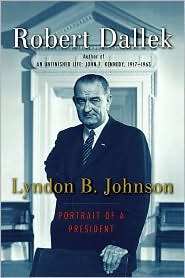
Now, we’re not sure how the confusion arose or who is spinning who. But we wonder if Mr. Obama learned a few presidential wiles from Lyndon Johnson and Medicare. LBJ managed to push through legislation creating the Medicare program in July 1965, despite vociferous opposition from the American Medical Association. He knew the program would never get off the ground without physician support. Here’s how he got it, as recounted by historian Robert Dallek in Lyndon B. Johnson, Portrait of a President:
Some members of the Administration were so worried about winning the cooperation of the AMA that they urged a meeting at the White House with AMA leaders at which the President appealed to doctors to support a law favored by the people and worked out “in the most pain-staking way in accordance with the exacting rules of our democracy.”
Johnson did not think that the AMA and most physicians would find it easy to oppose Medicare without serious damage to their public standing. But he was worried enough to invite AMA leaders to the White House, where he could compel a public acknowledgement of their support. In a July 30 discussion with eleven AMA officers, Johnson asked the physicians for help in getting doctors to rotate in and out of Vietnam for a few months to serve the civilian population. Appealing to their patriotism, Johnson declared, “Your country needs your help. Your President needs your help.” The doctors responded almost in unison with promises to start a program immediately.
“Get the press in here,” Johnson told [presidential Press Secretary Bill] Moyers. When they arrived, Johnson described and praised the AMA’s readiness to help the Vietnamese. But the reporters, undoubtedly primed by Moyers, wanted to know whether the doctors would support Medicare. Johnson, with mock indignation, said: “These men are going to get doctors to go to Vietnam, where they might be killed. Medicare is the law of the land. Of course they’ll support the law of the land. Tell them," Johnson said, turning to the head of the delegation. “Of course, we will,” the AMA president responded….A few weeks later, the AMA announced its intention to support Medicare.
- Denise Peterson & Cathy Kelly
Wednesday, April 22, 2009
Pharma Will Stop “Resorting” To Influence Clinical Trial Investigators
PhRMA is extending its ban on lavish entertainments from sales contacts with clinical practitioners to the contact between sponsors and clinical trial investigators.No more nice resorts to plan clinical trials or bring together investigators. The “Principles” specifically define the types of location and entertainment that will be acceptable for clinical trial teams to get together. “Resorts are not appropriate venues,” the Principles state bluntly.
“While modest meals or receptions may be appropriate during company-sponsored meetings with investigators, companies should not provide recreational or entertainment events in conjunction with those meetings,” the business-like code declares.
And guests are not welcome: “It is not appropriate to pay honoraria or travel or lodging expenses for those who are not involved in the clinical trial.”
The clinical trials principles essentially adopt the same restrictions on entertainment applied by PhRMA to marketing contacts in a separate code adopted last summer.
And the reasoning is clear again. PhRMA’s President Billy Tauzin has a politician’s innate sense of the right argument for the right climate: now is no time to flaunt lavish entertainment of customers or clinical trial investigators. This is a time for the business to adopt a parsimonious demeanor – of course, the new frugality does not extend to lobbying expenses where PhRMA is extending its giving to new constituencies like labor consultants (but that’s a different story).
And these changes in entertaining patterns will slowly affect the cost structure of the industry – skinning away some of the marketing/entertaining fat. That’s not an untimely change for an industry that is losing some of its biggest revenue producers.
The new version of the clinical trial principles is the third update for the voluntary code, which was first adopted by the industry in 2001. The newest version of the code can be called the “disclosure edition” because its primary purpose is to address the key issues of public openness about the existence of specific trials, the results of trials, and a clearer definition of the roles played by each named contributor in published results.
There are important commitments to openness about listing trials and trial results from the drug companies – and some equally important exclusions about the types of trials that PhRMA does not believe its members should have to post on the government trials database. PhRMA does not believe, for example, that it helps patients to tell the public about the existence of Phase I research.
The code is simple and defines a more open clinical trial process and one with less unseemly influence (in the form of entertainment, etc.) on investigators. From that perspective, it is an improvement. Whether it will be enough to restore the public confidence in the accuracy and unbiased results of trials is a question of a different magnitude.
Tuesday, March 10, 2009
Smoke Signals Look Good for Biopharma
The smokeless backrooms of politics in Washington 2009 are looking like a good environment for the biopharma industry -- better even than the deals that emerged from the smoke-filled rooms of lore.
This could very easily have been a year of multiple political threats to the industry with the drug business portrayed as a scapegoat for out-of-control health costs, but it is emerging instead as a year offering reasonable compromises and proposals to protect pharma pricing and give the industry access to significant new markets.
The first signs that the biopharma sector may have crawled out of the bulls-eye as a target for health reform are (1) the Obama Administration's decision to turn back to the tobacco industry as the number one health villain and (2) relatively small financial contributions expected from the biopharma sector to pay for health care reform.
As we have written recently, tobacco regulation is next on Capitol Hill agenda for the Democrats. Getting rid of cigarette smoke has become a core issue for the new administration despite the fires incinerating the other parts of the economy. The campaign against smoking is more accurately a "Corr" issue for the administration, supported by the HHS Deputy Secretary-designate, William Corr, a long-time ally of House Energy & Commerce Chairman Henry Waxman (D-CA) and long-time critic of the tobacco industry.
No matter how the anti-smoking campaign found its way into the packed Obama agenda, the fact that it is there means that pharma immediately becomes a lesser evil on the list of industries affecting US health care.
Pharma is well aware of the smoke-screen and regulatory/political cover that the tobacco industry presents. Even before the 2009 legislative season was underway, Pharmaceutical Research & Manufacturers of America President Billy Tauzin was expressing full support for the government to go aggressively after tobacco regulation.
"Any work" the government could do "to prevent people from smoking is good work," Tauzin declared, saying "tobacco is not our friend." It is a point not lost on a political pro like former House Energy & Commerce Chairman Tauzin that pharma experienced its best years of growth and new product introductions while the Food & Drug Administration was absorbed in its fight against the tobacco companies in the late 1990's.
The anti-smoking position allows Tauzin to talk positively about health reform. He took his prevention rhetoric to the White House Summit where he talked about the importance of healthier lifestyles. He claimed that 67 percent of cancers could be avoided if people did not smoke, ate properly and exercised.
Tobacco regulation can be a distraction for FDA's senior management and take up a lot of the agency's resources, but it creates a less pressured atmosphere for drug regulation.
The second sign of a developing positive atmosphere for biopharma is the relatively small $29 billion that the industry will be expected to contribute to the $634 billion down payment fund for Obama's health care reform initiative. That is the amount the federal government will collect from increased Medicaid rebates. Pharma will actually face additional payments to the states of about $12 billion more (for a total of $41 billion). The full negative impact on the industry including cost reductions in the private market is estimated at $70 billion over ten years.
Compare that to $117 billion that the health insurers are being asked to give up from reductions to Medicare Advantage payment rates and you can see why the health insurers are crying "foul" and complaining that the pain of health reform is falling disproportionately on them. It also becomes clearer why biopharma leaders are accepting the proposed payments more stoically: they are being asked for less and have a lot to gain if insurance coverage can be more widely extended to the currently uninsured and under-insured -- a potentially large new market for pharmaceuticals.
The fact that cuts to pharma revenues are within the tolerable range combines with the industry's position against smoking to create a good climate for working with the White House, HHS and Congress on two key industry objectives: (1) a well-crafted follow-on biologics bill and (2) control over patient co-pay levels for drugs and biologics.
By supporting Corr's anti-smoking effort, pharma improves it relationship with a key figure for the FOBs bill. Corr was the staff architect for Waxman behind the original Waxman-Hatch generics bill 25 years ago. He is likely to be the driving force behind getting a follow-on deal done this year. He is no friend of pharma; but having the smoking issue as background is very convenient for the industry.
Legislative control over co-pays is getting less public attention but could be the big money issue for pharma in the current legislative season -- especially as specialty drugs and biologics become more important to the industry.
Both BIO and PhRMA have identified efforts to restrict the amount of out-of-pocket expenditures that patients will have to make for drugs as important to their policy agendas. This is an access issue for patients that offers an indirect price protection to the industry. If pharma can avoid high co-pays, that will permit them more flexibility for high prices.
The objective is to make sure that health insurers and Part D Medicare plans cannot set co-pay levels so high as to act as a de facto barrier against patient use of the products. The drug industry senses that controls on co-pays are politically viable in a Democratically-controlled Washington because they can be presented as a patient/beneficiary access issue.
The Democratic victories did not seem like good news for pharma in November and it still could turn out badly, but things have started out pretty well.
Friday, March 06, 2009
Health Reform Summit: BIO's Invitiation Lost in the Mail
We've written plenty about the parallels and contrasts between health care reform vintage 2009 and the last big go 'round in 1993 with ClintonCare.Today's health care reform summit definitely fits in the "contrast" category. And not just because it was broadcast live on the web, in self-conscious contrast to the Clinton task force's closed door policy.
What caught our eye was the attendee list. The brand name pharmaceutical industry quite literally had a seat at the table--two in fact: Pharmaceutical Research & Manufacturers of America CEO Billy Tauzin and Pfizer CEO Jeff Kindler were among the 150 or so to score what President Obama called "the hottest ticket in town."
Then there is who wasn't invited. No one from the generic industry--and no one from the Biotechnology Industry Organization.
That is a huge contrast to 1993, when BIO (or at least, its predecessor organizations) offered the brand industry its only access to the Democratic leadership. Because, back then at least, everybody hated Big Pharma, but they just loved those spunky, innovative biotech companies.
The fact is that it has been tough going for BIO so far in 2009. The association has some ideas to help its members in the context of the stimulus plan. They were probably long-shots, sure, but nothing materialized.
And then the President put follow-on biologics in the budget proposal. Not really a surprise, but there was a lot of tough talk about "evergreening" that probably made some folks nervous.
Now, the kick off to the health care reform debate. And BIO literally didn't have a seat at the table...