


 There are a few caveats. First, a black box warning for the once-daily GLP-1 analog which includes a potential increased risk of thyroid cancer (despite Novo Nordisk's repeated claims that this applies only to rodents, not monkeys or humans). Second, no first-line usage allowed. Third, significant post-approval requirements, including a CV safety study, a 5-year epidemiological study to evaluate thyroid cancer risks, a 15-year cancer registry to monitor thyroid cancer cases, and a REMS.
As such, "it's a worst case label for the product," concluded Sam Fazeli, an analyst at Piper Jaffray in London. "Bittersweet" was how Jefferies' Jeffrey Holford put it, while Citigroup simply cut to the chase with "Commercial success far from certain."
Things could have been still bleaker, though. At least the US approval has finally happened (the drug was filed in May 2008). It might have been pushed out significantly further, given the regulators' apparent problem with the thyroid cancer risk. And on the up-side, there's no need for calcitonin monitoring during Victoza therapy (calcitonin is the marker used in humans for thyroid cancer) and there are no broad contra-indications for the drug. Only patients with a family history of medullary thyroid cancer, or multiple endocrine neoplasia syndrome, aren't allowed Victoza--and both those indications are very rare.
As such, Novo's management was upbeat during the analyst call announcing the news. The REMS is very remiscent of that recently imposed on Lilly/Amylin's twice-daily GLP-1 analog Byetta, said EVP & CSO Mads Thomsen, and certainly manageable. He added that many diabetes drugs (metformin, the sulphonylureas) have black box warnings, and most new products aren't awarded first-line treatment at their first pass at FDA. Thus, "we're perfectly happy with our monotherapy label," he said. (The product was denied approval as a monotherapy in Europe).
There a big 'but', though--and it's Byetta. That product has not only a five-year head start, but also hasn't got a black box, hasn't got a thyroid cancer risk warning, can be used as an initial therapy, and thus remains "first choice" treatment in this class, according to Fazeli, despite its more frequent administration.
This explains the generally (although not exclusively) down-beat analyst reaction to the news; "we see more room for disappointment than surprise on Victoza," writes Citigroup's Mark Dainty. Never mind the fact that Victoza outperformed Byetta in blood sugar lowering in a recent Phase III head-to-head trial.
Novo's management still thinks it can surprise, however. (They're a confident lot.) They re-iterated their forecasts that Victoza will reach sales of over $1 billion by 2015 (Byetta's currently at about $700 million and it has been on the US market since 2005).
Much will depend on whether follow-on GLP-1 analogs including long-acting Byetta (EQW) and Roche/Ipsen's taspoglutide are stamped with the same thyroid cancer warnings as Victoza. (Amylin's epidemiological study of Byetta is due March 31). Novo's Thomsen is adamant that the thyroid cancer signal seen among rodents is a class-effect among the long-acting GLP-1 analogs, and points to a forthcoming peer-reviewed scientific paper outlining what he claims is a similar pre-clinical effect on thyroid c-cells for Victoza, long-acting Byetta and taspoglutide. "We'll have to live with the notion that long-acting GLP-1 analogs cause c-cell proliferation in rodents," he told The In Vivo Blog. "But there's no reason to believe that these findings have any relevance to higher species," he added.
Whether or not the other long-acting GLP-1s get the same treatment, FDA is unlikely to remove Victoza's black box for several years at least, likely until the 5-year follow-up cancer study data is available.
Meanwhile, though, with its already-expanded US sales force and pricing in line with Byetta at about $8/day for the 1.2mg dose, Novo will be pushing Victoza with all its might and leveraging its wider diabetes franchise where possible. And let's not forget the fundamentals: Victoza is once-daily, can be taken anytime, prompts some weight loss, isn't associated with hypoglycemia or significant nausea, and is relatively easy to titrate.
Those elements may yet trump the worries about cancer in rats.
Tuesday, January 26, 2010
Victoza Gets Past FDA, But....

Wednesday, August 27, 2008
Miscommunicating Risk (Part 2): The Byetta Disconnect Continues...
 Byetta's back in the news, and once again not in a good way. "Amylin Reports Four Additional Deaths With Byetta" is how Reuters has it.
As we wrote last week, the Byetta experience underscores some fundamental challenges facing the industry (and investors) in the new era of drug safety. This is a case where there seems to be a big disconnect between the seriousness of a safety issue from the regulatory perspective (where a safety "update" by FDA treated two deaths from pancreatitis as important information for prescribers, but not a call to action) compared to the reaction of investors ("The sky is falling!").
But, whether or not FDA intended to sound the alarm about Byetta, the stock market reaction made pancreatitis a big story. Or, put another way, the sky may not be falling but Amylin's stock price certainly did.
Now, a week after the news broke, Amylin tried its hand at communicating safety information, hosting a teleconference to offer "context" for the FDA safety update.
That included the news of four additional case reports of Byetta patients who experienced pancreatitis and died. For analysts on the call, though, that "news "sounded like a non-event. Amylin carefully explained that those four deaths, though all associated with pancreatitis, were already reported to FDA, before the agency issued its recent safety "update" on the GLP-1 anti-diabetic. In other words, the agency agreed with the sponsor that they weren't worth talking about publicly. In three of the four cases, Amylin says, it has obtained case reports that support the view that the cause of death was unrelated to pancreatitis or Byetta. In the fourth case, Amylin says it has been unable to obtain any additional information.
Amylin also discussed the deaths in the broader context of outlining the overall risk of pancreatitis seen with Byetta (about 1 in 3,000) and the more severe hemmorhagic/necrotizing pancreatitis that triggered the latest alert (less than 1 in 10,000). And, the company says, there is no indication whatsoever that the rate of pancreatitis associated with Byetta is any higher than the expected rate in the overall patient population.
Well, Amylin shares are down again today (as are marketing partner Lilly's).
This raises two more questions in our minds for others in industry to ponder as the new drug safety era takes shape.
(1) FDA recognizes that it needs to do better when it comes to risk communication. But do sponsors?
(2) In a world where the line between partner and prey (cf. Roche/Genentech, Bristol/ImClone) is always fuzzy at best, how does "Safety First" volatility affect the stability of partnerships?
Amylin's investors haven't been shy about voicing their feelings that FDA is being unduly alarmist about the pancreatitis issue. (And, privately, we've heard the same thing from executives who work for the sponsors.) But this is a case where FDA issued safety information in about the least alarmist way it could have--short of keeping its mouth shut.
And if you think keeping its mouth shut is an option for FDA right now, you haven't been paying attention.
But what about the sponsors? The question that begs to be asked is why Lilly and Amylin waited a week to hold a conference call. Analysts who put that question to Amylin say the answer was that the company didn't want to upset FDA by appearing to challenge or contradict its safety communication. (And in holding the call at last Amylin carefully avoid doing so.)
Our response to that objection is: what would an angry FDA do that is worse than what is already happening to Amylin? The stock was down 20% and investors are starting to write off hopes for Byetta LAR.
Still, if Amylin and Lilly were afraid of annoying FDA, then why hold a call at all? The delay made the issue seem ominous. Just the scheduling of the call caused Amylin shares to fall. Then the company said very little that isn't already in the public domain about the context of pancreatitis--and apparently by failing to offer anything new its reward is to see another stock price decline.
We don't claim to know the right way to manage investor communications about these kind of emerging safety issues, but we're pretty sure this isn't it.
What we do know is that sponsors have to prepare now for how they are going to handle a circumstance like this. Amylin and Lilly may have been caught flat-footed by the reaction to the FDA safety notice, but that is no excuse. In today's world, the news could just as easily have been sparked by an international regulator, or by a prominent academic (say, Steve Nissen has been quiet lately hasn't he?), or in the favorite phrase of former FDA deputy commissioner Scott Gottlieb, by any 18 year old with a computer and access to Wellpoint's database.
Our modest proposal for a better way: why not hold this conference call before FDA issues a safety update? It would take a brave sponsor to do that -- in effect announce to investors that it has submitted six fatality reports to FDA. Still, in hindsight, we bet Lilly and Amylin would be better off right now if that was the approach they took.
Which leads into the second issue, since an effective communication strategy presumes that the two sponsors have the same objectives in mind.
Viewed from the standpoint of the Byetta brand team, there is no doubt that the partners' interests are aligned and this safety scare is a huge problem.
But what about from a strategic perspective? The Roche/Genentech deal has already triggered speculation about other biotech buyouts to come, and Lilly/Amylin is on everyone's list of possibilities. Lilly, remember, already showed its willingness to go down this path when it bought its Cialis partner Icos.
If the market is overreacting to the pancreatitis issue, Lilly can do more than just assert its confidence. It can put its money where its mouth is and buy Amylin out. It wouldn't be cheap: Amylin is valued at just under $3 billion. But that is less than half its value a year ago before the pancreatitis issue first emerged.
Then there is this: a new posting on ClinicalTrials.gov showing that Lilly is moving its own GLP-1 agent into Phase III. That certainly got investors' attention. Does Lilly think it has a better product than Byetta?
(Lilly may even have an extra incentive to buy Amylin: according to our Strategic Transactions database, the Byetta contract includes "option compounds" in both Lilly's and Amylin's pipelines to which the partners have reciprocal rights. While the names of the compounds and the option periods have been redacted out, our bet is that the "option compounds" represent possible competitors to Byetta. So if Amylin has got any claims to Lilly drugs -- maybe indeed this Lilly-discovered GLP-1 -- then Lilly would have some extra incentive to buy out Amylin now).
We don't pretend to know Lilly's plans for its Amylin partnership, but we do know that the challenges of mastering risk communication aren't any easier when there are two sponsors involved.
Tuesday, August 19, 2008
Miscommunicating Risk: The Byetta Disconnect
 First things first: we have no idea how serious the risk of pancreatitis with Amylin’s type 2 diabetes agent exenatide (Byetta) really is. Nor do we pretend to be able to guess how the brand will be affected commercially in the hypercompetitive diabetes market by the report of two deaths associated with the drug.
But this we do know: there seems to be a disconnect between the level of warning that FDA chose to issue for Byetta and the size of the financial market’s reaction. And that disconnect underscores an ongoing, critical issue facing the entire pharmaceutical industry in the world of “Safety First” regulation: how to communicate a risk associated with a product without scaring patients that could benefit.
You have to give the Food & Drug Administration credit for diagnosing the problem. The agency is the first to admit that it simply doesn’t know the best way to meet the public demand for transparency in regulatory actions—especially anything involving safety—without needlessly scaring patients, confusing providers, and sacrificing its ability to speak authoritatively on behalf of the public.
That, in a nutshell, is why the agency formed a new advisory committee on Risk Communication in the hopes of bringing a little science to the question of how best to warn consumers about emerging and inherently uncertain safety issues.
Based on what happened to Amylin yesterday, it’s safe to say there is still a lot of work to do.
In case you missed it, FDA issued an update for health care professionals on August 18 about the risk of pancreatitis associated with Byetta. FDA and the sponsors (Amylin and its partner Lilly) first alerted prescribers to the risk back in October, citing 30 reports of acute pancreatitis associated with the brand.
The update cites six new, more serious cases reported since then, involving what the agency describes as “hemorrhagic or necrotizing pancreatitis.” All six cases led to hospitalization, and two patients died. In light of the apparently more serious reports, FDA says it is working with Amylin and Lilly on stronger warnings and advises discontinuation of Byetta when there are any signs of pancreatitis in the meantime.
Amylin’s investors certainly think that’s a big deal: the company’s shares dropped 15% almost instantly on the news, stayed down to the close, and opened even lower today. You can't blame investors for being skittish. Byetta is a huge product for the biotech and has already been struggling a bit commercially. In this climate, the impact of even uncertain safety risks can be dramatic. (Remember Vytorin?)
Last but not least, the issue certainly raises more questions about the regulatory prospects for Amylin's long-acting version of Byetta. (We have written previously about why we think Byetta LAR could benefit from the focus on cardiovascular outcomes for type 2 diabetes products--but if there is some reason to suspect the long-acting version is worse for the pancreas, all bets are off.)
But here’s the thing: FDA chose to disclose the new information about Byetta without much fanfare, simply posting the update on its “MedWatch” drug safety page, with a prominent link on the “What’s New” column of the Center for Drug Evaluation & Research’s home page. The agency did not issue a press release, a formal public health advisory, or host a media conference call, the way it does in other cases where it wants to amplify its warning.
In fact, we first heard about it from the ever vigilant David Kliff, whose Diabetic Investor issued a note at 1:45 pm—by which time the sell off was well underway. (For the record, our copy of the alert via FDA's email list serve arrived at 2:52 pm.)
In other words, Wall Street’s reaction is driving coverage of this particular drug safety issue—not the public health judgment of the regulatory agency. Think about it: if Byetta happened to be sold by a privately held company, or exclusively by a global Big Pharma where it was not the exclusive focus of investor attention, the media coverage would certainly be much reduced.
Again, we don’t claim to know the right outcome here. Maybe it’s best if everyone stops using Byetta altogether. Maybe it’s best that no one stop. But it seems safe to bet that more people will be aware of this risk than would have been without the Wall Street reaction—and that means the impact of the FDA warning will be larger than the agency might otherwise have anticipated.
You don’t have to be an Amylin investor to think that may not be the best way for risk communication to work.
Tuesday, August 12, 2008
The Case for Byetta LAR (Part 2)
 Amylin and Lilly have high hopes for Byetta LAR, a once-weekly formulation of the incretin mimetic exenatide. Analysts are (as they tend to be) of two minds, with opinion ranging from those who think LAR may fairly quickly become the dominant brand in the entire diabetes class to those who wonder whether it will even make it to market.
We will leave the debate over the commercial prospects to others. But we do think LAR looks to have a winning profile from the regulatory perspective.
That, to put it mildly, is counterintuitive. We just wrote that it is harder than ever to get new type 2 diabetes drugs on the market. And we’ve said previously that it is harder than ever to get line extensions to market. (Remember Cordaptive?) That sure doesn’t sound like a good prognosis for LAR.
But this may be a case where two wrongs do in fact make a right.
How so? Well, first, this is a circumstance where it definitely helps to be developing a line extension rather than a new molecule. Here is how Amylin CEO Dan Bradbury described the situation during Amylin’s second quarter conference call. “The FDA panel meeting really focused on cardiovascular risks associated with new chemical entities,” he said. “That is one of the major differences here.”
Indeed, the panel vote does imply that marketed antidiabetic products just got a little more valuable. In fact, one implication of the latest advisory committee vote is that the decision by FDA to leave Avandia on the market is an even bigger victory for GlaxoSmithKline than it appeared. (An advisory committee voted overwhelmingly last year to allow continued marketed of the drug. FDA’s internal Drug Safety Oversight Board agreed, but by a single vote. And ultimately the decision came down to CDER Director Janet Woodcock, who opted to allow continued marketing.)
Now, Avandia (like other marketed products) will be expected to generate outcomes evidence—but at least it can continue to generate revenues in the meantime. And the odds of another TZD coming into the market any time soon just when down. So maybe, just maybe, GSK will actually see sales of the franchise rebound a bit in the years remaining before patent expiry.
But Byetta LAR is not a case of asking FDA to approve a new agent to lower blood sugar, but rather a case of asking FDA to approve an improved version of an already marketed drug. And, in fact, of a drug that has an attractive cardiovascular risk profile, given Byetta’s effects on weight and lipid levels.
That alone, though, may not be good enough in the current regulatory climate. But here’s the kicker: FDA can use the LAR approval to ensure it gets the outcomes data to support its decision to approve Byetta in the first place. The agency, of course, already asks for that data routinely—but as everyone saw with Avandia, those post-marketing commitments are seldom sufficient to generate definitive conclusions about the kinds of questions the committee now wants answered.
FDA, though, has a new tool it can use going forward: mandatory post-marketing study requirements, complete with the ability to levy fines against manufacturers who fail to deliver data by an agreed upon time. As we’ve said before, this changes everything about Phase IV.
The new authority is much easier for the agency to apply prospectively, to newly approved drugs (or at least new applications for expanded uses, new labeling, etc.). The agency can (and in the case of type 2 diabetes, we bet it eventually will) go back and add post-marketing requirements to already marketed products, but that is a process that will take some time.
So, Lilly and Amylin have a two-fold case for Byetta LAR. It is an improvement over an already marketed drug (since, the companies say, it provides better glucose-lowering control and increased convenience)—and it also gives FDA the opportunity to finalize mandatory outcomes studies for exenatide sooner than it otherwise could.
And, as an added bonus, it fits perfectly with the companies’ commercial positioning of the product. Lilly and Amylin are already planning a large cardiovascular outcomes study based on extensive trials suggesting beneficial effects on surrogate endpoints. So it shouldn’t be hard for them to commit to FDA to do such a study as a condition for approval.
All of which means Byetta LAR may turn out to be the right product for the current regulatory climate.
Of course, if the commercial product isn’t the same as the one used in clinical trials, all bets are off…
Monday, August 11, 2008
The Case for Byetta LAR (Part 1)
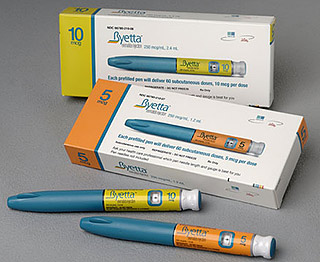 Lilly and Amylin say they have one regulatory hurdle to cross before filing for the long-acting formulation of exenatide (Byetta LAR): demonstrating comparability between the clinical formulation of the drug and the proposed commercial supply manufactured by Amylin in Ohio.
Amylin CEO Dan Bradbury told investors during the company’s second quarter conference call July 21 that a recent meeting with the agency gives the company great confidence in its projection of an NDA filing sometime in the next year. The company has said all along that it expects to file by the end of the first half of 2009, Bradbury said; the meeting with FDA suggests that timeline may be conservative, since the agency may end up not requiring a full-fledged clinical crossover study.
At a time when investors are focused on the now clear, unequivocal emphasis on outcomes endpoints for new type 2 diabetes drugs, Amylin’s confidence in a near time filing date for Byetta LAR is big news.
This is a tough time for type 2 diabetes drug development. An FDA advisory committee essentially endorsed the Steve Nissen worldview: that blood sugar reduction is not an end in itself, and new drugs for use by diabetics need to provide sufficient evidence of outcomes benefits—especially cardiovascular outcomes—as a condition for approval.
Our colleagues at “The Pink Sheet” have extensive coverage of the meeting, and—more importantly—FDA’s takeaways from the meeting.
But in case you missed it, after a morning’s worth of warm-up, Steve Nissen—Cleveland Clinic cardiologist and shadow FDA commissioner—went up to the podium and called out the entire profession of endocrinology, telling the committee that they have made glucose reduction a goal in itself and lost sight of the bigger picture. Some committee members fumed visibly—but the panel spent the next day-and-a-half following the agenda laid out by Nissen.
The committee agreed with his premise—that it is no longer acceptable to approve drugs solely based on the ability to reduce HbA1c levels—and with his overall approach to assessing cardiovascular outcomes. They punted on some questions—like exactly how much outcomes research to expect, and under exactly what conditions the studies would be necessary prior to approval instead of as post-marketing commitments.
So what does all this mean, other than demonstrating once again the incredible influence Nissen has on drug development and use in this country at this moment in history?
First, it confirms that the bar is indeed higher for type 2 diabetes drugs, that—in effect—they will be governed by a quasi-superiority standard of the type that FDA has begun talking about for NSAIDs (and now antipsychotics).
That in itself should not be news: Remember Pargluva? But it is now clear that new agents for glucose reduction will be expected to demonstrate some compelling reason for approval—better HbA1c control, evidence of reduced toxicity, something—or else face the risk of being asked for definitive proof of outcomes prior to approval.
So there is plenty of reason to wonder whether Lilly and Amylin can in fact move forward with LAR as planned (or even faster than planned).
We think they can…and we’ll explain why tomorrow.
Wednesday, June 11, 2008
ADA Wrap-Up: Where's The Chocolate?

Trying to understand all that data released at the American Diabetes Association’s 68th Scientific Sessions in San Francisco? Attempting to make sense of the company posturing and resulting fallout in the marketplace? It’s enough to make anyone a little hypoglycemic.
But getting a handle on the market potential of the various medicines in the lucrative Type II diabetes space, such as Januvia and Byetta, is worth a potential sugar low.
The curve for Amylin/Lilly’s Byetta, a GLP-1 analog on the U.S. market since 2005, hasn’t been so steep. At $158 million in revenue for the first quarter, twice-daily Byetta missed its mark due to a number of factors – among them lack of up-take by primary care physicians. That’s one reason why Amylin told the street in January it would speed up its filing for once-weekly Byetta LAR to the second quarter of 2009.
At ADA this week, Amylin reported data showing its Byetta LAR injection improved glucose control at or below ADA’s 7% goal for 72% of patients, with an average weight loss of 9.5 lbs. Jim Reddoch of FBR Capital Markets said, “We think LAR is a potential best-in-class drug, well ahead of the competition.” He’s modeling $2 billion-plus in peak sales for the drug in 2012. But the news did little to help Amylin's share price, which slid June 9 on news from Novo Nordisk and Roche.
Novo released new Phase III results pitting its once-daily GLP-1 analog liraglutide against Byetta. Liraglutide was significantly more effective at lowering A1c and resulted in slightly more weight loss. JPMorgan’s Cory Kasimov noted, “With liraglutide’s approval expected by 1H09, we believe the drug could take significant market share from Byetta.”
Amylin isn't taking the news sitting down--but it will likely have to invest considerable money and resources to keep a leadership position. The biotech's CEO, Daniel Bradbury, told “The Pink Sheet” DAILY the firm is considering head-to-head trials of Byetta vs. liraglutide.
Meanwhile, Roche and partner Ipsen’s taspoglutide (R1583) also demonstrated impressive A1c control. Rate of nausea, however, appeared high at 52% with the 20 mg once-weekly dose, although patients weren’t titrated. The firm announced at ADA that it will begin a head-to-head trial of taspoglutide vs. Byetta. It plans an NDA filing in 2010. Maybe Amylin needs to add another arm to that trial its considering?
(We understand if you are getting a bit dizzy. Great summaries of all the news are available at our sister publication, "The Pink Sheet" DAILY.)
But the news wasn't all GLP-1. The DPP-4 class is looking more crowded as two contestants vie for the prize of being second to market. The Bristol-Myers Squibb/AstraZeneca drug, Onglyza, when taken alone, apparently significantly improves A1c levels compared to baseline in just three doses. Bristol plans to file an NDA for the compound mid-year. Meanwhile, Takeda issued a slew of reports about its alogliptin, widely expected to be approved later this year. Good news for Merck--analysts don't seem to think either drug looks superior to Januvia.
--Pamela Taulbee
