


 Tomorrow’s advisory committee review of Bristol-Myers Squibb/AstraZeneca’s oral DPP-4 inhibitor anti-diabetic saxagliptin will be a critical milestone for type 2 diabetes drug development.
Based on our review of the briefing documents for the committee, we think FDA is essentially asking its expert panel whether it is possible for anyone to meet the agency’s new standards for cardiovascular safety of type 2 diabetes therapies without conducting prospective studies to do so.
That question is critically important to other sponsors with drugs pending at the agency, starting with Novo Nordisk whose liraglutide goes before the same committee on Thursday.
As we discuss in greater detail here, we think the signs are good for a positive outcome at the committee.
But who cares about that. We raise a more parochial question today: which of the two sponsors will look smarter when the meeting is over?
Recall that Bristol brought in AZ as a partner soon after the muraglitizar (Pargluva) disaster, where its last effort to market a type 2 diabetes agent crashed and burned—after a successful committee review. (Thank you, Dr. Nissen.) In that case—arguably the worst possible outcome for a drug development company—Bristol could at least look at the silver lining: the $100 million Merck paid for marketing rights to the drug.
In doing the deal with AZ, Bristol was very deliberately hedging its risk in light of what it saw as a worsening regulatory climate for primary care in general and type 2 diabetes in specific. So, was AZ a sucker to pay up (at least $150 million so far), or was Bristol a scaredy-cat to give away half of huge market?
Okay, okay, we get it. Obviously both Bristol and AZ have a huge stake in a positive outcome. Each is slated to share 50% of the market for saxagliptin, so there is no question of one side wanting it more than the other.
But still—given the size of the saxagliptin deal, it is worth asking whether it was worth it and for whom.
Given the concern about FDA’s diabetes guidance and the potential for costly post-marketing studies, you could easily argue that Bristol was right. Even if saxagliptin makes it through FDA soon, it will probably be more expensive to market and less lucrative than AZ may have forecast at the time of the deal.
And there is no guarantee that a positive vote tomorrow means saxagliptan is on the market this year. Most analysts seem to think the exclusive focus on cardiovascular safety at the committee means FDA has no other questions about approvability, but we're not so sure. It may be that FDA wants to focus on the cardiovascular analysis, figuring that if saxagliptin doesn't have enough data to meet the guideline, no one will.
On the other hand, at the time of the deal, saxagliptin looked certain to be at least third in the class (behind Merck’s Januvia and Novartis’ Galvus). Now, however, it has passed Galvus and is ahead of Takeda’s alogliptin . Indeed, it has even leap-frogged drugs that are not head-to-head competitors, like liraglutide. So maybe AZ got the better deal.
We think two things are clear from the above discussion: First, from Bristol’s perspective, the deal almost certainly worked as a hedging strategy. After all, even today, we don’t think you can say with any certainty whether saxagliptin will end up closer to Januvia or Pargluva on the scale of commercial success. (Ask us tomorrow and we might know more…)
Second, on the off chance that Bristol has another type 2 diabetes agent in Phase III, we doubt they'll get $200 million for it if saxagliptin crashes and burns....
Tuesday, March 31, 2009
Betting on the Saxagliptin Advisory Committee

Friday, January 12, 2007
AZ-BMS Diabetes Deal: Two Paths for Big Pharma
If there is a schism among Big Pharma it is between those companies clinging on to the notion that pharma's future role is--as it is today--as a massive marketer of mass-market drugs, and those that see specialism as a means to avoid imploding under the weight of their own infrastructures. The diabetes deal announced yesterday by AstraZeneca and Bristol-Myers illustrates the pursuit of each strategy: AstraZeneca, eager to play in what one pharma CEO described this week as "the disease of our epoch," has paid BMS $100 million upfront for worldwide (except Japan) co-development and co-commercialization rights to two late-clinical stage diabetes projects. For BMS the move is another big step back from primary care marketing and confirmation that the company's future lies along a specialist path.
AZ will fund the majority (75%) of development costs through 2009, the companies said, after which costs will be split 50-50. Should each of the two drugs--saxagliptin, a DPP-4 inhibitor currently in Phase III and dapagliflozin, a SGLT2 inhibitor in Phase IIb--reach global markets BMS will earn $650 million in pre-commercial milestones and could land an additional $300 million per drug in sales milestones. Post launch expenses and profits will be split evenly on a global basis and BMS will manufacture both products and book sales.
Acquisition of diabetes projects to shore up its primary care portfolio has been high on AZ's agenda since the PPAR agonist tesaglitazar (Galida) crashed out of clinical trials in May 2006; ironically the decision to yank Galida was based on thought-leader and regulatory reaction to BMS's own PPAR, muraglitazar (Pargluva) and intimations that Galida was in for similar treatment. Pargluva was killed after analysis published in JAMA by Cleveland Clinic CV chair Steve Nissen, MD, questioned the safety of PPARs and FDA said further long-term clinical studies would be needed to approve the product. (See "Anything but Academic: Lessons from the PPAR Failures," The RPM Report, June 2006.)
By the time saxagliptin hits the market the best AZ and BMS can hope for is only two entrenched competitors: Merck's Januvia and Novartis' Galvus will likely await. Dapagliflozen is a sodium glucose co-transporter-2 inhibitor, which blocks the re-absorption of glucose from urine in the kidney; a more novel, yet riskier prospect.
Thursday, June 14, 2007
Is FDA Killing Research?
 It sounds crazy. But it’s what Wyeth’s R&D chief Bob Ruffolo fears if the unprecedented political storm currently engulfing FDA continues to force the agency to raise drug safety hurdles.
“Who is going to bring a new, improved version of Avandia to market,” asks Ruffolo, given the likely trial-size FDA is going to request? How will any company be able to prove that their drug doesn’t have the safety issues associated with Avandia, if these (whether or not they are real) only become apparent from Steve Nissen’s meta-analysis of trials involving 28,000 patients?
No drug is risk-free, and no company-sponsored clinical trial can feasibly replicate real-world drug usage over a number of years. Yet people [politicians, patient groups, Public Citizen, and now FDA] "are demanding absolute positive safety,” Ruffolo tells us.
Now sure, comprehensive safety data within the reasonable bounds of clinical trials is crucially important to getting a drug approved. But if, as Ruffolo contends, regulators—whether or not under pressure from politicians and lobbyists—become obsessed with safety and fail to grant equal attention to benefit, there may be little point in even pursuing drug development within certain classes. Hence, “I’m worried that what saw with Avandia will kill off an entire area of research.” (Add, perhaps, CB1-antagonists to the list, since rimonabant was unanimously rejected by an FDA advisory committee yesterday.)
Avandia, like Lilly/Takeda's Actos (which will also get a black box warning following the NEJM report) is a PPAR gamma agonist. Developers of such single PPARs have already had a rocky road: despite many attempts, they remain the only compounds in their class on the market (there used to be three -- until the FDA forced Warner-Lambert (now Pfizer)’s Rezulin off the market). And Avandia and Actos already in 2002 had their labels updated to reflect safety concerns around congestive heart failure resulting from fluid retention. Meanwhile, every one of the next generation dual alpha-gamma PPAR agonists to get close to the FDA has also failed: remember AstraZeneca’s Galida, discontinued last year because of kidney toxicity; or Merck & Co.’s MK-767; or the compound Merck in-licensed to replace it, Bristol-Myers' Pargluva (whose main antagonist, like Avandia's, was Cleveland Clinic's Steve Nissen).
One might argue, given the list of casualties, that the PPAR class is doomed and it is in fact better that researchers leave it well alone. After all, who wants me-toos? We have a couple of PPARs already out there, the safety-scare will discourage their further usage, and that will force the industry to look elsewhere, for ‘real’ innovation.
But ‘real’ innovation and progress don’t generally happen in giant leaps, they happen in increments. There are plenty of reasons for bringing new versions of Avandia to market, Ruffulo argues, just as there are plenty of good reasons to have a variety of Cox-2 drugs, or a palette of cancer treatments. It’s well known that individuals respond differently to the same drug; in cancer, there’s also the issue of resistance.
Getting back to the PPARs: designing drugs that target different ratios of PPAR alpha, gamma and delta receptors might just improve the side-effect issues that Nissen highlighted, if indeed they are worthy of a black box warning. Despite the failures, companies including GlaxoSmithKline and Sanofi-Aventis are still working on next-generation subsets of PPARs, including dual PPARs and PPAR delta agonists.
So why is Ruffolo so riled up? Wyeth doesn’t have a PPAR agonist (it isn't in diabetes), and, for that matter, doesn’t have a Cox-2 either. In fact, Ruffolo contends, the company has been a little more protected than some from the worst of the safety storm around primary care drugs, in part thanks to its focus on more specialist areas like rheumatoid arthritis (and CNS in primary care, where FDA appears particularly open to new treatment options).
But Wyeth has been hit by its fair share of safety crises—including the Women's Health Initiative study in 2002 which apparently showed an increased risk of breast cancer, among patients taking Wyeth's combined estrogen/progestin hormone replacement therapy Prempro. Positive benefits such as a decrease in hip fractures were overlooked, contends Ruffolo. So are more recent data analyses this year reversing some of the earlier findings on heart attack risk. In today's regulatory reality, meta-analyses count when they’re negative on safety, but not when they’re positive on efficacy. In other words, drug labels can only get worse.
The industry itself is partly to blame for this onslaught, though. Its behavior hasn't exactly been squeakly clean--think enquiries into dubious promotional techniques, accounts of negative trials being swept under the carpet, and the 'dodgeball' that reps were encouraged to play with Vioxx when faced with difficult questions.
Ruffolo acknowledges that the industry makes mistakes. But that won't help the sector out of its plight, nor will blaming eager politicians and watchdogs. For that, drug firms should start rebuilding consumer trust. Perhaps this safety storm will push them into doing so--the silver lining in an otherwise black cloud.
Tuesday, December 16, 2008
The Lesser Of Two Evils?
 When Steve Nissen is not qualified to serve on an FDA advisory committee under the agency’s new conflict of interest guidelines, you know things are bad. Really bad.
According to Nissen, and as reported in "The Pink Sheet" DAILY, his position as chair of the cardiology department at the Cleveland Clinic likely bars him from serving another term on an FDA expert panel.
Nissen may not be exactly beloved by the pharmaceutical industry, but no one can argue that the man knows drug development, and is a global expert on cardiovascular drug safety. And when it comes to conflicts, Nissen prides himself in not only disclosing all the companies he has worked for, but also donating all his fees directly to charities so that he can't claim the tax benefit.
Plus, he has served as an advisory committee member before: Nissen was a permanent member of the Cardiovascular & Renal Advisory Committee from 2001 to 2005, that last year as chairman. Since then, he has served as a temporary member as duty calls, like the July meeting on type 2 diabetes clinical trial endpoints. So if he can't serve, then who can?
“The current rules are pretty bizarre,” Nissen told attendees at the recent FDC-Windhover FDA/CMS Summit. “The imputation of conflict of interest guidelines based on institutional contracts eliminates a lot of desirable people.”
In Nissen’s case, the trouble is with a section of the new CoI guidelines that bars the “head of a department” that is conducting or will conduct studies on a product (or its competitors) “that is the focus of a meeting and receives personnel or salary support, designs or advises on any aspect of clinical trials, or reviews data or reports from the trials.”
We emailed Nissen to clarify, and he pointed out that the cardiology department has more than 100 faculty members. So “for most advisory committees, it is highly likely that someone within our department is involved with the company in some fashion.” And given the size of the Cleveland Clinic, Nissen said, “the likelihood that someone...receives funding from the sponsor or its competitors is 100%.”
Of course, Nissen’s inability to serve on an advisory committee is most likely be welcome news for drug sponsors, who see him as, frankly, a pain in the derriere. Granted, this is the man who prevented Bristol/Merck’s Pargluva (muraglitazar) from ever seeing the light of day, and crippled the commercial future for GlaxoSmithKline’s Avandia. So you can understand that angst.
But industry should not be breaking out the champagne quite yet. If it is true that Nissen is no longer eligible to serve on an advisory committee, it underlines a disturbing trend at the agency: FDA’s continued inability to fully staff its expert panels with individuals that qualify under—and are willing to serve despite of—more stringent conflict of interest guidelines.
When we last looked at the staffing problems in the advisory committee system in The RPM Report, there were 83 vacant seats, and three-quarters of the panels did not have permanent chairs. That was despite a major recruitment effort at the agency. Things haven’t improved much since.
And when drug sponsors start to see who is qualified to serve as permanent advisory committee members under FDA’s conflict of interest rules, they may be wishing for Nissen. You tell us. As a sponsor, who would you rather have: Nissen, or Public Citizen’s Sidney Wolfe and Center for Science in the Public Interest’s Merrill Goozner?
Friday, July 27, 2007
So Who Is the Avandia Whistleblower?
 The Senate Finance Committee loves FDA whistleblowers. And it sounds like they have found another one as part of their investigation of the review of GlaxoSmithKline's diabetes drug Avandia.
Previously it was revealed that the former Deputy Director of the Division of Drug Risk Evaluation in the Office of Surveillance and Epidemiology (OSE) Rosemary Johann-Liang, who recently left the agency, had been verbally reprimanded for recommending that a black box for congestive heart failure be placed on Avandia. Now Baucus and Grassley allege a second reviewer was taken off the review.
"During a recent interview with Finance Committee staff," their letter says, "a senior medical officer in the Office of New Drugs (OND), who at one point was the primary reviewer for Avandia, told staff investigators that s/he was told to stop participation in the review of potential cardiovascular safety problems associated with Avandia. Since 2005, the senior medical officer believed that there was enough evidence to support a black box warning regarding the risk of CHF."
Next, we talked with former Avandia primary reviewer Saul Malozowski, now a senior advisor on endocrine physiology in NIH's National Institute of Diabetes and Digestive and Kidney Diseases, who left FDA in 2001. "Nobody under my direct supervision was ever removed from any task in either Avandia or other drugs," he said via email. "I hope you have access to my review of this drug where I underscored the potential pitfalls in the documentation provided and the dangers that patients with cardiac condition could encounter. I also was concerned about the weight gain." So he wasn’t the whistleblower either.
Monday, August 11, 2008
The Case for Byetta LAR (Part 1)
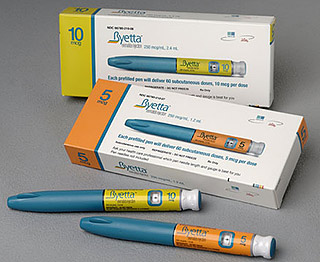 Lilly and Amylin say they have one regulatory hurdle to cross before filing for the long-acting formulation of exenatide (Byetta LAR): demonstrating comparability between the clinical formulation of the drug and the proposed commercial supply manufactured by Amylin in Ohio.
Amylin CEO Dan Bradbury told investors during the company’s second quarter conference call July 21 that a recent meeting with the agency gives the company great confidence in its projection of an NDA filing sometime in the next year. The company has said all along that it expects to file by the end of the first half of 2009, Bradbury said; the meeting with FDA suggests that timeline may be conservative, since the agency may end up not requiring a full-fledged clinical crossover study.
At a time when investors are focused on the now clear, unequivocal emphasis on outcomes endpoints for new type 2 diabetes drugs, Amylin’s confidence in a near time filing date for Byetta LAR is big news.
This is a tough time for type 2 diabetes drug development. An FDA advisory committee essentially endorsed the Steve Nissen worldview: that blood sugar reduction is not an end in itself, and new drugs for use by diabetics need to provide sufficient evidence of outcomes benefits—especially cardiovascular outcomes—as a condition for approval.
Our colleagues at “The Pink Sheet” have extensive coverage of the meeting, and—more importantly—FDA’s takeaways from the meeting.
But in case you missed it, after a morning’s worth of warm-up, Steve Nissen—Cleveland Clinic cardiologist and shadow FDA commissioner—went up to the podium and called out the entire profession of endocrinology, telling the committee that they have made glucose reduction a goal in itself and lost sight of the bigger picture. Some committee members fumed visibly—but the panel spent the next day-and-a-half following the agenda laid out by Nissen.
The committee agreed with his premise—that it is no longer acceptable to approve drugs solely based on the ability to reduce HbA1c levels—and with his overall approach to assessing cardiovascular outcomes. They punted on some questions—like exactly how much outcomes research to expect, and under exactly what conditions the studies would be necessary prior to approval instead of as post-marketing commitments.
So what does all this mean, other than demonstrating once again the incredible influence Nissen has on drug development and use in this country at this moment in history?
First, it confirms that the bar is indeed higher for type 2 diabetes drugs, that—in effect—they will be governed by a quasi-superiority standard of the type that FDA has begun talking about for NSAIDs (and now antipsychotics).
That in itself should not be news: Remember Pargluva? But it is now clear that new agents for glucose reduction will be expected to demonstrate some compelling reason for approval—better HbA1c control, evidence of reduced toxicity, something—or else face the risk of being asked for definitive proof of outcomes prior to approval.
So there is plenty of reason to wonder whether Lilly and Amylin can in fact move forward with LAR as planned (or even faster than planned).
We think they can…and we’ll explain why tomorrow.
Thursday, August 02, 2007
Is Partial Agonism the Key to PPAR Success?
In case you haven't had your fill of TZD news this week, we bring you word that Dr Reddy's Labs and Rheoscience have dosed their first patient in what will be the first of several large Phase III studies of their partial PPAR gamma agonist balaglitazone.
- GSK's Avandia, subject of everyone's favorite meta-analysis, though allowed to remain on the market for now, will get slapped with some stern patient- and doctor-scaring warnings. Takeda's Actos has avoided the whirlpool so far.
- The PPAR class hasn't exactly had smooth safety sailing prior to Avandia's snafu. Warner-Lambert's Rezulin kicked off the parade back in 2000 and so-called next-generation dual gamma/alpha PPAR agonists like AZ's Galida and Merck's MK-767 and Merck/BMS' Pargluva eventually followed.
- Clinicians and patients may be moving beyond the PPARs in any case. The RPM Report has reviewed the winners/losers: Actos may have seen a bump in the wake of the initial Avandia news, but that hasn't lasted. Merck's first-in-class DPP4 inhibitor Januvia is enjoying wild success in its first year on the market and observers are salivating over potential newcomers like Amylin's once-weekly Byetta and Novo Nordisk's liraglutide.
Nevertheless, Rheoscience presses on. If Actos is now the TZD safety standard bearer, it makes sense that to get to market now companies will have to prove their drugs as safe or safer than Takeda's (in fact, European drug regulators require such an active comparator to prove non-inferiority). Rheoscience is aiming to do just that. The first balaglitazone Phase III will be a European "six-month, double-blinded, randomized, placebo-controlled multicenter trial in which type 2 diabetes patients will be given daily doses of either 10 or 20 mg of balaglitazone versus the active comparator Actos (45mg/day) as an add on to stable insulin treatment," according to Rheoscience.
Our interest piqued, we got in touch with Rheoscience CEO Philip Just Larsen, MD, PhD. (For background on Rheoscience, check out our 2004 profile of the company.) Rheoscience's September 2005 deal with Dr. Reddy's got the Danish biopharma company European and Chinese rights to balaglitazone in exchange for taking responsibility for execution and costs associated with the drug's US/EU Phase III program and US regulatory submission (Rheoscience will also receive an undisclosed milestone payment if an NDA is approved and undisclosed royalties on US sales). Novo Nordisk once held rights to the drug, but returned them to Dr Reddy's in 2004, back when dual PPARs were still expected to dominate the class, says Larsen.
Larsen stresses the benefits of balaglitazone's partial gamma agonist properties. "It doesn't take full agonism for full glycemic control," he argues, pointing out that Phase II studies of the drug as well as preclinical models suggest that 20mg of balaglitazone is comparable to 45mg of Actos in that regard.
What's more, he says, balaglitazone shouldn't raise the same safety concerns as other TZDs, since in vitro models and preclinical trials suggest it causes less fluid retention than Avandia and Actos and is less adipogenic than those drugs. The second Phase III trial for the drug is an international long-ranging study to generate a safety database; again that trial will use Actos as a comparator, but Larsen says he doesn't expect either drug to generate the same cardiac ischemia safety signals that have plagued Avandia.
"It's worth emphasizing that it's not the class as such that is under suspicion for inducing cardiac ischemia," he says. "Actos is not associated with cardiac ischemia," a notion backed by FDA's David Graham during Avandia's recent panel meeting, he says.
Nevertheless the series of trials required to get balaglitazone onto the European and US markets will be very costly (Larsen declines to say exactly how costly). Patients and clinicians may be wary of TZDs and hamper trial enrollment (a suggestion Larsen disputes, particularly in terms of European patient accrual). The future of diabetes treatment may indeed by combination therapy, but whether or not TZDs are a mainstay of those combos remains to be seen as newer drugs like the GLP-1s make progress. The regulatory environment--for all drugs, it sometimes seems--is increasingly tricky. Larsen remains optimistic.
"I'm not worried about the regulatory environment. The advisory panel was in favor of drugs in this class, they're a necessary tool in the toolbox," he says. "Treating diabetics is a challenge and by limiting the options you put yourself in a difficult position, and these [TZD] products are quite efficacious."
As for the class' past failures, he points out that "the entire concept of pursuing the dual agonists was a blind alley, and it took those Phase III trials to show that is the case. That is how the selective PPAR agonists like balaglitazone were revitalized," and now shown that pursuing partial agonism could control the side effects related to full agonists like Avandia.
Rheoscience and Dr. Reddy's have competition. A second partial-PPAR gamma agonist in late stage trials belongs to Metabolex and Johnson & Johnson (we wrote about their innovative deal last summer). But don't expect any winners for quite some time. Balaglitazone's NDA won't be filed before late 2009 at the earliest.
Monday, May 21, 2007
Nissen goes meta on GSK; markets take back $13 billion
 Cleveland Clinic cardiologist and Big Pharma nemesis Steve Nissen has struck again, this time calling out GSK's Avandia in a New England Journal of Medicine analysis of the drug's cardiovascular side effects across a variety of clinical trials. Nissen's meta analysis concludes that Avandia patients are 43% more likely to have a heart attack than patients given a placebo or another drug.
GSK's share price stumbled more than 8% as the markets digested the news, wiping a whopping $13 billion off the company's market cap. The Big Pharma for its part predictably "strongly disagreed" with Nissen and co-author Kathy Wolski, pointing out the intrinsic shortcomings of the kind of meta-analysis done by Nissen and Wolski and holding up data from its ADOPT and DREAM studies, which suggested Avandia risk was comparable to that of commonly used diabetes meds metformin and sulfonylurea and placebo, respectively.
The authors acknowledged the limitations of meta-analysis but suggested GSK needed to make public more data from its Avandia program for further analysis to more accurately determine the drug's cardivascular risks.
"The manufacturer's public disclosure of summary results for rosiglitazone clinical trials is not sufficient to enable a robust assessment of cardiovascular risks," they contend. "Until better precision of the estimates of the risks of this treatment on cardiovascular events can be delineated in patients with diabetes, patients and providers should give careful consideration to the risks and benefits of their overall treatment plans."
The WSJ's Health Blog put together a nice list of Nissen's previous pharma takedowns, which includes Merck's Vioxx and Bristol/Merck's Pargluva. Nissen's prominence as a critic of industry and FDA is something our RPM Report colleagues have examined in depth several times (see their May piece for an FDA reaction to his criticism and this June 2006 look at the emergence of academics like Nissen as a shadow-FDA force to be reckoned with).
FDA's medical policy head Bob Temple told the RPM Report that meta-analyses could become standard practice for drugs on the market (and Avandia isn't the first drug knocked around this year with a retrospective analysis: witness Novartis' Zelnorm). For now the FDA is likely to convene an advisory panel ASAP and won't rule out any regulatory action. That said, the agency wasn't able to react as quickly as Rep. Henry Waxman--who announced earlier today that his Oversight committee will conduct a hearing on the matter June 6th.
Whether or not you think Nissen's brand of activism is necessary, harmful, overdue or half-baked, it's here to stay. Today it was GSK that suffered the smackdown (and diabetes competitors like Merck & Co. who will likely get a boost in the aftermath); tomorrow it'll be someone else.
