Pages

Showing posts sorted by relevance for query exubera. Sort by date Show all posts

Wednesday, April 11, 2007

Take a Deep Breath, Pfizer, and Think Again


It's just what Pfizer didn't need: another expensive failure.

Less than six months after the much-vaunted Lipitor-replacement torcetrapib tanked, it's now official that the Exubera launch is a flop. The numbers say it, the newspapers say it, and even Pfizer’s own executives acknowledge that “we still need to figure out how to market Exubera.”

Not surprising, perhaps—Pfizer isn’t exactly a large molecule expert, and Exubera, as the first ever inhaled insulin, presents even more challenges for its sponsor than your average biologic.

First, doctors must be convinced of the drug’s advantages over existing treatments; not just longer-acting insulins such as Levemir, marketed by diabetes-leader Novo Nordisk, but also since late 2006, Merck & Co.’s star DPP-4 inhibitor sitagliptin (Januvia), a rare industry success story (to be followed by recently-approved Janumet, a combination of Januvia and metformin).

Then, time-constrained docs must learn how the inhaler device works (and adapt dosages, which are different when insulin is inhaled rather than injected). If they get past that hurdle--and aren’t swayed by detractors such as Dr. John Buse, president-elect of the American Diabetes Association, who says that Exubera may present a safety risk in Type I diabetics--then their patients must get used to carrying an umbrella-sized device around with them (and paying more for the privilege: Exubera costs $2-3 more per day than injectable insulin).

So Exubera is being chosen for just one in 500 insulin prescriptions in the US, despite Pfizer’s investment—900 part-time diabetes educators, over six months of doc-targeted marketing, and considerable sales rep resource, in part diverted from other more profitable drugs. Analysts have slashed Exubera sales forecasts, in some cases to barely more than $300 million by 2012.

But Pfizer’s not giving up. “Don’t write Exubera off,” warns a senior executive at Pfizer. “We’ve screwed up before on launch, and the drug has come back.”

The company will soon launch a fresh marketing campaign, a summer DTC advertising splurge (very unfashionable), and reckons that transferring Exubera promotion to its highly successful CV team might make the difference.

Chances are it won’t. Marketing inhaled insulin—effectively a niche drug, despite initial forecasts of peak-sales of up to $2 billion—isn’t like marketing a primary care pill. You can’t use the same tricks.

“Patients will be inhaling insulin over the next few years,” insist Pfizer executives. Sure, but how many, and whose product? By the time Pfizer figures out its promotional game, competition will be even worse, even if there is a market. The handful of inhaled insulin alternatives in Exubera's wake have smaller, more discreet devices, and will benefit from Pfizer's experience in figuring out how to make breathing in one's insulin more attractive than injecting it.

“You may wonder whether Exubera could be right for you,” says Pfizer’s product website to prospective customers. Despite its brave face, Pfizer must be wondering whether this drug is right for it, too.

Monday, November 19, 2007

Delivery Delays

Making money in drug delivery has always been tougher than its boosters promise. And 2007 has once again proven that point (for more on this topic see Start-Up and IN VIVO articles here and here).

Most spectacularly, Pfizer dumped the inhaled insulin Exubera (though, realizing its rudeness, it quickly decided to pay its partner, Nektar, $135 million as a kind of a forgive-me gift and make all the right noises about helping it with the insulin supply and technology transfer a new marketing partner would need.

Meanwhile, Procter & Gamble abandoned Nastech and their nasal parathyroid hormone project (good story on this at the WSJ Health Blog). The original deal back in 2006 was trumpeted as worth $577 million to Nastech – though as it turned out Nastech didn’t even get the full $15 million in first-year milestones.

And while undoubtedly some of the management changes are merely coincidental, it’s intriguing to us that the top three names in drug delivery—Alkermes, Nektar and Emisphere—have all gotten new CEOs this year. Only Emisphere’s Michael Goldberg was actually pushed out, but the fact that all of these companies are pretty long in the tooth and still trading at or below their 10 year share-price averages (even, in the case of Alkermes, when you delete from the average the crazy period of 2000) has got to give you some sense of the fatigue that sets into managers who have to run this business. Says a senior official at one of the Big Three: “Boards are saying to the senior executives ‘it's time to deliver on delivery.’"

OK, OK--there's been good news, too. Vivus got its transdermal estradiol spray Evamist approved – and with it a $140 million milestone payment from marketing partner KV Pharmaceuticals. Not bad for about three years’ work – and some evidence of a working economic model.

United Therapeutics saw its stock jump about 50% early this month when its TRIUMPH-1 trial showed that its nebulized formulation of otherwise injected or infused treprostinil boosted walking distance for pulmonary hypertension patients. Next stop: an aerosolized version using Aradigmn’s AERx Essence inhaler.

XenoPort takes more research risk for its programs—prodrug formulations of existing molecules. Its gabapentin prodrug was attractive enough to convince GlaxoSmithKline to fork over $75 million in cash and dangle another $500 million in regulatory and sales milestones for the compound. And the early Phase III data it released a few months after signing the GSK deal certainly heartened investors, who have nearly doubled the price of the stock.

But the XenoPort deal also highlights the challenge that continues to frustrate drug-delivery companies and their investors. XenoPort’s prodrug is a new chemical entity that offers hard-to-duplicate molecular advantages. By and large, the products of drug delivery don't do that. Most don't make a big enough difference in therapeutic outcome to justify a big investment—in partnering terms, in development programs, and in launches.

The Exubera example is instructive. Originally, Pfizer thought inhaled insulin's convenience was enough of an advantage to make the product a winner. And they weren't alone: so did their partner Aventis, the maker of basal insulin Lantus. But certainly within the last few years Pfizer had begun to realize that Exubera needed a superiority claim. And that would be expensive--far more expensive than Pfizer had ever dreamed. Pfizer in fact needed to test Exubera against Lantus. Sanofi, which by then owned Aventis, certainly didn't want to risk Lantus getting shown up and cannibalized by Exubera. So Pfizer had to spend lots of time and $1.3 billion buying out Sanofi’s share before it could get the Exubera vs. Lantus trial going. But Pfizer couldn't wait to launch the drug until it had the comparative data -- so Exubera came onto the market clothed only with convenience. You know the rest.

The Exubera failure will help keep Big Pharma, and investors, on the sidelines of drug delivery. That’s one reason for investors’ indifference to what looked to us like the enormously positive data on once-weekly Byetta LAR: it did a bit better than the twice-a-day Byetta in reducing A1C levels but no better in reducing weight: its basic advantage is that it's a lot easier to use.

Convenience is pretty attractive to mid-sized companies like KV or United Therapetics. And they’re willing to pay for it. For them, a drug with a minor advantage can provide great growth. But they’re limited in what they can sell well. They're not, for example, particularly good at missionary sales—as Cephalon has demonstrated with its underwhelming results on Alkermes’ alcoholism treatment Vivotrol.

Alan Frazier of Frazier & Co., an investor in a variety of drug delivery companies, including XenoPort and Alexza, noted that VCs "always underestimate how much it takes to develop these systems," which can be quite complex. And they've got to be complex, he notes, because they have to provide real thereapeutic advantages over the convential therapy. So you end up with a great deal of investment on the technology side, he says--and then even more on the development side. After all, he says, pharma companies have been burned by drug delivery technology failures so they want more and more clinical data -- including Phase III trials. "Tough to finance,” he laments.


In short, drug delivery--the supposedly cheaper and less risky alternative to NME development--is often just as risky and certainly no cheaper.

Friday, March 23, 2007

Reporting on Exubera: an A-Buse

Many analysts have questioned the potential of Pfizer’s inhaled insulin, Exubera. Nonetheless, it was more than surprising to see the comments about the drug attributed to American Diabetes Association president-elect John Buse, MD, this week.

In a widely circulated AP story on March 21 about Exubera, Buse was quoted saying "I think Pfizer will wish they had never gotten into this. I doubt they'll regain their investment…There is no advantage to Exubera and there may be a safety risk. I see it as my job to talk people out of (using) it."

Buse has spoken to IN VIVO in the past, and we know him to be a highly credible and extremely careful commenter who focuses on medicine and avoids discussion of company issues. His statements on Exubera and Pfizer therefore seemed unusually pointed, all the more so given that he had said “There’s cause for tremendous optimism” following the product’s approval in 2006 for the treatment of type 1 and type 2 diabetes in adults.

When asked in an email last night about the accuracy of the AP story, Buse replied: “Not fair. The comments were specifically about treating type 1 diabetes. Not about treating type 2 diabetes.”

That makes sense. Indeed, last year he pointed out the possibility of a safety risk for type 1 diabetics, who must use Exubera in combination with longer-acting insulin. The inhalation device “is a little too cumbersome to be used in multiple daily therapies like we use in type 1 diabetes, but certainly that would be an option,” he said then, adding that the drug is “mostly going to be used in the type 2 population that's just getting started in the insulin business,” as an alternative to or in combination with rapid-acting insulin injections or oral drugs. Safety issues are also amplified in type 1 patients because “they are likely to be exposed for 50-plus years,” Buse added in his recent email to us.

As for the reported comments about Pfizer’s ability to recoup its investment, he would only say that “I may have said it” in the course of reflecting on the competition Exubera faces in both the type 1 and type 2 markets from Lilly-Amylin’s Byetta, “even better [incretin mimetics] on the horizon, better pens, much greater acceptance of long-acting insulin, increasing price pressure from managed care and the interest in long-term safety demonstration.” --Mark Ratner

Did the AP inhale?

Thursday, October 18, 2007

Exdoomera: Why Is Sanofi-Aventis Smiling?

Pfizer CEO Jeff Kindler must have been gritting his teeth as he read out loud the costs of the now-terminated Exubera inhaled insulin product.

Pfizer announced pre-tax charges of $2.8 billion related to the Exubera exit, with approximately $1.1 billion of intangible assets, $661 million of inventory, $454 million of fixed assets and $584 million of other exit costs.

That's a lot of zeros. Exubera, along with the now defunct cholesterylester transfer protein (CETP) agent torcetrapib, were supposed to lead Pfizer into an new age of blockbuster products. Now both programs are in rubble.

There has been a lot of buzz about the titanic failure of Exubera to meet expectations, but seeing the numbers in black and white is, nonetheless, staggering.

Less than two years ago, in January 2006, Pfizer paid Sanofi-Aventis a king's ransom--$1.3 billion--for the full rights to Exubera. Then the company brilliantly navigated the product, which had respiratory safety concerns that stalled its development for years, through an FDA advisory committee and US approval by focusing on a comprehensive risk management plan.

At one point, the drug was projected to be a $2 billion-a-year franchise. In the third quarter, Exubera generated $7 million in revenue. Pfizer took one last shot at jump starting the launch by unveiling a national direct-to-consumer ad campaign earlier this year, but that was throwing good money after bad.

Exubera may have failed for any number of reasons: patients were overly concerned about respiratory side effects; the failure of a primary care sales & marketing effort to make a mark in a specialty pharmaceutical category; or it was simply a bad product for the subset of Type 2 diabetic patients it was trying to serve. And it may have been all of those things together.

In the end though, it looks like Sanofi-Aventis pulled a fast one on Pfizer, Gordon Gecko-style (you have to have seen the movie "Wall Street" to understand this reference), giving up its right to a potential blockbuster only if Pfizer paid a huge premium for the French company's troubles. Someone's laughing all the way to the bank. However, that hit may be a tad easier to take if Pfizer chooses to make a significant run at taking a stake in the French drug maker, as rumor would have it.

For Kindler, this hardly seems like a fair shake for his first year as CEO. Will investors view him as a stoic leader making tough decisions to clean up someone else's mess? They may. However, this could be the last time Kindler gets the benefit of the doubt.

Friday, July 27, 2007

Sorry, I Still Don’t Get It

Pfizer launched its first TV campaign for Exubera this past week in an attempt to breathe a little life into the stalled inhaled insulin brand. And with just $4 million in quarterly sales after 18 months on the market, Exubera needs all the help it can get.

But will the “Now I Get It” campaign be enough to put Exubera on a faster track? As we pointed out in an IN VIVO article in May, Exubera has some pretty major marketing hurdles: 1) it’s not clear that inhaled insulin is any more effective than the injectable stuff; and 2) there’s that pesky long-term pulmonary safety signal.

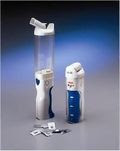
But perhaps the biggest hurdle is the size of the inhalation device. As big as a can of tennis balls, it’s not exactly something you’d like to whip out at a restaurant. Pfizer tries to dispel that notion in the commercial: a man is shown holding and closing the device while having a meal with a friend—but in such a way as to disguise the actual size of the thing.

The size problem isn’t new: as reported by The RPM Report, during FDA’s 2005 advisory committee review of Exubera, one panelist noted that despite the increase in “metrosexuals carrying purses,” the inconvenience of carrying the device may actually prevent patients from complying with their treatment regimen. Embarrassment also may be a factor: as the Pharma Marketing Blog points out, the inhaler looks like a large bong.

It’s also interesting to note that the commercial doesn’t ever discuss the convenience factor of inhaled insulin—in fact, the word “needle” is never uttered. But maybe that’s because for the majority of patients, inhaled insulin can’t replace injections. Instead, Pfizer sells Exubera as a treatment to help control blood sugar levels.

Inhaled insulin should be an easier sell, and with a number of other inhaled insulin products coming down the pike (all with smaller inhalation devices), Pfizer is running out of time. It’s a slick commercial, but it’s doubtful that the introduction of DTC ads for Exubera will help Pfizer overcome device envy.

But hey, don’t take our word for it: judge for yourself. To see a clip of the broadcast ad, click here, and tell us what you think.

Monday, October 20, 2008

Long Tail of the Law

Drug products are evolving long tails and they are going to carry costs for firms well into the future.

Drug safety commitments in the US and in Europe are developing into regulatory requirements that will stretch out for years, requiring time and resources from companies even after the products may have lost all commercial viability.

Two recent examples demonstrate this quirk of regulatory evolution.

Pfizer’s inhaled insulin, Exubera, was pulled from the market a year ago in October 2007; but a year later, FDA is imposing a formal Risk Evaluation & Mitigation Strategy on the product. That’s the authority that the agency received for controlling products in the post-market from the FDA Amendments Act in September 2007.

An article in “The Pink Sheet” (October 13) delves into the reasons for FDA’s belated regulatory requirements on the discontinued product. FDA says it expects Pfizer to undertake a supplemental NDA filing for Exubera to develop a medication guide and a communications plan to set a precedent for future inhaled insulin products that might try to come to market citing Exubera as a reference.

The legacy regulatory requirement is going to likely to cost Pfizer time and effort and stretch well past the commercial demise of Exubera.

FDA is also using its new legislated authority to further require Pfizer to submit data from Phase IV commitments. When Exubera was approved, the Phase IV commitments were part of an agreement reached by the company with FDA to conduct seven studies on 85,000 patients. FDA is converting that agreement into a mandatory requirement for six of the studies.

Pfizer says the studies have been terminated. FDA explains that it added the beyond-the-commercial-grave requirement to assure that any data that was collected by the sponsor would be submitted. As FDA says, “while the completion of the trials was not a mandate, the submission of data was.”

Shire also has had a recent experience with a withdrawn product that demonstrates the lingering costs and obligations even after a product is off the market.

At mid-year, Shire said it was discontinuing its overseas erythropoietin product, Dynepo, as a result of lower prices for the EPO class due to the introduction of biosimilars at prices 20-30% below branded levels. The company did not mention the general troubles in the ESA class from declining indications but that could not have helped the commercial prospects.

For commercial reasons, Shire decided to call it quits. But for regulatory reasons, the product will have lingering costs.

According to a late July briefing by the company on first half results, Dynepo will cost Shire about $6.5 million to warp up previous post-market study requirements. The company explains that “the costs are part of the commitments made to participants, centers, doctors, and clinical staff.” Like Pfizer, the company does not plan to finish the studies, but costs remain.

The situation of continued studies after market withdrawal is not new. With the post-market becoming more heavily regulated and with FDA having authority to require work (not just request it), companies should be prepared for long tails dragging behind dead products and holding back operating results.

Friday, October 19, 2007

Exubera: Fun with the Classics

(With apologies to Joseph Heller.)

… We will courtmartial you if you turn our deal down, even though it would raise a lot of questions and be a terrible black eye for Colonel Cathcart Kindler.

Colonel Cathcart Kindler winced at the words “black eye” and, without any apparent premeditation, hurled his slender onyx-and-ivory cigarette holder Exubera inhaler down viciously on the wooden surface of his desk. “Jesus Christ Hank McKinnel!” he shouted unexpectedly. “I hate this goddam cigarette holder Exubera inhaler!” The cigarette holder Exubera inhaler bounced off the desk to the wall, ricocheted across the window sill to the floor and came to a stop almost where he was standing. Colonel Cathcart Kindler stared down at it with an irascible scowl. “I wonder if it’s really doing me any good.”

“It’s a feather in your cap with General Peckem Pfizer’s ego, but a black eye for you with General Scheisskopf the investors,” Colonel Korn informed him with a mischievous look of innocence.

“Well, which one am I supposed to please?”

“Both.”

“How can I please them both? They hate each other. How am I ever going to get a feather in my cap from General Scheisskopf the investors without getting a black eye from General Peckem Pfizer’s ego?”

“March Biogen.”

“Yeah, March Biogen. That’s the only way to please him Pfizer’s ego. March Biogen. March Biogen.”

Wednesday, April 18, 2007

More Insulin Problems

Pfizer isn't the only company having problems with an alternative delivery form of insulin.

Emisphere Technologies has been working on oral insulin for more than a decade--and finally its board got fed up.

In October 2006, the company reported disappointing Phase II results with its oral insulin--no difference from placebo. The stock tumbled by more than 50%. By January the long-time CEO, Michael Goldberg, MD, was out. The firing was led by Mark Rachesky, who joined Emisphere's board in 2005 when his fund, MHR Institutional Partners, loaned the company $15 million, later changing the straight debt to a convert--at $3.78 a share. That's unprofitably close to the company's current stock price (and less than half the Emisphere price when Rachesky did the covert deal).

Goldberg was blamed for poor execution of the key trial (as well as the fact that the company hasn't made much progress in its nearly nineteen years of life). The original trial design called for the oral insulin to be tested in very sick but stable patients; to accelerate the enrollment, the company apparently relaxed the criteria. In a subsegment look at patients who met the original criteria--an often unreliable analysis--oral insulin apparently did perform well. But now the company needs a new trial to prove the point. And this isn't the first trial that wasn't well executed: its oral heparin test was hurt by a poor liquid formulation whose taste turned off patients.

The company is by no means dead--it's managed to hire a new CEO, Michael Novinski, the former president of Organon USA. And it's brought on a board of big-name diabetologists to advise it on trial design and execution. It's got a new formulation with apparently three times the absorption of the older version--thus reducing cost-of-goods and increasing patient convenience.

But oral insulin won't win on convenience. And it won't win by eliminating the pain of injections. New smaller needles make taking insulin relatively painless. The big advantage will be eliminating embarassment, says one insider: "What diabetics hate is at a restaurant having to pull up their shirt and stick themselves in the stomach with a needle." Exubera doesn't solve that problem: puffing on a big device is no less inconspicuous than sticking one's belly with a needle.

A pill should be a lot more acceptable. And yet that's not enough. The market for insulin reformulations is being shaved by better needle technology and by new products, like the injectable Byetta and the oral Januvia. And as Pfizer is learning from Exubera, managed care doesn't want to pay for convenience. Emisphere's product, to be truly important, will have to show better outcomes. It may be able to get on the market by showing equivalency to injectable insulin--but to make Emisphere, and oral insulin, a success, it will need to keep diabetics healthier, too. That's a much more expensive task than most proponents of oral protein delivery ever figured they'd have to accomplish.


Friday, March 07, 2008

Dead AIR?

Alkermes said today that it expects Eli Lilly to discontinue the companies' AIR Insulin collaboration:

Lilly has informed Alkermes that it is evaluating its business case for AIR Insulin and Alkermes expects Lilly to make a decision to discontinue the program in the next week. Alkermes is not aware of any safety, efficacy, or manufacturing issues that have arisen regarding AIR Insulin since Lilly’s last public update on the program.

Loyal IN VIVO Blog readers won't be completely shocked--over the past few months in our writing and reporting on the demise of Exubera we've noted repeatedly the current difficulties associated with drug delivery in general and the problems with succeeding with inhaled insulin specifically.

We expect Lilly is treating Alkermes a bit better than Pfizer treated Nektar--perhaps avoiding some Howard Robin-esque harsh words and a $135 million "i'm sorry" payment.

Since this is Lilly's proprietary insulin, Alkermes presumably isn't even getting back a partnerable asset on the cusp of finishing Phase III development, with a means of delivery much more discreet than the much-maligned Exubera inhaler.

Your move, Mannkind.

UPDATE: It's official, says Lilly.

Friday, April 11, 2008

Deals of the Week: Billions!

Though we were treated to a few interesting deals, some of the week's news was kind of grim. Particularly so with the latest development in the ongoing inhaled insulin saga. Nektar and Pfizer said this week that there was an increased number of lung cancer cases in the Exubera arms of its clinical trials compared to placebo. The figures were small--6 patients on Exubera vs 1 placebo--but the news was enough to rattle investors in the remaining inhaled insulin player out there, Mannkind.


Meanwhile, GSK was rapped on the knuckles by FDA over some faulty Avandia record keeping. And we learned why Big Pharma management is hanging onto strategies left over from Nirvana's heyday.

At least for the first time in a while, the big industry news for the week involved some creative M&A, with Novartis and Takeda pulling the trigger on multi-billion dollar deals, and we're here to add our $0.02. Of course those of you who are all hopped up on cognition enhancers are excused from today's lesson--go figure out what's reflected in Dick Cheney's sunglasses; the rest of us slow witted folks will carry on to ...

Takeda/Millennium: $8.8 billion is a serious chunk of change for Takeda to pay for the one-time genomics pioneer and current Velcade-driven biotech, as we pointed out yesterday. But the $25/share offer, at lofty premium to Millennium's recent share price reflects the ongoing demand for new products by Big and mid-sized pharma in general and Takeda's drive to be a world-class oncology play in particular. We leave it to you, dear reader, to click here to read yesterday's more extensive summary (or, if you're reading this via our free email subscription, scroll down).

Novartis/Alcon/Nestle: The biggest deal of the year so far belongs to Novartis and Nestle. Unlike last year's big-bucks transactions (AstraZeneca's acquisition of MedImmune and Schering-Plough's acquisition of Organon) this deal isn’t about biologics or specialty medicine; nor, indeed, is it about pharma, as traditionally defined. It’s not an acquisition, either (yet). The $11 billion (half of which will come from cash, half from short-term debt) buys Novartis a non-controlling share in Alcon, no more. Or, should we say, no more for now: in an 18-month window a couple years down the road Novartis will have the option to buy (and Nestle will have the option to put) another 52% stake in the ophthalmology play at a predetermined price of $28 billion. The deal presents a very different solution to the industry’s growth issues then yesterday’s consolidation schemes. It’s about increasing exposure to consumer health care and private-pay markets in a high-growth, specialist area. Alcon, whose surgical and consumer health businesses make up over half of its $5.6 billion in annual revenues, reduces Novartis’ overall exposure to Medicare and payor-driven price pressure. Alcon represents a very new kind of pharma deal: with pharma re-defined to include consumer care and surgery as well as branded drugs; and, for the first few years at least, with the buyer remaining an arm’s length investor. But for Novartis’ own investors, there remains another question: if Novartis can’t – at least in the describable medium term – define how the two companies are going to add strategic value to each other, isn’t it in effect accumulating an investment portfolio that investors themselves might prefer to manage? (Excerpted from Melanie Senior's forthcoming IN VIVO article.)

Paion/Cenes: Yet another example of the woes that have befallen UK biotech, Germany's Paion AG has taken out the pain-focused Cenes Pharmaceuticals for a mere ₤10.9 million--incredibly a 32% premium to the firm's value at market close the day before the deal. Cenes is one of a handful of beleaguered UK biotechs that are either up for sale or in the process of getting dismantled and sold for parts. The company's lead project, M6G for post-operative pain, is in Phase III; a second project, CNS5161 for neuropathic and cancer-related pain, is in Phase II. Paion's recent past hasn't been trouble free--it's lead compound desmoteplase for stroke hit a snag in Phase III and US partner Forest abandoned ship last year--and analysts may be asking themselves what the addition of a few tough-to-license-been-around-the-block compounds will do for the German group's prospects, despite the low price. (Fun M6G Fact: the compound was once the subject of a Cenes/Elan 80%/20% JV, the structurally-creative and ultimately dismantled off-balance-sheet entities known inside the Irish drugmaker as "Green Rabbits.")

PDL BioPharma: Finally, chalk something up to activist shareholders after all. PDL BioPharma yesterday declared a $500 million special cash dividend--$4.25 per share--and said it would spin out its biotech R&D operations from the royalty stream from its antibody humanization IP. We noted the company's pyrrhic victory over vocal investors calling for the company's sale just last month when PDL took itself off the market and restructured--though it seems those investors that stuck around are seeing some cash for their efforts in the end. PDL says the newco will be capitalized with about $375 million, enough to run for roughly three years given existing cash burn. The antibody royalties--expected to be $240 to $260 million this year--may be monetized if not distributed to shareholders on an ongoing basis.

Thursday, November 01, 2007

Press Release of the Week: Drug Delivery!

Most of the releases we receive are from dedicated health care PR pros. If the topics aren't right up our alley, then they tend to be at least tangentially related to what we cover. But yesterday we got a doozy. Put it this way: we never thought we'd be considering the question "Which Air Cannon is right for me?" At least not during our day jobs.


Although this latest bit of press-release inspired amusement is right out of left field, but it did inspire us in a we-thought-everyone-was-done-making-fun-of-Exubera-but-maybe-not sort of way. What you see up there on the right is an "Air Cannon." It's hard to imagine the PR guy who is pitching a biopharma-medical device magazine on a story about these babies really thinks it'd be of much use to, say, Pfizer or Medtronic (or for that matter thinks much at all), but we gave it a shot:
  • next-generation Exubera inhaler
  • tired of waiting for your prescription to be filled at the pharmacy? Just give the pharmacist your coordinates and wait for your statins to land on your front lawn
  • spice up panel discussions by shooting "My vice president of business development went to Pharmaceutical Strategic Alliances and all i got was this lousy T-shirt" shirts into an unsuspecting audience
So any of you PR folks out there who can occasionally find us unresponsive ... take note. When Air Cannons, Inc. Provides Creative Ways to Whip Crowds into a Frenzy shows up in the old in-box, we're all over it.

Tuesday, January 15, 2008

Novo Scraps Inhaled Insulin

The dismal failure of Pfizer/Nektar’s Exubera loudly called into question whether inhaled mealtime insulin was commercially viable at all.

The answer—surprise, surprise--is that it’s not, at least according to Novo Nordisk. The Danish firm announced last night that it was scrapping its Phase III inhaled insulin program, which uses Aradigm’s AERx liquid aerosol system.

The slight irony here is that the (already painfully delayed) AERx program was killed because it failed to show “sufficient clinical or convenience benefits” over the various insulin analogs already available to patients—including, prominently, those using Novo’s own FlexPen, a discreet and simple-to-use injection device.

Novo’s decision doesn’t mean that other late-stage inhaled insulin wannabes, including Lilly/Alkermes and MannKind will follow suit. But as we argued in this IN VIVO feature, Pfizer’s snafu means the going will be tough. Novo was at best going to be third to market, and the brick-sized device (far larger than Lilly/Alkermes’) had long been recognized as a problem—that’s why Novo had begun a next-generation program in-house. And the product required refrigeration.

So the writing was on the wall. In fact it’s somewhat of a relief that Novo has finally put this long and expensive project to bed, taking a non-recurring cost of about $260 million (DKK 1.3 billion), which will hit 2007 operating profit. Mads Krogsgaard Thomsen, CSO and EVP of Novo Nordisk had already last year acknowledged that “this is not going to be a huge product.” Now it won’t be one at all.

Not that this spells the end of pulmonary delivery for Novo. The problem with all of the current batch of inhaled insulins, according to Thomsen, is that they’re short-acting, meal-time insulins that must be taken alongside basal insulin—the ones available with tiny, pain-free injection devices. Exubera's failure showed that patients (and payors) understandably, were reluctant to add onto that regime something even more complex. And Pfizer, for reasons we outline here, failed to reverse the treatment sequence by persuading physicians to prescribe insulin earlier on.

So given that meal-time insulin is typically a fifth or sixth step in diabetics’ chain of medication (which progresses from diet-and-exercise, through oral anti-diabetic drugs to GLP-1s and then basal insulin) why did drug companies focus their inhaled efforts on this and not basal insulin? “Becase we had no choice,” says Thomsen, technological limitations meant that prandial insulin was the only one which could be formulated for inhalation.

Those limitations are no longer, he continues. Novo now intends to focus on developing pulmonary forms of basal insulin and GLP-1. We outlined in a feature last summer the importance of glucagon-like-peptide (GLP-1) analogs (and Phase III GLP-1 analog liraglutide in particular) to Novo’s business, so it’s no surprise that GLP-1s feature in the firm’s fresh set of pulmonary delivery plans.

These are a way from the market, however—liraglutide itself can’t be formulated for inhaled delivery because its half-life is too short; nor can Lilly’s first-to-market Byetta. Still, “we’re not starting from scratch, either; we have an inhaled, bioavailable GLP-1 candidate in late-preclinical trials,” asserted Thomsen on a conference call following today’s news.

Novo’s shares were down nearly 4% this morning; chances are Aradigm might have a bad day when the US exchange opens. But Novo’s put on a brave face. “We’re going from being followers in a commercially unattractive area, inhaled meal-time insulin, to leaders in a highly commercially-attractive area—a new generation of inhaled long-acting basal insulins and GLP-1 analogs.”

Friday, November 16, 2007

Deals of the Week: The Break Up to Make Up Edition

Break up to make up, that's all we do
First you love me then you hate me, that's a game for fools.


Has Carl Icahn soured on BiogenIdec, the biotech that last month offered itself up to the largest bidder only to find--so far--no takers? Appears so. His new interest, as we wrote about here, is Genzyme. Maybe. So, in honor of Icahn's roving eye--and to celebrate a possible fairy tale ending for Roche and Ventana Medical Systems--IN VIVO Blog brings you the latest Deals of the Week: The Break Up to Make Up Edition.

First the break ups:
  • Pfizer/Nektar: Tired of dismal sales and bong jokes, Pfizer announced last month that its marriage to inhaled insulin developer Nektar Therapeutics was over. Now comes the divorce settlement. In a joint statement issued Tuesday Nov. 13, the two companies announced they have “resolved all outstanding contractual issues." As part of the deal, Nektar gets full rights to Exubera and a cool $135 million for its faith in Pfizer's marketing genius. In addition, Pfizer will continue to support on-going Phase IV clinical trials, while Nektar shops the product around. Just one day later, at a media R&D love fest, Nektar's CEO Howard Robin told the press that he was "very very pleased" with the deal. "[Pfizer CEO] Jeff Kindler and I spent a lot of time on this arrangement and we remain friends to this day," he said. Aww, how sweet. Bet the folks working on the two companies' Phase II partnership for a pegylated human growth hormone are relieved the split was amicable. We'll have more on the future of inhaled insulin in an upcoming IN VIVO article. Meantime check out this story from our May issue, which highlights many of marketing and clinical challenges associated with Exubera.


  • AZ/ Infinity: This week Infinity and MedImmune (now a wholly owned division of AZ) also called it quits, partially, nixing their agreement to develop small molecule inhibitors of the Hedgehog cell-signaling pathway (the firms' collaboration around Hsp90 continues). As part of the un-deal, which is the result of some change-of-control-provision-inspired negotiations, Infinity gets back rights to the lead candidate, IPI-926, and AZ/MedImmune agrees to shoulder 50% of the development costs through mid-2008. Infinity can also opt-in on AZ's own Hedgehog program through initiation of Phase III trials. Here's the press release.


  • Novartis/Speedel: OMG did they break up? Okay, it's not really fair to call the recent dispute over Tekturna/Rasilez payments a break-up. Think of it as a lover's spat. The two companies made news Thursday Nov. 15 when Speedel cried foul, saying it hadn't received monies related to the new blood pressure drug. In what quickly escalated to a "he said, she said" scenario, Novartis issued a statement saying it believed it had fully complied with its reporting duties to Speedel. Alice Huxley, Speedel's CEO, is confident the two companies will be able to work things out: "We trust that this disagreement can be amicably resolved as soon as possible," she said. From Speedel's point of view, they'll need to make up soon. The company expects to burn through 75 million euros in 2007 so it could do with an infusion of cash. (To get Novartis's perspective on Speedel, check out this interview with CEO Dan Vasella from earlier this spring.)


Life was rosier in device land, where we highlight these match-ups from the week:


  • NeuroMetrix/Cyberkinetics: The two companies announced the formation of a JV to develop and commercialize a product for peripheral nerve injury based on Cyberkinetic’s Andara electrical stimulation therapy. For NeuroMetrix, which has struggled to develop non-invasive diagnostics for peripheral neuropathy, the JV gives it entrée into the neurostimulation area. For Cyberkinetics, the deal allows it to expand its use of Andara beyond the ultra-niche market of acute spinal cord injuries. Under the terms of the deal, NeuroMetrix will provide up to $2 million to fund the first two years of the joint venture and has first rights to commercialize the Andara platform for spinal injuries, as well as the inside-track if it decides to purchase Cyberkinetics. (For more background on the two companies look here and here.)


  • Synthes/N Spine: Synthes has a whole lotta love for the medical device maker N Spine (profiled in the July/August issue of START-UP). This week, Synthes announced it was spending $30 million up-front and as much as $45 million in milestones and earn-outs to acquire the ortho start-up, which develops fusion and stabilization motion-preservation devices for the lumbar spine. Other terms of the deal, including the date of closing, were not disclosed.


  • Pfizer/Coley: Finally, back to biopharma, where the word just came across the wire that Pfizer is buying Coley Pharmaceuticals for $8/share, or $164 million. Consider this the bonus make up and break up deal. The writing was on the wall that Coley was on the block since June, when Pfizer backed out of a deal the two companies had on a lung cancer therapy. The reason? An independent data safety monitoring committee's verdict that a mid-trial analysis suggests the compound plus chemotherapy works no better than chemo alone. Since then the firm has been trading at a market value not too different than the value of its cash on hand. We'll try to have more on this deal after the companies' conference call.

Thursday, August 13, 2009

Financings of the Fortnight: Follow-On Fever

This week's IPOs from Cumberland Pharmaceuticals and Emdeon may have garnered all the headlines. But for portents of a future biotech IPO market--as opposed to a market in IPOs for profitable, less risky companies like Cumberland and Emdeon--look instead to what seems to be an all-of-the-sudden-white-hot follow-on market.

But one more word about IPOs before we get to the FOPO-fever. We don't mean to suggest that this week's pioneers have zero impact on or relation to investors' appetites for riskier drug discovery and development plays. For now any connection is likely psychological, but not unimportant: investors are regaining their taste for new life-sciences companies. Soon enough they'll move down the risk continuum. One correspondent suggested to us that it was like eating dry roasted peanuts: "Once you start ...". We agree, but argue that VCs need to be building more pistachio-like companies if they really want to get the ball rolling.

These days though, investors are positively nutty (sorry) about biotech follow-ons. Since our last FOTF column two Thursdays ago--which highlighted FOPOs from HGSI (net $357mm) and Orexigen ($75mm)--the floodgates have opened. We've chosen to highlight Micromet and Mannkind (see below), but there were others as well, to the tune of about $600 million worth of follow-on shares sold. And that doesn't include PIPEs. At least a dozen deals in the past two weeks brought in a total of about $100 million.

Some of the big 'uns: This morning Seattle Genetics announced underwriters had exercised their overallotment option, bringing the biotech's gross haul to $136 million. Onyx raised at least $120 million (plus at least $200 million in convertible debt). And Inspire Pharmaceuticals grossed $115 million.

The prices on these deals were pretty good too; none of the firms that raised big money were languishing near 52-week lows. If investors' appetites for biotech follow-ons remain unsated, IPOs of R&D focused companies may not be too far behind.

That said, we're not holding our breath for a flood of S-1s. But investor interest in biotech shares has other, more immediate, ramifications beyond increased underwriting revenues for investment banks. As biotech capital markets begin to thaw, pharmaceutical acquirers may become more active, sensing a market that has hit bottom and realizing that biotech prey (and the prey's investor syndicates) may eventually have other exit options. More M&A will generate more interest from investors. And thus, the cycle begins again.

But let's not get ahead of ourselves. For now content yourselves with ...

Micromet: With $49 million on hand in cash and equivalents, Micromet enhanced its cash position by netting $75 million from a follow-on public offering Aug. 4 to fund development of its pipeline of four clinical-stage antibodies. Micromet priced its offering at $5 a share on July 30 – the stock had closed trading at $5.59 the day before -- and underwriters also sold the overallotment, taking the gross haul over $80 million. The Bethesda, Md.-based biotech plans to start a pivotal trial of its lead compound blinatumomab in acute lymphoblastic leukemia next year, and two weeks ago received orphan designation for the project in Europe. It recently regained North American rights to blinatumomab from previous partner MedImmune--surely increasing its development expenses even as MedImmune continues to pay to manufacture clinical supply. Micromet also has adecatumumab in Phase II for colorectal cancer with partner Merck Serono. Each antibody is also in Phase I in a different indication: non-Hodgkin’s lymphoma for the former and metastatic breast cancer for the latter. This is by far Micromet's biggest fundraising haul, reflecting the maturation of its BiTE technology pipeline. After going public through a reverse merger with CancerVax in 2006, Micromet raised cash three times through PIPE deals. Most recently, it sold 9.4 million shares at $4.25 a share (an 8% discount) to funds including Index Ventures Growth, Abingworth, DAFNA Capital Management and Merlin Nexus, grossing $40 million. A June 2007 PIPE brought back $25.3 million and a July 2006 deal yielded $8 million.--Joe Haas

MannKind: Not giving up on inhaled insulin any time soon, MannKind has just raised $62.2 million in a follow-on public offering of 8.4 million shares including the full exercise of the overallotment. Chairman and CEO Alfred Mann, who has previously invested over $900 million of his own money into the company’s fast-acting insulin candidate Afresa according to an interview last year with IN VIVO, bought one million shares for $8.11 (the price equal to the market value immediately before the FOPO) while the remaining stock was sold for $7.35/share. Both prices are pretty good considering that in early March shares were trading around $2 and have gradually increased since MannKind submitted the NDA for Afresa on March 16, reaching a high of $8.54 on June 25, right around the time the company completed the purchase of Pfizer’s bulk insulin inventory for $3 million. Since it went public in 2004, MannKind has raised a ton of cash—$884 million, including the present deal-- through private placements and follow-ons. Most notably it brought in $401 million from a 2006 FOPO of 23 million shares, at the much higher price of $17.42 (at the same time it raised $115 million in debt). Now that Exubera has failed, and without companies like Lilly or Novo Nordisk in the picture, MannKind is the only firm left pursuing a late-stage inhaled insulin (MAP, which coincidentally also completed a follow-on recently, and Vectura/MicroDose each have candidates in Phase I). Afresa appears to have a tough road ahead and it’s clear the drug will require a REMS in light of the Exubera fall-out, as well as mandatory post-marketing studies if approved. MannKind remains in the hunt for a partner.--Amanda Micklus

Constellation Pharmaceuticals: Epigenetics player Constellation Pharmaceuticals made news this week, pulling in the third tranche of its Series A and hiring a new CEO, Mark Goldsmith, to replace acting chief and Third Rock Ventures Partner, Mark Levin. The biotech, which formed in 2008 with great fanfare, raised $14.8 million in funding from its backers last year, and closed on the remaining $17.2 earlier this month. No new investors were announced with this final tranche: in addition to Third Rock, Venrock and Column Group co-led the Series A, and Altitude Life Science Ventures also participated. The financing, which should last the company into well into 2010, will be used to push forward Constellation’s most advanced programs--still tightly under wraps—and to hire additional scientists, while building the management team. Goldsmith’s acceptance of the top spot marks the beginning of the long-promised moves by Third Rock partners away from the day-to-day management of the company. Goldsmith most recently was an entrepreneur-in-residence with Prospect Venture Partners, after stints as SVP of Genencor and CEO of Cogentus Pharmaceuticals, which officially closed shop earlier this year. A scientist-physician trained in microbiology and immunology, he’s had to immerse himself in the field of epigenetics, an emerging field of science that aims to understand how misregulation of a second layer of genetic information—the packaging of DNA into chromosomes—can result in human disease. His near-term goals, he says, are to advance the top projects (sorry no additional details yet but the focus is still on histone methyltransferases and histone demethyltransferases), enhance the platform (which he calls a product engine), and “put in place one high quality strategic corporate alliance.” He’ll have his work cut out for him. In addition to Constellation, another well-financed start-up, Epizyme, is gunning for the top spot as “the epigenetics company.” Like Constellation, Epizyme is also built around the discoveries of leading scientific thinkers, boasts top-tier managerial talent, and has A-List backers. (For more on both companies, check out this feature from March 2009's START-UP.) Beyond these two companies a number of start-ups are attempting to develop inhibitors to histone deactylases (HDACs), an enzyme family also implicated in epigenetics. And coincidentally the start-up Acetylon landed roughly $7 million in financing this week as well.--Ellen Foster Licking

XDx: Perhaps motivated in part by Human Genome Sciences’ recent positive Phase III data for lupus candidate Benlysta, Bristol-Myers Squibb last week led a $14.4 million venture round for molecular diagnostics company XDx. Earlier this year, Bristol partnered with XDx, tasking the Brisbane, Calif., biotech to identify biomarkers for systemic lupus erythamatosus. Bristol's Orencia (abatacept) is in Phase III trials for lupus, a disease that hasn't seen a new therapy in generations; a companion diagnostic could give Orencia a market edge if it is approved for lupus (it's currently sold for RA). XDx, which markets the AlloMap HTx assay to help identify heart transplant patients with low probability of organ rejection, has been working on applying its molecular expression testing technology to lupus since licensing gene expression intellectual property from the University of Minnesota two years ago. In addition to Bristol, the early-August round was financed by XDx’s existing investors: Burrill Venture Capital, Duff, Ackerman & Goodrich, Integral Capital Partners, Intel Capital, Kleiner Perkins Caulfield & Byers, Sprout Group, and TPG Biotechnology. XDx filed an IPO in October 2007 but withdrew it last September citing poor market conditions; the current financing is its seventh venture round. Between December 2004 and May 2007, the biotech raised approximately $72 million in Series D, E and F financings. XDx said it will use the Series G proceeds to support new and ongoing R&D projects and commercial activities related to AlloMap. CEO Pierre Cassigneul said the firm hopes to expand the market for AlloMap, which it says can reduce the need for invasive biopsies and potentially lower dosing of immunosuppressant drugs in transplant patients, and predicted the firm would break even financially next year.--Joe Haas

image from flickr user Joe Seggiola used under a creative commons license

Tuesday, August 21, 2007

Old Medicine in New Bottles

Two excellent posts from the Wall Street Journal’s Health Blog and Pharmalot noted speculation from Credit Suisse on a Pfizer bid for Wyeth (we detail that company's pipeline troubles here).

Catherine Arnold, who wrote the original report, is one of our favorite analysts and anything she writes we take seriously.

But let us put the acquisition in the context of some other big decisions Pfizer needs to make.

Since the simultaneous resignation announcements of Alan Levin and John LaMattina, Pfizer has to soon appoint a new CFO and a new research boss. We’re speculated before here and here about who Pfizer might turn to for R&D. The finance choice could be complicated by what we’re told is the likely retirement of David Shedlarz, Pfizer’s vice chairman as well as Levin’s boss, Pfizer’s former CFO, and Kindler’s one-time rival for the top job. A Shedlarz departure would further upset an investment community utterly uncertain about Pfizer’s direction.

But at this point, Pfizer shouldn’t be worrying about Wall Street (it ain’t as if, with $22 billion in cash and short-term investments on its balance sheet, Pfizer needs to sell stock). Instead, the choices Pfizer makes for the R&D and finance jobs will say a lot about just how much strategic change the company’s CEO and board believe they need to make.

Would, for example, they choose a finance boss who would advocate for a more radical use of Pfizer’s cash – equity investments in several dozens of biotechs, for example, or even a Roche-Genentech like transaction? Or, even more radically, with a splintering of Pfizer into a number of quasi- or indeed completely independent therapeutically focused companies, perhaps majority held by a Pfizer holding organization? Or will the new boss simply placate shareholders short term by continuing to increase the dividend (at 4.9%, already the highest in the industry, says Goldman Sachs) and repurchasing shares?

Now back to Wyeth. As we work on a story about trends in pharmaceutical dealmaking for the September issue of IN VIVO, we consistently hear about the revival of interest in major acquisitions—that the problems of Big Pharma are now so severe that CEOs are accepting meeting requests with investment bankers that, just a few months ago, they’d have ignored.

But such deals are difficult given that the product overlap among companies is more obvious to the FTC than ever. And having to sell the overlapping products is what kills value in these deals.

That’s why biotech acquisitions are so interesting. The product overlap is usually minimal and biotechs deliver biologics capabilities that Big Pharma badly wants. A metric of that desire: the highly competitive auction that ultimately delivered MedImmune to AstraZeneca for $15.6 billion.

Theoretically, Wyeth brings similar biologics capabilities to Pfizer that MedImmune brought to AZ, along with a host of non-overlapping small-molecule drugs.

And yet we remain skeptical that such a deal is either likely or in the best interests of either company’s shareholders. Sans CFO and R&D boss, Pfizer shouldn’t embark on their third gigantic integration effort in less than a decade. Wyeth’s biologics business will do at least as well under Wyeth as it will under Pfizer (let’s remember just how underwhelmingly Pfizer has performed marketing biologics like Exubera and Rebif). Meanwhile, any biologics successes will boost Wyeth’s $22 billion base of revenues far more than Pfizer’s $47 billion. Indeed, Wyeth will resist Pfizer’s blandishments, particularly if an offer comes wrapped in Pfizer’s shares.

And if Pfizer presses its case, as it did with Warner-Lambert and Pharmacia, its own investors could easily rebel: why try to cure a disease, they might reasonably ask, with the same therapy which has consistently failed to work?

Tuesday, January 01, 2008

The Top Ten IN VIVO Blog Posts of 2007

IN VIVO Blog started up in earnest about eight months ago, and in that time we've racked up hundreds of posts covering a wide variety of topics, like Big Pharma's pipeline troubles, biotech exit strategies, financing, drug regulation, managment succession, and the Philadelphia sports scene. But, you're wondering, what are our favorites? Well, reader, wait no longer. Because to jumpstart your workayear life we've completely unscientifically collected our Top Ten posts of 2007.


You'll notice that there are well more than ten posts below, but we've handily crammed them into a list of ten topics. It's our way of saying "Happy New Year!" or maybe "We can't count!"

10. The Importance of China: we spoke to VCs eager to invest there, we covered a few harbingeresque deals, and we analyzed the country's role as a gene therapy hotspot.

9. RNAi: We broke the news about the next-generation RNA interference company Dicerna, and followed up with news of its Series A & new competition from Nastech spin-out MDRNA. We also covered Alnylam's spectacular platform deal with Roche and AZ/Silence's smaller but important-to-the-biotech alliance.

8. Inhale, Exhale: We had a little fun with Pfizer's inhaled insulin Exubera troubles, like much of the rest of the blogs out there, and we also came through with some more serious content: the Gecko-esque play by Sanofi-Aventis, the ads that couldn't make enough people "get it," and an early look at the numbers that led to the drug's demise. Finally we unpacked some taken-out-of-context quotes that created just one of the several stories this year involving ADA president John Buse, MD.

7. Win Some, Lose Some: Carl Icahn succeeded in getting MedImmune on the block and sold to AZ for a handsome price. But his plans to put Biogen Idec on the block (see more below, in #1) and interest in Genzyme failed to achieve the desired M&A result, so far.

6. Diagnosis Negative: Icahn wasn't the only party rebuffed. Roche spent most of the year getting turned down by Ventana, which played down the pharma's $3 billion offer multiple times. First they said please, then highlighted its belief in the importance of its diagnostics business by promoting its dx head Severin Schwann to CEO of the whole Roche Group. We suggested soon thereafter that Ventana should do the deal, and in late November they indeed decided to at least think harder about it.

5. R&D: As the attempted revitalization of Big Pharma's R&D machines continues we observed that it is business development effectively displacing much of the research infrastructure and decisionmaking, for example at Johnson & Johnson, where that company's drug business has made its chief licensing honcho Tom Heyman head of discovery for the biggest R&D operation in its newly reorganized three-headed drug business. We also predicted, successfully, who might take over as Pfizer's R&D chief, and who the drugmaker could have considered instead.

4. Isn't that Special? We've observed several times the stretching and misappropriating of the label "specialty pharma," and in this post spelled out why many of these would-be specialists might be barking up the wrong tree.

3. Capital Connections: IN VIVO Blog would be less informative and well rounded without our colleagues from The RPM Report, who've written some brilliant posts regarding regulation and policy (not to mention biotech CEO entourages). Lets start with FDA and CMS teaming up against erythropoietin marketers J&J and Amgen, and our series of posts on the subject. And then there's our coverage of the Avandia situation, FDA's leadership, and drug safety.

2. Birth of a Hybrid: Bristol-Myers Squibb's innovative dealmaking this year drew our attention in a handful of posts analyzing the company's business model and dealmaking strategy. First it partnered two late-stage diabetes drugs with AZ, and followed up quickly with a monster deal with Pfizer on its anticoagulant candidate apixaban. Not quite a biotech, not quite a Big Pharma. As we discussed at our PSA conference in September, welcome to the hybrid future.

1. Biogen Idec: Shortly after we broke the news that Biogen Idec was retaining bankers to explore a potential sale of the company, we noted why such a sale, at the company's inflated valuation, wouldn't (or shouldn't) happen.

We look forward to the new year & hope you'll stay tuned. Thanks for reading.

Friday, October 05, 2007

How Much Does Pfizer Want to Succeed?

Yesterday, Pfizer’s Jeff Kindler ended the speculation around what we think is his most important appointment, elevating development chief Martin Mackay to the top R&D job (an appointment, by the way, which we predicted--here).

As the WSJ’s health blog pointed out, Kindler has chosen managerial continuity. If Mackay does some of the requisite R&D reforming, it will at least come from within the Pfizer context – and theoretically won’t generate the antibody response an outsider’s initiative would (like Peter Corr’s attempts when the former Warner-Lambert chief was briefly R&D boss).

Second, Mackay is not John LaMattina. He clearly recognizes the need to change Pfizer—as he’s noted to IN VIVO and as he’ll explain at Windhover’s FDA/CMS Summit on December 6.

But two big issues will determine how successful Mackay can be—one more or less in his control; the other out of it.

The first: just how far is he willing to go in reforming Pfizer R&D? A $7.5 billion annual cost, it is vastly too expensive for what it produces. And it’s got too many people working on too many projects to manage effectively.

To succeed—our view, of course--Mackay will have to reduce headcount; start and objectively judge experiments in development (like its Project Fisher, a parallel to Lilly’s Chorus division); figure a way to push biologics into the mainstream of Pfizer’s discovery and development and create systems for monitoring the likely but as yet unknown safety challenges they’ll present; push for independent (and probably independently traded) R&D organizations, on the models of Genentech or Theravance, to whose output Pfizer will have post-Phase II options; and figure out ways of partnering Pfizer’s own de-prioritized drug candidates.

Among other things. But that’s enough for right now.

Problem is: Pfizer’s commercial and financial sides (including its CEO) will have to accept and adapt to the kind of output a revitalized Pfizer R&D must generate—high-value specialty drugs, including biologics. That will mean a smaller, more focused commercial Pfizer--or even Pfizers (we’re all for disaggregation and spinouts—therapeutically focused mini-Pfizers, for example). When Pfizer has followed its instincts, taking a mass-market approach to specialty drugs, it’s failed: witness the disappointing performance of Rebif in multiple sclerosis or the disaster of its inhaled insulin, Exubera.

We know and respect Martin Mackay. And we know he has his work cut out for him. But if he does his bit, Pfizer then needs to let him succeed.

Monday, August 06, 2007

While You Were Making History*

755*

IN VIVO Blog picked up on a few news items you may have missed over this fine summer weekend.
  • The irony. Foot and mouth disease is back in Britain--though so far confined to a small area near the twin Pirbright laboratories of the UK's Institute for Animal Health and Merial Animal Health (a veterinary JV between Merck & Co. and Sanofi-Aventis).

  • The agony. Mannkind is having trouble licensing its inhaled insulin product, the company's CEO said on Friday. The company's shares fell like they were whacked over the head with an Exubera bong. Wait, they were?

  • The ecstacy! OK maybe not ecstacy, because we couldn't find anything resembling such excitement. But spending $16 billion (or selling out for $16 billion) must feel pretty good. The WSJ is reporting this morning ($ sub. reqd.) that Akzo Nobel is spending its Organon cash as ICI will accept a sweetened takeover offer.

(AP Photo/Chris Carlson)

Monday, October 13, 2008

Watson’s Rapaflo Sails Through FDA: The Exception That Proves The Rule?

Analysts don’t expect much from Watson’s Rapaflo, a new entrant in the already crowded alpha-blocker benign prostatic hyperplasia category.

But if the drug is any where as good as relieving obstructed bladders as it was at breaking through the bottleneck at FDA, don’t bet against it.

Let’s recap what we know about today’s FDA. The agency doesn’t have the resources to review applications on time. (See “Talent Squeeze at FDA,” The RPM Report, December 2007.) It also has the strategic good sense to realize that now is not the time to make on-time approvals the top priority. (See “The New User Fee Rules,” The RPM Report, March 2008.)

There’s more. “Standard” review applications will receive at least one “complete response” letter before approval—if they are approved at all. (See “The Data Everyone’s Talking About,” The RPM Report, November 2007.) Inexperienced NDA filers shouldn’t kid themselves into believing they will even get a review by FDA. (See “Rejected Out of Hand,” The RPM Report, February 2008.) And products for crowded primary care indications can only come to market in the US if they have been sold forever overseas (See “When Approvable is Good News,” The RPM Report, December 2007) or if they have clear evidence of comparative advantages over existing therapy. (See “Straight Talk From FDA,” The RPM Report, November 2007.)

So, if you had asked us about Watson’s chances on Rapaflo, filed in December under a licensing agreement with Kissei, we’d have bet all our US Treasury bonds that they’d have at least another year to wait before getting the all clear from FDA.

Good thing you didn’t ask. As “The Pink Sheet” reports, Rapaflo received approval from FDA on Oct. 9—three days before the 10-month standard review deadline.

So here’s a drug entering a huge primary care market (we found one estimate that there are 115 million men worldwide with BPH) approved based on clinical trials in less than 1,000 patients. It has only minimal global market experience (two years in Japan). The sponsor—Watson—is still far better known for its generic drug applications than its new drug savvy, and there are already four brands available in the same class for the same indication.

Can this be the same FDA that just imposed a formal risk evaluation and mitigation strategy on a drug that isn’t even marketed anymore? (It is—FDA is requiring a REMS for Exubera.)

Maybe FDA read the analyst reports, which suggest Watson will have at best modest success (say $50 million a year) selling Rapaflo in a generic-first class. But we doubt it. This is definitely a clear sign that the old model FDA is completely dead yet. Product by product, division by division, there are still openings for these kind of approvals.

Though we still wouldn’t build our business on expecting too many more Rapaflo’s in the years to come…

Thursday, September 29, 2011

Financings of The Fortnight Has No Clue What Will Happen Next

Some people call it "risk/reward ratio." Some people call it "systemic uncertainty." But in the spirit of baseball's Wild Wednesday finish, in which two hallowed teams completed historic collapses and lost their playoff spots in down-to-the-wire, white knuckle fashion, we prefer to quote one of the sport's philosopher-princes, former St. Louis pitcher Joaquin Andujar. His favorite English word was "you-never-know."

The you-never-know bug bites in the strangest places. Life-science VCs have spent much of the past few years pulling back from early-stage long-term biotech bets in favor of more manageable "specialty" companies. But de-risked is a far cry from no risk, as the backers of Zogenix will tell you. As noted in our round-up below, the firm went public nearly a year ago, but the main investors have nearly tripled down on their investment, buying in at the IPO and again at the recent secondary offering as the firm's share price has fallen lower than the odds of, say, the Boston Red Sox breaking their fans' hahts one month ago.

"Wait 'til next year!" was the rallying cry of the old Brooklyn "Dem Bums" Dodgers faithful, perennial runners-up to the mighty Yankees in the golden-age 1950s; Zogenix investors could be saying the same thing. The firm hopes to file for marketing approval of its second product, a single-dose, controlled release oral formulation of hydrocodone, in early 2012, so buying low (again) could make for some well-earned last-laughing.

Speaking of comebacks, few would predict an eventual Mannkind victory in its tilting-at-windmills quest to bring an inhaled insulin to market. Not after the Exubera debacle, not after other contenders with deeper pockets and generations of diabetes experience pulled out, and certainly not after Mannkind has made life harder on itself by overpromising and underdelivering.

But with a breeze of good news at its back -- FDA has greenlighted two Phase III trials for its Afrezza product -- the firm is pressing ahead. Instead of selling stock to raise cash, it wants to test the debt market. No word yet on the rate Mannkind will pay to find the amount it wants to raise -- $370 million -- but the equity side has already weighed in, with the stock up 17% since the company made the debt announcement last week.

FOTF might have its deep-seated prejudices and sympathies on the diamond side, but unless a company is throwing spitballs at the financial rules or patient safety, we have no particular dog in anyone's hunt for financial return or regulatory approval. Though we admit, there's nothing like a good comeback story. One we're working on, which you'll see in the pages of START-UP soon, is the re-emergence of the quest for a cure for HIV/AIDS. Written off as a pipe dream most of the past decade, serious work is underway again. One big question, however, is who'll pay for it. If Big Pharma resources are shrinking and VCs are skittish, can public dollars be deployed in creative new ways?

As the king of all baseball wise men once said, the game isn't over until it's over. Unless, of course, you make too many wrong mistakes. One last piece of Yogic advice: If you come to a fork in the road, take...


Elevation Pharmaceuticals: Elevation unveiled on Sept. 26 promising Phase IIa data for its lead candidate, EP-101, a nebulized bronchodilator for moderate to severe chronic obstructive pulmonary disease. At the same time, the start-up also announced it had drawn down the second tranche, worth $17 million, of its January 2010 Series A. According to Elsevier's Strategic Transactions, that $30 million round, led by Canaan Partners, TPG Growth, Care Capital and Mesa Verde Venture Partners, was the largest A round for a respiratory-focused biotech in the past three years in the U.S. and Europe. During this time there have been 12 such financings, ranging from $8.4 million to $20 million. Elevation investors see EP-101, a reformulated version of glycopyrrolate optimized for delivery with a portable handheld nebulizer, as a blockbuster opportunity. It could provide a significant improvement in standard of care for moderate-to-severe COPD patients, who are expected to number about 1.8 million in the U.S. by the time of the drug’s anticipated market entry in 2016 or 2017, said Elevation CEO Bill Gerhart. Despite the large market, Elevation faces  commercial challenges. Therapies in the respiratory space are maturing, and competing COPD therapies from big competitors like GlaxoSmithKline (Advair), Novartis (Foradil), and Boehringer Ingelheim (Spiriva) will go generic within the next four years, raising the efficacy bar Elevation has to clear. The start-up also faces challenges from younger players like Pearl Therapeutics, which raised a mammoth $69 million Series C in 2010 to push its COPD therapy into Phase IIb. -- Joseph A. Haas and Ellen Licking

Mannkind: Despite the setbacks for its inhaled insulin Afrezza, MannKind is far from drawing its last breath. The firm said Sept. 23 it hopes to sell $370 million in debt, partly to help pay for a pair of pricey Phase III studies needed to get the drug approved by FDA. In addition to the Phase III trials, the proceeds will be used to commercialize the product and build out a manufacturing facility in Connecticut. Afrezza’s development program has been long and tortuous. After two "complete response" letters from FDA, the company said in August that the agency had confirmed designs of two Phase III trials -- one in type 1 diabetes and one in type 2 disease -- using a new next-generation inhaler developed for the product. With the complete response letters, the agency had questioned, among other things, the use of an older inhaler in clinical trials, but the company had hoped new trials would not be necessary. During a Sept. 12 investor meeting, CEO Alfred Mann said the two new trials would include about 1,000 patients and wrap up in the second half of 2012. “We have a clear path to approval now,” he said. But investors know to be wary. Company executives have been prone to overly optimistic pronouncements, such as the near-promise of a big partnership for Afrezza by the end of 2009 that never materialized.-- Emily Hayes

Zogenix: Poster child for the post-meltdown class of biopharma IPOs has to be Zogenix.The specialty delivery play, with a needle-free injectable migraine product, thought it could slip through the tenuous window that opened last year, setting its offering at 6 million shares at $12 to $14 a share. Zogenix slipped through all right, but only with the ugliest of haircuts, with buyers beating it down to 14 million shares at $4 per. Sure, bankers sometimes shoot unrealistically high on purpose as part of the managing-expectations dance, but a 69% discount and all that dilution? On Sept. 16, the public market voted again, as Zogenix priced 30 million shares at $2 each. The stock had been trading near $3 the previous week. No wonder so many VCs ask out loud about the merits of rushing is to go public. According to the prospectus, three of Zogenix's venture investors -- Domain Associates, Clarus Ventures and Scale Venture Partners -- are buyers in the most recent deal, although their ownership percentages in Zogenix will drop. The same investors, plus a few more, were also buyers at the IPO, making up more than half of the proceeds. The IPO isn't an exit, VCs tell us all the time, but the FOPO? Zogenix's top two VCs have now effectively tripled down: Domain has gone from 3.5 million shares before the IPO to more than 10 million, and Clarus from 3.5 million to 9.5 million. Zogenix shares closed Sept. 28 at $2.05. -- AlexLash

Tokai Pharmaceuticals: Massachusetts-based Tokai said it reeled in $23 million for what it called a Series D3 round of financing led by Novartis Venture Fund and Apple Tree Partners. The money will take the company through Phase IIb testing of lead compound galeterone (TOK-001), which it is studying for the treatment of castrate-resistant prostate cancer. Company officials said they've successfully completed a Phase I trial but have yet to release the results. The cash should last Tokai through 2013, said Seth Harrison, chairman of Tokai and a managing general partner at Apple Tree. "We want to go from a Phase II -ready company to a Phase III-ready company over the course of the next one and half to two years," Harrison told "The Pink Sheet" last week. The Phase I trial included 49 patients and began in 2009. The company said the results were"very encouraging" but would not reveal details. Tokai plans to present results of the study at upcoming oncology meetings. The funding comes as other castrate-resistant prostate cancer treatments are hitting the market, namely Johnson & Johnson's Zytiga (abiterone), which J&J acquired when it shelled out nearly $900 million for Cougar Biotechnology; and Dendreon's Provenge (sipuleucel-T), whose launch has failed to live up to investor expectations. Harrison said that Tokai will look into options for an exit once galeterone is Phase III-ready, and toward that end it brought in a seasoned biotech dealmaker, MartinWilliams, to take over from Harrison as CEO. Before Tokai, Williams was chief business officer at RNAi platform firm Dicerna Pharmaceuticals, where he brokered a partnership with Kyowa Hakko Kirin. Earlier, Williams was chief business officer at Synta Pharmaceuticals, where he helped take the company public in 2007 and negotiated a $1 billion collaboration with GlaxoSmithKline for its lead product, the metastatic melanoma treatment elesclomol that later failed miserably in Phase III trials. -- Lisa LaMotta

Photo courtesy of flickr user Blyzz via a Creative Commons license.