One company's generic-infested, avoid-at-all-costs, too-little-too-late, carcass of a primary care market is another company's big relief, big news, and big hope for a rebound.

One company's generic-infested, avoid-at-all-costs, too-little-too-late, carcass of a primary care market is another company's big relief, big news, and big hope for a rebound.

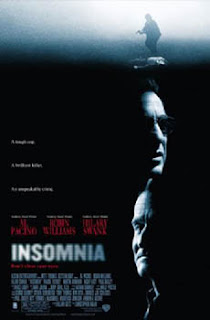
Days never end. Nightmares are real. No one is innocent.
Eli Lilly said yesterday it was acquiring the private insomnia-focused biotech Hypnion to help boost its CNS pipeline. Terms of the deal weren't disclosed but IN VIVO has learned the transaction was all-cash and included no earn-outs. While Nolan's 2002 film grossed nearly $114 million we reckon Hypnion probably sold for more than twice that figure, even without having the benefit of Al Pacino or quasi-exotic Alaska locations.
It's not surprising that Hypnion's backers sold out--insomnia is an increasingly competitive space to play in, with large, expensive Phase III development programs (like Somaxon's multiple pivotal trials for Silenor).It has been on the cards for some time--and some cuts have already been implemented, for sure--but Bayer has made its restructuring official: 6100 jobs have been eliminated at the German specialty pharma company, which ought to go a long way towards its goal of €700 million in savings by 2009.
Most of the jobs lost come from Europe (3150) and the majority of which will be administrative redundancies in Germany, the direct result of Bayer's €17 billion takeover of Schering AG last year.
And surely it all makes sense. But what's more important in the long run is where is Bayer going from here. The company has more boldly than most larger pharmaceutical companies embraced specialist medicines as the way forward--it didn't have much of a choice, really. The move seems to be paying off; progress may or may not be confirmed when Bayer talks up its R&D strategy at the end of the second quarter.
David Brennan's certainly made his mark just over a year into his tenure as CEO of AstraZeneca. The company has embraced externalization with fervour, completing a dozen or so significant alliances or acquisitions in the last 12 months, bolting on biologics capabilities by snapping up compatriot CAT, and joined in the cost-cutting, efficiency drives and re-focusing that are fast becoming
Big Pharma's hallmark.
But is that enough? Brennan doesn't seem to think so. When asked in an IN VIVO interview last month whether he's contemplating more revolutionary change to set AZ apart, the answer's an assertive "Yes". But he's not going to talk about how. So what might be afoot within the Mayfair HQ?
It's not going to be a merger--that's an old trick, after all, and one that hasn't been shown to work very well. Nor did he sound that excited by the notion of acquiring a new, ready-built franchise by buying a specialty pharma firm such as Shire (not that he'd want to now, anyway, after that firm's large lunch of Vyvanse promotion partner New River Pharmaceuticals.
Doing a Novartis doesn't seem to be on the agenda either--"we think about [buying] generics, vaccines or diagnostics, etc. during each annual review," admits Brennan. "But the whole point of the Astra-Zeneca merger was to focus us solely on innovative pharmaceuticals. Anything else would detract from that."
So what's left? Splitting up? As Brennan points out, AZ is already organized into small-ish units, research units, since recently including CAT and Arrow--and plans to remain that way, GSK-style--"better than putting everyone in one unit and saying, now we're all going to do things this way."
Perhaps that means more, smallish, bolt-on acquisitions--what most of the punters are predicting. But as these entrepreneurial cells are increasingly left to their own devices (unless you're Pfizer), it raises the prospect of Big Pharma as portfolio managers, assessing and managing a series of external partners rather than, not as well as, their in-house R&D.
"The hurdles for in-licensing are lower," Brennan says. "The way we look at it now is, we’ve got risk in our portfolio, there will be risk in what we’re licensing in, so let’s make sure we’re looking at the best technology, project, or product that we think we can get at the time, and we’ll deal with it accordingly." Sound a bit like a portfolio manager to you?
Big Pharma used to bask in relatively easy-won double digit growth--the safe havens of the stock market. That has changed. Today, "being successful is not a certainty—you have to make it happen," notes Brennan.
Watch this space.
A ton of resources at Big Pharma are devoted to developing or licensing drug delivery technologies, for sure. But here's a publicly funded organization putting its money where, well, where its mouth is.
The micro-system comprises a medication reservoir and releasemechanism, a built-in intelligence, micro-sensors and micro-actuators. IntelliDrug device will be placed in the oral cavity. The medicine is contained in the small reservoir. It will be released in a controlled manner accordingly to patient’s needs, for periods lasting days, weeks or months. The device will be reloaded in a simple non-invasive way. The released medicine will be either absorbed by the oral mucosa or swallowed by the patient.
Actual implant sans toothbrush and smile.
The Galvus delay is terrible news for Novartis.
Competitor Januvia, from Merck, has already seen the single best launch in recent memory for an anti-diabetes product. With a 40% share of new written scrips just four months after introduction, it may be the best launch of any new drug into a crowded category. Given its labelling -- “similar to that reported with placebo” -- doctors are rushing to prescribe what one clinician called a "no-brainer drug": zero training required in administering it; once-a-day dosing, with or without food, with or without any other medication. Once they're comfortable with Januvia, why would doctors switch to anything else, unless they're dramatically differentate
d?
Originally estimated to be three months behind Januvia, Galvus was already at a big timing disadvantage. Things are now much worse. Galvus seemed to have little differentiation over Januvia before (and therefore little chance of gaining a market-share advantage--now its only differentiation is negative: the skin lesions in primates, linked in FDA's mind to the toxicities seen with the drug at very high doses. That won't encourage doctors to try new patients on Galvus, particularly if, as a number of experts believe, Galvus' label--granted the drug's ultimately approved--comes with restrictions on use.
The potential time bomb for Merck is that Galvus' problems will redound to its detriment--just as the problems around Merck's own Vioxx KO'd Pfizer's Celebrex. FDA's metabolic division has been under severe scrutiny and it's possible they could do the cautious thing and start looking at lot more closely at Januvia. And when they do, will doctors too start thinking a lot more before prescribing what was once a no brainer?
The majority of the 200 scientists and researchers to be cut will come from the company's offices in northern Illinois, Abbott spokesman Scott Stoffel said Monday night. The bulk will come from a research unit that deals with the early discovery of treatments for metabolic disorders such as obesity and diabetes, he said.
Over the weekend Shire announced approval of Vyvanse, its next-generation ADHD drug licensed from soon-to-be-acquired partner New River.
Once it is launched in the second quarter this year, Vyvanse should quickly inherit ADHD market share from Shire's current leader Adderall XR, for which a soft landing has already been orchestrated via a variety of authorized generics deals. But despite the new drug's approval, despite the $2.6 billion Shire paid for the 50% of Vyvanse it didn't already own, and despite all the talk of potential resistance to abuse, the FDA has recommended to the DEA that Vyvanse join the majority of ADHD drugs as a Schedule II controlled substance. 
(editorial aside: is the DEA logo intentionally trippy?)
Shire isn't letting that get them down, and the decision--surely a disappointment to Shire--has been expected for some time. Quoth Shire CEO Matt Emmens in a statement announcing the approval: “The label we received with the approval letter includes information about the extended duration of effect and abuse-related drug liking characteristics of VYVANSE which illustrate benefits that differentiate this compound from other ADHD medicines."
But the authorities' equivocation here won't give Shire much wiggle-room on price and message.
Once again, ally turns to buy.
Eager to land 100% of the two companies' profits from the soon-to-be-approved ADHD drug Vyvanse (formerly NRP-104), Shire Pharmaceuticals bought New River Pharmaceuticals today for $2.6 billion in cash. The broad smile of New River chairman, CEO and founder RJ Kirk, who owns 50.2% of the biotech, can now be seen from space.
Buying out the junior partner on a potential blockbuster is hardly unusual these days--see Lilly/Icos, Genentech/Tanox, and Amgen/Abgenix: partners can be expensive, as we've pointed out before. At $64 per share the deal is a solid one for Kirk and his fellow New River shareholders, though the acquisition premium hardly reaches the heights of previous deals in the space: 10% over New River's closing price on Friday, February 16th and 14% greater than the shares' average over the past four weeks.
Perhaps given New River's backstory, and the company's subsequent growth over the past two years, the size of the premium matters less than the company's spectacular takeout valuation. In the eight years from foundation to IPO, New River was largely funded by Kirk and other managers, acquaintances and friends, and toughed out a tricky IPO market in 2004 before finally raising public funds at $8 per share in a Dutch auction run by WR Hambrecht. Not bad.
Shire consolidates the value of Vyvanse, a probable blockbuster expected to launch in the second quarter of 2007 after FDA and DEA review. The drug has received two FDA approvable letters so far, the latter in December 2006.
Notably Shire is raising $2.3 billion in debt to pay for the transaction (along with a placing of new ordinary shares that should bring in around $800 million) leaving its roughly $470 million cash for additional in-licensing or acquisition deals.
New River's product candidates beyond Vyvanse, NRP290 (in phase II in acute pain) and NRP409 (preclinical, primary hypothyroidism) are non-core to Shire and likely to be out-licensed, though Matt Emmens, Shire's CEO, said today that no decisions have been made.
© Copyright 2014 Informa plc.
Informa Business Information. All Rights Reserved.
www.pharmamedtechbi.com