


 Who says Election season is over?
To us, it sounds like the campaign to run the Food & Drug Administration is just heating up. That, at least, is our impression after FDC-Windhover’s FDA/CMS Summit for Biopharma Executives last week.
Exhibit A: The presentation by Cleveland Clinic cardiologist Steve Nissen. As always, Dr. Nissen was energetic, engaging and pretty frank in calling ‘em as he sees ‘em. But we heard some things that sounded a bit different than we have heard before.
As “The Pink Sheet” reports, Nissen—who, with some understatement, observed that he is no fan of the Prescription Drug User Fee Act—nevertheless declared that, having taken the money, FDA needs to follow through by offering an answer in the agreed upon timeline. That isn’t going to make Nissen any new friends at FDA. In fact, Office of New Drugs Director John Jenkins spoke earlier in the day and delivered a passionate defense of the agency’s review performance in 2008, and he sat stoically through Nissen’s presentation.
But some of the industry folks in the audience must have been whispering “amen” under their breaths. Our unscientific read of conference attendees is that they are sympathetic to the challenges facing FDA’s review group, and wary of piling on the agency at the this moment in its history—but they agree with the principle that, given how much they pay in user fees, FDA ought to be able to give them an answer on time.
And we bet one company in particular agrees: Nissen singled out Lilly’s overdue application for prasugrel (Effient) as both a case where the agency owes the sponsor an answer one way or the other. (If you haven’t followed the ins and outs of that application, start here.)
Nissen also declared that FDA’s “core” problem is that it lacks the resources to fulfill its mission—and stressed his view that a strong, credible FDA commissioner will help the agency secure those resources from Congress. (Oh, and he let slip that he had just been up on Capitol Hill himself that morning, chatting with some of his friends in Congress.)
Last but not least, Nissen endorsed the call for a fixed-term for the FDA commissioner (five or six years) to help depoliticize the agency’s leadership. That, to our surprise at least, has become a rallying cry for Big Pharma in the weeks since the election, with CEOs like Schering-Plough’s Fred Hassan and Pfizer’s Jeff Kindler highlighting the idea in appearances before investors.
In other words, Nissen sounded a lot like someone hoping to win some industry support for the FDA job...or at least convince some people not fight too hard to block him.
When asked specifically whether he has his eye on the commissioner post, his answer was “no comment.”
But it was what Nissen said afterward that really caught our attention. “I am going to stay engaged in these issues,” he said. “As an advocate for patient safety, I want to be engaged one way or the other.”
One way or the other? Hmmmm.
Nissen then went on to describe his ideal candidate, and frankly, it sounded an awful lot like him. First, a commissioner should be a physician, “because if you haven’t ever taken care of patients, you don’t really have the necessary perspective.” Check. Nissen is a cardiologist at the Cleveland Clinic.
Next, the commissioner should be a “good scientist,” because the FDA has to be a science-based organization, and “decisions have to be made upon the basis of evidence.” Check. Nissen is deeply involved in pharmaceutical research with a host of drug companies (the money from which, he is quick to point out, is donated to charity without a tax break for him).
The FDA commissioner also “ought to know something about statistics.” Check. As Nissen was quick to point out, he presented a series of statistical slides during an advisory committee meeting in July on the approval standards of diabetes drugs.
Finally, he said, FDA needs a commissioner who is “passionate about the public interests.” Check. Nissen’s critics may question whether he is also passionate about his elevating his public profile, but there is no question that he has patients’ interests at heart in his self-appointed position as a drug safety advocate.
Now, bear in mind that just because Nissen (and others) are campaigning for the job doesn't mean that a pick is anything close to imminent. The new Administration has a lot on its plate, and (as we wrote here) FDA isn't even close to the top of the list. But the Obama team knows a thing or two about long campaigns, so we say: bring it on.
Tomorrow: a word from (and about) some other candidates at the FDA/CMS Summit…
--Michael McCaughan and Kate Rawson
Thursday, December 11, 2008
The Long Campaign for FDA Commissioner (Part 1)

Tuesday, December 16, 2008
The Lesser Of Two Evils?
 When Steve Nissen is not qualified to serve on an FDA advisory committee under the agency’s new conflict of interest guidelines, you know things are bad. Really bad.
According to Nissen, and as reported in "The Pink Sheet" DAILY, his position as chair of the cardiology department at the Cleveland Clinic likely bars him from serving another term on an FDA expert panel.
Nissen may not be exactly beloved by the pharmaceutical industry, but no one can argue that the man knows drug development, and is a global expert on cardiovascular drug safety. And when it comes to conflicts, Nissen prides himself in not only disclosing all the companies he has worked for, but also donating all his fees directly to charities so that he can't claim the tax benefit.
Plus, he has served as an advisory committee member before: Nissen was a permanent member of the Cardiovascular & Renal Advisory Committee from 2001 to 2005, that last year as chairman. Since then, he has served as a temporary member as duty calls, like the July meeting on type 2 diabetes clinical trial endpoints. So if he can't serve, then who can?
“The current rules are pretty bizarre,” Nissen told attendees at the recent FDC-Windhover FDA/CMS Summit. “The imputation of conflict of interest guidelines based on institutional contracts eliminates a lot of desirable people.”
In Nissen’s case, the trouble is with a section of the new CoI guidelines that bars the “head of a department” that is conducting or will conduct studies on a product (or its competitors) “that is the focus of a meeting and receives personnel or salary support, designs or advises on any aspect of clinical trials, or reviews data or reports from the trials.”
We emailed Nissen to clarify, and he pointed out that the cardiology department has more than 100 faculty members. So “for most advisory committees, it is highly likely that someone within our department is involved with the company in some fashion.” And given the size of the Cleveland Clinic, Nissen said, “the likelihood that someone...receives funding from the sponsor or its competitors is 100%.”
Of course, Nissen’s inability to serve on an advisory committee is most likely be welcome news for drug sponsors, who see him as, frankly, a pain in the derriere. Granted, this is the man who prevented Bristol/Merck’s Pargluva (muraglitazar) from ever seeing the light of day, and crippled the commercial future for GlaxoSmithKline’s Avandia. So you can understand that angst.
But industry should not be breaking out the champagne quite yet. If it is true that Nissen is no longer eligible to serve on an advisory committee, it underlines a disturbing trend at the agency: FDA’s continued inability to fully staff its expert panels with individuals that qualify under—and are willing to serve despite of—more stringent conflict of interest guidelines.
When we last looked at the staffing problems in the advisory committee system in The RPM Report, there were 83 vacant seats, and three-quarters of the panels did not have permanent chairs. That was despite a major recruitment effort at the agency. Things haven’t improved much since.
And when drug sponsors start to see who is qualified to serve as permanent advisory committee members under FDA’s conflict of interest rules, they may be wishing for Nissen. You tell us. As a sponsor, who would you rather have: Nissen, or Public Citizen’s Sidney Wolfe and Center for Science in the Public Interest’s Merrill Goozner?
Tuesday, July 24, 2007
Dissin' Steve Nissen?

The New York Times ran an interesting profile of the Cleveland Clinic's Steve Nissen on Sunday in light of his "controversial" meta-analysis finding over a 40% increased risk of heart attack for diabetes patients on GlaxoSmithKline's drug Avandia.
I interviewed Dr. Nissen a few months ago. Check out our July issue of The RPM Report called "Inside the Mind of a Serial Drug Killer" to find out what makes him go, what would make him stop and what he thinks is driving some members of Congress to criticize his efforts. Note, the Times may have higher circulation than The RPM Report , but we had the better headline.
But don't take our word for it. Here are a couple of excerpts:
The RPM Report: What would make you stop doing this type of work in the area of drug safety?
Nissen: It is all of our jobs, not just the FDA’s job to do this. Those of us in the physician community owe it to our patients to give equal balance and weight to positive and negative findings about drugs, and so should the FDA. Even if the FDA were doing an outstanding job, it’s still the responsibility of independent scientists to do these sorts of things, so it really isn’t about the FDA.
The RPM Report: So creating two drug centers—one for premarket review and one for postmarket surveillance—would not stop you from doing this kind of research. You feel this is a moral obligation.
Nissen: It is a moral and ethical obligation; it’s just about good science, it’s a scientific obligation. Science is about pursuing the truth and wherever that leads you. If we had very, very good regulatory agencies looking after this, there may be fewer opportunities to turn these things up.
How did we find out about fen-phen? There was an independent group of physicians that began seeing fen-phen patients with valve abnormalities. They said, “Oh my God, this is a potentially serious problem, let’s publish it,” and they did a great thing, they probably saved a lot of lives; they’re heroes.
The RPM Report: Why is there such a visceral reaction to you and the research you are doing? FDA’s meta-analysis of Avandia studies showed similar findings as your meta-analysis.
Nissen: Right. Part of the problem is this is not about me. One of the issues is sometimes when you don’t like the message; it’s easier to attack the messenger. It’s to be expected, but we’ve got to keep everyone focused on the science. I was very restrained in that [Avandia] hearing, I didn’t attack back. I simply said: this is what we did, this why we did it, this is why it’s important, and I’m going to stay on that message because it’s the right thing to do.
The RPM Report: Rep. Darrell Issa (R-Calif.) seemed particularly unnerved by your analysis and the process you took to get it published?
Nissen: He was wrong about the statistics, you cannot calculate an effect size if there are no events [studies with no heart attack events were excluded from Nissen’s meta-analysis]. He had been briefed by people giving him campaign contributions and that happens to be GSK. I looked it up. The three people on the attack at the hearing were very heavy recipients of GSK campaign money.
For the rest of the interview, subscribe to The RPM Report. Also, Nissen will be speaking at our annual FDA/CMS Summit in December in Washington, D.C. in case you want to hear him in person.Speaking of Avandia, there is a July 30 fact-gathering meeting between FDA and Glaxo (Takeda, which markets Actos, is an invited guest) regarding the cardiovascular profile of the diabetes drug. While something conclusive could come out of that meeting, it's highly doubtful. So we'll just have to wait and see whether Nissen and his meta-analysis are vindicated for finding risks that hadn't been previously uncovered or his findings were rushed, sloppy and wrong. Stay tuned. It could be a while.
Tuesday, January 15, 2008
The Man Pharma Loves to Hate
 It’s the headline lay media outlets love to report: “High-Cost Cholesterol Drug Combo Shows No Benefit Over Lower-Cost Generic Statin.” From a health care reporter’s perspective, nothing is more juicy than a study that shows that a cheap generic drug is more effective than a expensive new medicine. Especially when the study is sponsored by a drug company.
And that story is made even better is when Steve Nissen goes on national television to say things like this: “My advice to physicians is to not use these drugs...for first-line indications anymore. These should really be relegated to drugs of last resort until we have some evidence that they produce a health outcomes benefit.”
But that’s exactly what happened to Merck and Schering-Plough’s hot new cholesterol combo, Vytorin. The drug, which combines another relatively new drug, ezetimibe (Zetia) with generic simvastatin, was found to have no effect on the accumulation of plaque in the arteries, and may even increase plaque growth.
Yikes. No wonder Schering and Merck waited two years to release those findings. Wall Street certainly showed its displeasure: Schering’s stock price fell 8% yesterday, and Merck’s shares slipped 1.3%. And Merrill Lynch downgraded its rating on Schering’s stock, from “buy” to “neutral.”
But Merck and Schering aren’t just in hot water with investors. The companies released the data after Bart Stupak (D-Mich.), chairman of the House Energy & Commerce Committee, opened an investigation into the delay. Now Stupak is sure to haul Merck and Schering executives up to Capitol Hill to testify at what surely will be a very public, very messy hearing.
“In light of today’s results, which were released nearly two years after the Enhance trial ended, it is easy to conclude that Merck and Schering-Plough intentionally sought to delay the release of this data,” Stupak said in the statement. Stupak, of course, was the man behind the Ketek hearings last spring, when FDA’s David Graham returned to Capitol Hill to revive his role as a drug safety whistleblower. So he’s not exactly friendly with Big Pharma.
That’s all bad enough for Schering and Merck. But Nissen, head of cardiology at the Cleveland Clinic, twisted the knife in a bit deeper, appearing in virtually all major news outlets to blast the efficacy of Vytorin and Zetia. (In fact, we would challenge anyone to find a major news story that didn’t quote Nissen.)
Nissen became the go-to guy on cardiovascular drug safety following his unauthorized meta-analysis of GlaxoSmithKline’s Avandia data. With Vyotrin, he adds the mantle of Dr. Efficacy. Here’s what he told NBC’s Today show: “It was a shocking result for the medical community, and it suggests that this mechanism of cholesterol lowering produced by Vytorin and Zetia is simply ineffective at providing any benefits to patients.”
Either way, the reaction confirms our belief that Steve Nissen has become a pretty powerful force, and why our colleague, Ramsey Baghdadi, labeled him as a “serial drug killer.” (For Ramsey’s profile of Nissen in The RPM Report, you can find it here. Those who aren’t yet subscribers can sign up for a free trial to read the story.)
Monday, May 21, 2007
Nissen goes meta on GSK; markets take back $13 billion
 Cleveland Clinic cardiologist and Big Pharma nemesis Steve Nissen has struck again, this time calling out GSK's Avandia in a New England Journal of Medicine analysis of the drug's cardiovascular side effects across a variety of clinical trials. Nissen's meta analysis concludes that Avandia patients are 43% more likely to have a heart attack than patients given a placebo or another drug.
GSK's share price stumbled more than 8% as the markets digested the news, wiping a whopping $13 billion off the company's market cap. The Big Pharma for its part predictably "strongly disagreed" with Nissen and co-author Kathy Wolski, pointing out the intrinsic shortcomings of the kind of meta-analysis done by Nissen and Wolski and holding up data from its ADOPT and DREAM studies, which suggested Avandia risk was comparable to that of commonly used diabetes meds metformin and sulfonylurea and placebo, respectively.
The authors acknowledged the limitations of meta-analysis but suggested GSK needed to make public more data from its Avandia program for further analysis to more accurately determine the drug's cardivascular risks.
"The manufacturer's public disclosure of summary results for rosiglitazone clinical trials is not sufficient to enable a robust assessment of cardiovascular risks," they contend. "Until better precision of the estimates of the risks of this treatment on cardiovascular events can be delineated in patients with diabetes, patients and providers should give careful consideration to the risks and benefits of their overall treatment plans."
The WSJ's Health Blog put together a nice list of Nissen's previous pharma takedowns, which includes Merck's Vioxx and Bristol/Merck's Pargluva. Nissen's prominence as a critic of industry and FDA is something our RPM Report colleagues have examined in depth several times (see their May piece for an FDA reaction to his criticism and this June 2006 look at the emergence of academics like Nissen as a shadow-FDA force to be reckoned with).
FDA's medical policy head Bob Temple told the RPM Report that meta-analyses could become standard practice for drugs on the market (and Avandia isn't the first drug knocked around this year with a retrospective analysis: witness Novartis' Zelnorm). For now the FDA is likely to convene an advisory panel ASAP and won't rule out any regulatory action. That said, the agency wasn't able to react as quickly as Rep. Henry Waxman--who announced earlier today that his Oversight committee will conduct a hearing on the matter June 6th.
Whether or not you think Nissen's brand of activism is necessary, harmful, overdue or half-baked, it's here to stay. Today it was GSK that suffered the smackdown (and diabetes competitors like Merck & Co. who will likely get a boost in the aftermath); tomorrow it'll be someone else.
Monday, December 15, 2008
The Long Campaign for FDA Commissioner (Part 3)
 We’ve given you some of our thoughts on the candidates for FDA commissioner in the new Administration in several recent posts (here and here). Today, though, we tackle a bigger question: Why would anyone possibly want this job?
For a position that may well be the most thankless job in health care, an awful lot of people seem to be lining up to be the next commissioner of FDA.
With all the problems at FDA right now—a deeply underfunded agency with a nearly impossible mandate to protect the nation’s food and drug supply—it’s a wonder anyone would want to lead the agency. Add the prospect of contentious Senate confirmation hearings, a low public opinion of FDA, and a constant threat of whistleblowers, and you don’t exactly have your dream job.
But that hasn’t prevented people from wanting to be the next FDA commissioner. While much of the campaigning is taking place behind closed doors, some candidates are choosing to be a bit more vocal. Those individuals tend to fall into two categories; the Peter Rost Category of Candidates and the Steve Nissen/David Kessler Category of Candidates.
On one extreme end of the campaigning spectrum, there’s former Pharmacia marketing executive Peter Rost. As the Pfizer whistleblower over off-label promotion of the human growth hormone Genotropin, Rost is probably the one commissioner candidate that scares the bejesus out of pharma (or at least Pfizer) more than Nissen. Or he would if he had any chance of actually landing the job.
Not only is Rost openly campaigning, he is, in his words, “running” for FDA commissioner as though it’s an open Senate seat. Rost’s personal blog is now dedicated to his campaign run, and he has successfully solicited letters of endorsement from Sen. Sherrod Brown (D-Ohio) and Rep. JoAnn Emerson (R-Mo.).
On the other end of the spectrum, we’ll cite David Kessler. Kessler isn’t sending out press releases expressing his interest in the commissioner post, but he is indicating he’d be open to the job through public appearances. As we reported in an earlier blog post, when asked for his ideal profile for an FDA commissioner, Kessler essentially described himself.
The same goes for Nissen. While Nissen may be the last thing that anyone in industry wants in an FDA commissioner, he is laying out an agenda that sounds quite reasonable: more money for FDA, an end to the missed user fee deadlines, and restoring integrity to the agency. Indeed, we laid out in an earlier post why we think FDA commissioner Nissen wouldn't be the worst thing that ever happen to industry.
But even Nissen recognizes the challenges facing the next commissioner, and has publicly questioned whether anyone would want the job. Here’s what he said at FDC-Windhover’s FDA/CMS Summit last week:“The problem is in the current environment, getting anybody confirmed looks like it could be really tough. You know what the last bunch of commissioners have gone through. You have to be a masochist to want to do that, and there aren’t a lot of people who would want to do that.”
Of course, in saying someone would have to be a masochist to want the job, Nissen didn’t mention whether he was a masochist. Knowing what we know about Nissen, we'd have to say yes.
image via run100miles.com. nothing particularly masochistic about that, eh?
Thursday, September 23, 2010
Avandia Decision Today; Steve Nissen Thinks It Will Stay on the Market
Word is that US and European regulators will make separate announcements shortly about the future of Avandia. The status of GlaxoSmithKline's former blockbuster diabetes drug is once again under review, thanks to concerns about a potential increased risk of heart attacks compared to other treatment options.
What will the decision be?
Cleveland Clinic cardiologist Steve Nissen, MD, thinks he knows the answer: FDA will leave rosiglitazone on the market.
That, to put it mildly, isn’t what Nissen thinks FDA should do. But, he tells us, that is what he now believes FDA will do.
One clear sign that FDA is likely to save Avandia, Nissen says, is the agency’s recent red flag for its thiazolidinedione competitor, Eli Lilly & Co.’s pioglitazone (Actos).
FDA announced on September 17 that it had commenced a safety review of Actos after receiving preliminary results from a long-term observational study designed to evaluate the risk of bladder cancer. The agency did note that the review is ongoing and it has not concluded that Actos increases the risk of bladder cancer.
Nissen calls FDA’s analysis “barely statistically significant” for what is essentially a small subgroup of individuals. The Actos review, Nissen says, is a “smokescreen designed and timed to keep rosiglitzone on the market.” (For coverage of the warning, click here).
Indeed, the timing of the Actos safety update is fortuitous for GSK. A key piece of the argument for pulling Avandia is the availability of a “safer” alternative, Actos. However, it would certainly be an odd decision for the agency to pull one product due to a potential increase in cardiovascular risk and recommend use of alternative that may or may not have an increased risk of bladder cancer.
Nissen, of course, has led the calls for Avandia’s withdrawal, and he is convinced that the agency’s actions with the product reflect ongoing challenges with handling post-marketing safety issues. In his view, it basically comes down to how FDA reacts to challenges from outside—and, by implication, the need for change in the drug center management.
[Editor’s Note: Nissen will expand on his views about the decision-making at FDA during The RPM Report’s FDA/CMS Summit for Biopharma Executives in Washington DC Dec. 9-10. For more information or to register, click here.]
Kate Rawson
Tuesday, November 11, 2008
FDA Commissioner: Myths And Reality
 Everyone wants to know who the next FDA commissioner will be, and we certainly have done more than our share to stoke speculation about the answer to that question. And we expect to do more of the same in the weeks and months ahead.
But before the frenzy gets entirely out of hand, we would like to offer a few rules of thumb about the commissioner search process.
(1) FDA May Be Your Top Priority, But It’s Not Obama’s
Just because the pharmaceutical industry considers FDA one of the most important positions in a new Administration doesn’t mean the transition team sees it that way.
In this climate, priority goes to economic posts (where the Securities & Exchange Commission is a more critical regulatory agency than FDA) and to Defense/National Security.
Even when the US is not at war or facing a financial crisis, FDA typically is way down the list of posts to fill. The Centers for Medicare & Medicaid Services usually is filled first, for example; with so much money under management by CMS it almost has to be.
And, in this Administration, when attention turns to health care appointments, the focus will be on health care reform teams as much as on agency appointments.
During the last transition, the first political appointment to FDA didn’t come until August, when Dan Troy was named chief counsel. As a Senate-confirmed post, commissioner takes longer—and in 2001 it took until nearly the end of 2002. Everyone hopes that long a delay can be avoided this time, but even with haste, there is unlikely to be a commissioner confirmed and on the job much earlier than 12 months from now.
(2) It’s Not Necessarily Obama’s Pick AnywayThere’s always some give-and-take between the White House staff and the new Health & Human Services secretary when it comes to filling the FDA post, and without knowing for sure who the HHS secretary is—and whether he or she sees FDA as a critical priority—there is no way to handicap that dynamic effectively.
And then there is the Kennedy factor. Historically, Ted Kennedy, the long-time chairman of the Senate Health Committee, has played a pivotal role in the commissioner selection process, holding veto power over any Republican selections and playing an even more direct role in the pick during Democratic Administrations.
However, Kennedy’s health may not allow him to play that role in 2009; if he steps down, his successor (potentially Maryland’s Barbara Mikulski) will certainly want some say in the process. But there may be a stronger voice for House members like Henry Waxman, whose staff has worked closely with the Obama campaign.
So no one can say for sure who will be involved in making the pick—which makes it hard to say who the pick might be.
So let’s face it: at this point, there’s a good chance the nominee will be someone no one has mentioned yet. Remember: Mark McClellan wasn’t even considered for FDA until after he’d already been nominated and confirmed for a different post in the Bush Administration.
(3) It Won’t Be An InsiderThe biopharma industry would be thrilled if Center for Drug Evaluation & Research Director Janet Woodcock ends up as commissioner. Heck, the biopharma industry would be thrilled if she were President.
Don’t get your hopes up.
FDA is too plum a post to give to a career civil servant. There are too many people to reward and too few rewards to dole out to allow for that.
Even if the Obama team decided FDA is in such a state of crisis that they have to turn to an insider, the fact that Woodcock is so widely seen as industry’s top choice (like here) probably rules her out. Remember: the Bush Administration couldn’t get an “industry” pick at FDA. Why would an Obama Administration even want to try?
Woodcock could end up with the job nevertheless—but only if the outside choice (and maybe several outside choices) doesn’t make it through the Senate. And, as pleased as industry would be to have Woodcock running FDA, the prolonged uncertainty it would take before she really had a chance to get the job would be tough on the agency—exactly the outcome that industry wants to avoid in backing her for the post in the first place.
(4) It Might Be NissenJust as the perception that Woodcock is industry’s top choice isn’t going to help her get the job, the widespread suggestion that the Cleveland Clinic’s Steve Nissen would be the worst for industry doesn’t hurt him.
We have no idea if Nissen will end up at FDA—but as an Obama advisor he has already been vetted in case he is picked for some kind of government post. Maybe there is something in his background that rules him out, or maybe Obama, his HHS secretary, Kennedy, Waxman or someone else will want to go in a different direction.
But this we know: the opposition of industry won’t be the thing that keeps him out of the job.
(5) Nissen Might Not be so Bad After AllThere’s no question that Nissen is unpopular with some in industry (like anyone who ever had anything to do with marketing Avandia or Vytorin).
But there are at least three reasons why industry might not be so bad off if he ends up at FDA.
First, as commissioner, Nissen can’t just lob grenades as products the way he has been in recent years. Sure, he might pull Avandia outright, rather than cripple it commercially—but as commissioner he also has to set some constructive public health agenda that doesn’t simply involve taking potshots at individual products.
 Second, Nissen is not a drug safety gadfly at heart. Believe it or not, he wants to see industry succeed at developing innovative products. After all, he does drug development himself, and has spoken out in favor of products like Lilly’s prasugrel. As commissioner, you can bet Nissen would work just as hard to encourage the types of products and studies he likes as he would to discourage those he doesn’t.
Last but not least, there is the Kessler Effect: the last time a commissioner was appointed who defined himself by making enemies in industry, he also gave the agency the credibility it needed to establish accelerated approval and the user fee program. Kessler was never popular with industry, and drug companies celebrated his departure. But drug approvals have been in steady decline ever since. Coincidence or not, those were the good old days.
So happy speculating. Say, where is David Kessler anyway?…
Thursday, February 14, 2008
Botox, Friday Afternoon Press Calls and the Nissen Effect
 Blaming the media will never go out of fashion, at least not when it comes to drug safety scares.
Here is Schering-Plough EVP Carrie Cox, summarizing the battle to rebuild Vytorin after the ENHANCE debacle during its earnings call February 12: "Physicians ... understand that the furor around ENHANCE is largely a media driven event."
And GlaxoSmithKline’s recap of the Avandia meltdown of 2007: it resulted from a “distortion of the media” about the risk profile seen with the Type 2 diabetes drug, outgoing CEO JP Garnier said February 7.
There is no question that front-page headlines and national news broadcasts can do immediate and lasting damage to even the most well-established brands, damage that may go far beyond any appropriate medical response to new data.
But that only begs the question: what prompts some safety scares (or, in the case of ENHANCE, a failed efficacy trial) to create a media feeding frenzy, while others seem to pass with barely a ripple?
One answer, to borrow a phrase from religious themed bumper stickers, could be WWSNS: What Will Steve Nissen Say? There certainly does seem to be a strong correlation between the Cleveland Clinic cardiologist’s reaction to new data and the amount of play it gets in the media.
Wall Street seems to believe in the Nissen effect. In a February 11 note, Wachovia’s Larry Biegelsen argued that investors over-reacted to an “early communication” about a potential safety issue involving Allergan’s Botox. The issue, announced by FDA February 8, involved serious adverse events primarily associated with off-label use of Botox in children with cerebral palsy. Investors worried that a safety scare could significantly impact Botox widespread cosmetic use.
Not to worry, says Biegelsen. An “ENHANCE-like impact” on Botox use is “unlikely in our view.” Why? Well, for one thing, “Dr. Steve Nissen has not spoken out against Botox,” the way he did against Vytorin.
Talk about a case where silence is golden.
Biegelsen, of course, knows it isn’t quite as simple as that. Nissen’s silence is one of four factors the Wachovia analyst sees as reassuring differences between the Botox safety issues and the ENHANCE fallout. Only one is under the control of the sponsor: “There does not appear to have been any delay in the reporting of the serious adverse events.”
The other three involve reactions by external parties who have no formal regulatory role: (1) Nissen’s silence; (2) “Congress has not started an investigation into the handling of the Botox data”; and (3) The media coverage of Botox is more benign than the coverage of the ENHANCE data.
How so? “We couldn’t find a story in the print version of the New York Times on Saturday, whereas ENHANCE was front page news the day after the results were released.”
Of course, that last point is not entirely good fortune for Allergan. As we pointed out, FDA issued the “early communication” about Botox on Friday afternoon—part of what is becoming a pattern at the agency. (A safety update on Pfizer’s emerging blockbuster Chantix came out the week before Botox, and FDA’s first response to ENHANCE came the week before that.)
It so happens that Friday afternoon is the time least likely to generate significant news coverage. FDA swears there is no deliberate strategy to bury drug safety events. (At least, they assured Pharmalot of that—you can read more here.)
It certainly is plausible that FDA didn’t get all its ducks in a row to issue the early communications until Friday afternoon. We’ve talked to media savvy FDAers over the years (both in the press office and elsewhere) who routinely lament the review divisions’ habit of issuing approval letters at or after the close of business, often on Fridays, thereby all but assuring that even the most important new drug approvals would not be covered in the national news broadcasts, and sometimes even receive scant notice in newspapers.
The fact is that if FDA is not taking the news cycle into account when making safety announcements, it should be. Overblown safety scares do not serve the public health, so FDA certainly could justify Friday afternoon announcements as a way to better ensure that important new information gets into the public sphere in a more measured fashion.
On the other hand, the news media is the best way to amplify an urgent safety message. If that is the goal, the agency is better served by getting the news out early in the day and early in the week whenever possible.
In fact, that’s what FDA did on Monday February 11, when it announced that Baxter is suspending production of heparin due to severe adverse events--an announcement with urgent public health implications.
Wednesday, December 31, 2008
Next Steps For Prasugrel: The Anatomy of an Advisory Committee
 Eli Lilly and Daiichi Sankyo used the morning of New Years Eve (‘tis the season for hiding news) to announce that the delayed anti-clotting drug prasugrel will be considered by the Cardiovascular-Renal Advisory Committee February 3. (Shameless self-promotion alert: We predicted that February meeting in October.)
Now that a date has been offically set, let the next round of speculation begin.
That news can be viewed in two ways: optimists (like Lilly and Daiichi investors) will argue that the meeting is a signal that the review is wrapping up and a decision is close at hand. Pessimists will argue that the meeting is an indication of the internal strife at FDA over prasugrel’s benefit-risk profile—and that products that go before an advisory committee are less likely to be approved on the first cycle.
Here's our take. First, we should note that the confirmation of the advisory committee meeting is a milestone in prasugrel’s development. It’s the first word to come out of FDA on the drug since June, when the agency extended the review by three months. FDA then let the revised September 26 review deadline pass without an approvability decision.
Another positive indicator for Lilly and Daiichi is that FDA is only convening the Cardio-Renal committee—and is not asking for a joint review with the Drug Safety & Risk Management Advisory Committee. A joint meeting would indicate significant concerns at FDA regarding prasugrel’s safety profile, which we have delved into in this earlier post.
Of course, that certainly doesn’t preclude FDA from drawing from members of the Drug Safety & Risk Management Advisory Committee as needed—including its newest member, Public Citizen’s Sidney Wolfe, who is unlikely to look kindly upon the prasugrel NDA.
Wolfe is just one extra member that could be asked to show up on February 3, given the current vacancies on the Cardio-Renal advisory committee. There are just eight permanent Cardio-Renal members, including a consumer rep (Consumers Union’s Stephen Findlay) and a non-voting industry rep (AstraZeneca’s Jonathan Fox).
That can make for a lot of last-minute additions. At the committee’s last meeting, FDA added 13 temporary members, including two regulars: University of Washington statistician Thomas Fleming and Duke University human cognition expert Ruth Day.
So who might be asked to serve? With a product like prasugrel, one obvious choice for a temporary member is Steven Nissen, the head of cardiology at the Cleveland Clinic—an expert on cardiovascular drug safety and a former chair of the Cardio-Renal advisory committee.
Nissen’s participation on the committee would be a positive development for Lilly and Daiichi, given that he has come out in favor of prasugrel—first giving the drug a thumbs up for approval and then criticizing FDA for not delivering an on-time approvability decision. Nissen isn’t exactly a shrinking violet, so if he still favors a prasugrel approval, he stands a good chance of getting the committee to see things his way.
But those statements may prevent Nissen from serving—especially given FDA’s tougher line on conflicts of interest. Indeed, Nissen himself has questioned whether he is qualified to serve on an advisory committee under the new CoI guidelines. The meeting roster will be out in the next month. Lilly and Daiichi should hope Nissen's name is on it.
Human brain image courtsey of flickr user hduhadaway.
Wednesday, September 21, 2011
Professional Egos, Cultural Norms Clash At Xarelto AdComm
 Let’s be honest – we look forward to some FDA advisory committee meetings more than others. Some meetings, such as those convened only because a product is a new molecular entity but with no controversial safety or efficacy issues attached, can be a bit of a yawn from a newsgathering perspective.
Give us a drug that has hit some regulatory bumps in a hot and highly lucrative therapeutic area, and it raises our journalistic antenna.
So, when we saw the FDA staff’s strongly negative review of the atrial fibrillation claim for Bayer/J&J’s Xarelto (rivaroxaban) – a review that went so far as to recommend a “complete response” action – we knew we were in for an interesting meeting of the agency’s cardio-renal committee on Sept. 8.
Couple that with the revelation that there were going to be some big names participating in the proceedings (Rob Califf! Steve Nissen! Sanjay Kaul! Tom Fleming! – none of whom could be accused of being afraid to share their views on a subject), we were practically salivating.
Our giddiness was further heightened when we saw FDA’s draft questions, which spanned six pages. FDA wanted to know whether rivaroxaban’s efficacy was appropriately studied against warfarin in the ROCKET AF trial, or whether the drug’s efficacy is best viewed against that of Pradaxa (dabigatran), Boehringer Ingelheim’s oral direct thrombin inhibitor that was approved last October.
Most of the committee members – and FDA’s cardiology guru himself, ODE I Director Bob Temple – were pretty clear in their views that the Xarelto sponsors shouldn’t be required to show rivaroxaban’s efficacy against that of another drug on the market for less than a year. (This week’s issue of “The Pink Sheet” offers in-depth analysis of how FDA might continue to use its “as effective” standard.)
Thanks to these views, drug developers appear to have escaped the potential calamity of having to go back to the drawing board to compare their late-stage compounds to the newest kid on the block for FDA approval. (Reimbursement is another story, but we digress.)
Nonetheless, the discussion over the appropriate comparator for rivaroxaban raised the lingering problem of how well clinical trials mimic real world use when it comes to establishing efficacy against another drug, and whether it’s wise to attempt to mimic actual medical practice when that offers a comparison that is far from ideal.
While warfarin may be the appropriate comparator in the eyes of most committee members and top FDA brass, a debate over how well warfarin is used in clinical practice and in the ROCKET AF trial led to a clash of egos and a lesson in cultural norms at the meeting.
One key issue before the committee was how well anticoagulation control with warfarin was managed in ROCKET AF, as gauged by International Normalized Ratio time in therapeutic range (TTR).
In their briefing documents, FDA reviewers took the ROCKET AF investigators to task for what they considered to be the less than “skillful” use of warfarin when compared to other anticoagulant studies.
The mean time in TTR was 55% across the ROCKET AF program, compared with 64% for dabigatran’s pivotal RE-LY trial. The lower TTR in ROCKET so distressed the agency reviewers that they used the word “skillfully” 16 times in their briefing document as they sought to drive home the point that it is difficult to ascertain rivaroxaban’s true efficacy when compared against warfarin that is well managed.
But some in the meeting room didn’t take too kindly to FDA’s characterization of unskillful use of a drug that has been a standard of care for stroke prevention in atrial fibrillation patients for years.
Duke University Vice Chancellor of Clinical Research Robert Califf, appearing on behalf of the sponsors and the study’s executive committee, maintained that the average TTR of 64% for North America was better than U.S. practice in general and comparable to the North American results in other anticoagulant studies.
“This is hardly a result that should be attributed to unskillful clinicians,” Califf said. “I have to say on behalf of the executive committee and over 1,000 investigators, we don’t think we’re unskilled. We think we’re pretty good.”
Califf maintained that the lower overall mean TTR in ROCKET AF was due in large part to the geographical diversity of the study population and the inclusion of patients at higher risk of stroke than in other anticoagulant trials. More than 38% of the patients were enrolled in Eastern Europe, where TTR was 49.7%. Another 15% came from the Asia-Pacific region, where TTR was only slightly better, 52.4%, according to FDA’s calculations.
Regional variations in how quickly patients were brought back for INR assessment resulted in an “artificial” lowering of TTRs in areas where there was a longer delay, such as in Asia-Pacific and Eastern Europe, Califf said.
Warfarin dosing was managed at each site according to local standards, and there was no centralized protocol for managing patients who fell outside of therapeutic range. Site investigators were educated on the importance of keeping INR within the 2.0-3.0 target range.
The geographical distribution of patients, coupled with the absence of a single warfarin dosing protocol, touched off one of the more interesting debates of the day between Califf and Cleveland Clinic’s Steven Nissen, a temporary voting member on the panel.
“Given the fact that I think you guys knew that the TTR was going to be a critical factor in the approvability of the drug, I’m just puzzled why you didn’t make an effort to give sites, particularly Third World sites, some guidance about what to do,” Nissen said to the sponsors. “Basically, you sort of left them on their own, and my concern is that’s why you got such a low TTR” across the ROCKET AF study.
At this point, Califf embarked on a lesson in global diplomacy.
“Dr. Nissen I’m sure you didn’t mean to use the term Third World, because I don’t think that’s an appropriate term anymore, and in fact if you look at the news today you would find what you’re calling Third World actually owns most of our national debt,” said Califf, whose remarks were met with laughter in the room.
“I think the investigators around the world will be highly offended by the sort of American exceptional tone of some of the discussion, not you personally, but – ”
At this point, Michael Lincoff, Nissen’s colleague at Cleveland Clinic and acting chairman of the committee, attempted to redirect the discussion away from geopolitical issues and back to anticoagulants.
“Let’s focus on the subject,” Lincoff said, before he was cut off by Nissen.
“Rob, you showed us that those sites in those countries didn’t do a very good job of managing warfarin. That’s where all this comes from,” Nissen said to Califf.
“But these two concepts are related,” Califf responded. “It’s not that doctors do a lousy job. This is a really hard drug to use and it’s especially really hard to use in various social, economic personality characteristic circumstances. You know that as well as I do.”
“What we felt obligated to do was to do better than standard of practice given the heterogeneity of the practices in those centers,” Califf said. “We spent a lot of time at every site saying how do you do it? Let’s make sure what you’re doing is OK, but let’s not force you to use one specified algorithm. Let’s make sure you make the appropriate dosing changes. I showed you that it wasn’t that they weren’t making the appropriate dosing changes. They just brought the patients back when it was feasible to do it.”
With the sparring over lesser developed countries behind them, the committee continued with its questions and discussion, though later in the meeting other panel members felt the need to weigh in on the skillfulness issue.
TTR is “certainly a marker of skillful care” but is not an effect modifier, Cedars-Sinai cardiologist Sanjay Kaul maintained.
Yet, fellow panel member and cardiologist Darren McGuire, University of Texas Southwestern Medical Center, was quick to take offense. McGuire conceded the TTR rate at his institution is only about 54%, but he noted that numerous patient level characteristics, and not the treatment provided by a given physician, play a role in how well TTR is maintained.
“I will agree with Dr. Califf’s comment earlier. I take some offense at the term unskillful use, because it’s a little bit accusatory and it’s a complicated therapeutic strategy.”
Some committee members said they appreciated the lack of a standardized dosing protocol in ROCKET AF because it more closely mirrored how warfarin is used in clinical practice, which is imperfectly.
The issue of how well INR was maintained came up in the advisory committee review of Pradaxa as well. Boehringer was lauded for the level of control achieved for warfarin in RE-LY, which had an open-label design for that reason (though the trial design also drew criticism). But the INR variability also kept FDA from granting an outright superiority claim; the agency included cautionary language in labeling noting that the benefit was driven by centers where INR control was poor.
The back and forth at Xarelto review begs the question of whether better data is gained by mimicking real world use, though it may mean imperfect use of a standard of care, or if tightly controlled trial practice is a better comparator for convincingly demonstrating efficacy in the minds of regulators and payers.
While answers may not be quickly or easily forthcoming, it’s an issue that other anticoagulant sponsors should be prepared to address.
– Sue Sutter
Photo, "Triplets of Cap Hill," by Flikr user daniel spils, reproduced under Creative Commons license
Thursday, January 17, 2008
The Big Winner in the Vytorin Debacle? It Might be Lilly
 Steve Nissen's latest star turn, advising doctors everywhere to stop using Vytorin until there is better evidence it improves health outcomes, is surely going to be a boon for Pfizer and AstraZeneca.
Those companies' good old fashioned statins (Lipitor and Crestor, respectively) will surely pick up a bit of ground in the cholesterol market.
But that is sure to come at a price: If (when?) Congress holds hearings on the Great Cholesterol Coverup (we’re guessing at the hearing topic here), you can bet everyone in the cholesterol class will take some lumps for their aggressive marketing. It won’t help that the Energy & Commerce Committee which is investigating Vytorin is also investigating Pfizer’s Lipitor DTC campaign.
Here's another company that stands to gain: Eli Lilly & Co.
Why? Because the emergence of Steve Nissen as perhaps the most visible critic of pharmaceutical industry practices and products means that people are sure to pay even more attention when he says a drug company did things right.
Here is what Nissen had to say about Lilly's anticlotting drug prasugrel during our FDA/CMS Summit for Biopharma Executives. "The company did a courageous trial against an active comparator and they informed the medical community: What were the benefits, what were the risks, and a reasonable and sensible person can look at that and say I get it.”
"The results with prasugrel were a very good result," Nissen said. "The drug prevented more myocardial infarctions than the bleeding episodes it caused. I think the drug is an advance."
Nissen said more or less the same thing to the New York Times when the pivotal trial results on prasugrel were published, and he has since given more interviews underscoring his belief that the drug should be approved by FDA as quickly as possible.
That, to put it mildly, would be wonderful news for Lilly. The company lost about 15% of its value during the fourth quarter as Wall Street fretted about the mixed data. (The RPM Report has just published more on this topic on our website. You have to be a subscriber to The RPM Report to read our complete analysis, or sign up for a 30-day free trial to get a taste of what you are missing.)
Friday, July 27, 2007
Avandia and Rezulin: Parallels that Should Make GSK Nervous
History doesn’t repeat itself but it does rhyme. That old Mark Twain saying must be making GlaxoSmithKline sweat as Avandia is starting to look more and more like another Rezulin. By our reading of the tea leaves, Avandia is in much more peril than anyone seems to realize.
GSK is hunkering down for continuing assaults on its number two drug, battered initially by Cleveland Clinic’s Steve Nissen whose meta-analysis showed a 43% increase in heart attack risk for Avandia patients compared to control.
During the company's second quarter conference call, CEO JP Garnier clearly was using the "If you sound like a winner, you are a winner" strategy when it came to discussing Avandia with investors, analysts and media.
"We are still encouraged [about Avandia] because we have seen...a lot of evidence recently," Garnier said of the data GSK has submitted to the agency in advance of a Monday advisory committee fact-gathering meeting. "The evidence is supportive of Avandia's risk/benefit ratio, and of its effect on cardiovascular safety."
GSK is hyping a 400,000-patient epidemiology study of patients on Avandia and Takeda's Actos among other treatments that apparently bodes well for the diabetes drugs.
Glaxo has said that they simply have been unsuccesful in boiling down their message on Avandia to a "7-second soundbyte" which is the reason for the more than 45% decline in new Avandia scripts. " In the US, the media has ... had more of an impact on physician and patient impressions than the data itself," GSK's pharma operations chief David Stout said on the call.
Clearly, the message from GSK is: We stand behind Avandia. Unfortunately for the company, there are some discouraging parallels between their diabetes drug and Warner-Lambert's Rezulin.
Warner-Lambert pioneered the glitazone class, but Rezulin caused liver toxicity that ultimately led to its withdrawal. A recap of the regulatory history suggests some uncomfortable parallels with Avandia and the concerns about cardiovascular safety.
Two months after it got to market in 1997, FDA slapped Rezulin with a stricter warning on its packaging (thanks to 35 post-marketing reports of liver injury). At that point, 500,000 patients were already on the drug. Several "Dear Doctor" letters later, FDA's Endocrine and Metabolic Drugs Advisory Committee reviewed the liver tox issues, and recommended keeping Rezulin on the market, but only for patients not well-controlled on other diabetes drugs. One year later, the drug was taken off the market when reports kept coming in.
For Avandia, the toxicity is different--cardiovascular rather than liver--but the slow motion, repeated regulatory reactions are similar.
Avandia labeling was rewritten to strengthen cardiovascular safety warnings in 2001, and the company issued a "Dear Doctor" letter on the topic at that time. The concerns were raised more directly in the context of the review of Avandia for an indication for use with insulin; that use was ultimately approved in 2003. The Nissen paper now has put the regulatory machinery into fast forward, and an advisory committee will discuss Avandia's fate on Monday.
All of that is uncomfortable enough, but there is another parallel to the end of Rezulin emerging at the worst time for GSK: a Senate Committee is raising concerns that FDA reassigned a medical officer who wanted to put stronger warnings on Avandia.
If that sounds familiar, it should. In early March 2000, FDA senior medical officer Robert Misbin wrote a letter to Rep. Henry Waxman (D-Calif.) expressing frustration over FDA's handling of Misbin's attempts during the previous two months to convince the agency's Center for Drug Evaluation & Research that Rezulin had to be withdrawn from the market. Misbin asserted that FDA officials had stopped him from releasing information related to deaths of Rezulin patients.
One other thing: Misbin was the primary reviewer on Avandia and was taken off of the review several years ago. (Apparently, he's not the whistleblower this time around -- for more speculation on who the whistleblower might be, see the next post.)
All in all, Monday's advisory committee meeting doesn’t look good for Avandia. Even if the medical officers keep quiet, FDA will not be presenting a united front to the committee. That's because the agency is once again going to let its most prominent whistleblower, director for science and medicine in OSE David Graham, make a formal presentation. Graham most recently helped ensure that Merck's Arcoxia died a painful public death before an FDA advisory committee. FDA has apparently concluded that they have to let Graham speak at these meetings rather than wait for him to go to Congress to make his presentations. (Here is our coverage of the Arcoxia debacle.)
On Avandia, Graham has already made his position clear in FDA briefing documents. He argues that the current postmarketing studies (in particular the key RECORD study) can't, statistically, demonstrate a heart attack risk related to Avandia: they're underpowered. In other words, the current scientific evidence is all FDA is going to get to make their decision on the future of GSK's drug. Anyone want to venture a guess at where Graham will stand on Avandia?
And its not like FDA won't let the discussion go into whether the drug needs to be pulled. Quite the opposite. Here is one question posed to the committee: "Does the overall risk-benefit profile of Avandia support its continued marketing in the US (VOTE requested)? If yes, please comment on what FDA should do to maximize the risk-benefit considerations (e.g., limit to certain patients, incorporate a boxed warning….)"
That question means FDA is thinking awfully hard about whether this drug should stay on the market. You could argue that they added the question for political cover in order to leave it on the market, but I'm not buying it. I think they really want to know the experts' opinion.
And what will that opinion be? Nissen himself has said Avandia should remain on pharmacy shelves. NIH's Malozowski told us that he didn’t think FDA would pull it. “They will probably add a warning for a subpopulation of patients and a contraindication for its use with insulin."
I also asked Tom Garvey, a former FDA reviewer who runs his own drug development consulting business, what he thought. He concurs with Malozowski. Sort of.
Rezulin could be pulled off the market with less risk, he argued, because there were two other marketed drugs without Rezulin’s liabilities. Moreover, "the absolute risk found by Nissen is small (if, indeed, it exists) and the benefit conferred by Avandia is not inconsequential, especially in certain types of type II diabetics.”
But then he added, surprisingly: “All of this having been said, I too get the sense that the drug is probably doomed."
In short, as with Rezulin, an FDA advisory committee could recommend keeping Avandia on the market, in a limited way—while, in parallel, the political and historical momentum builds to yank it off. On the scientific front, the data isn’t clear. Nissen's meta-analysis has come under intense fire, but his results were confirmed by FDA's own meta-analysis, and they had access to a much larger data set. Meanwhile, GSK's RECORD study has been inconclusive on the heart attack risk question.
But the political front will evolve in its own way. And if history really is rhyming, if not precisely repeating itself, FDA will have a hard time keeping Avandia on the market.
Monday, August 11, 2008
The Case for Byetta LAR (Part 1)
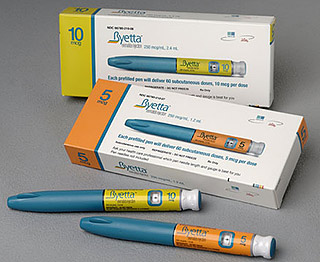 Lilly and Amylin say they have one regulatory hurdle to cross before filing for the long-acting formulation of exenatide (Byetta LAR): demonstrating comparability between the clinical formulation of the drug and the proposed commercial supply manufactured by Amylin in Ohio.
Amylin CEO Dan Bradbury told investors during the company’s second quarter conference call July 21 that a recent meeting with the agency gives the company great confidence in its projection of an NDA filing sometime in the next year. The company has said all along that it expects to file by the end of the first half of 2009, Bradbury said; the meeting with FDA suggests that timeline may be conservative, since the agency may end up not requiring a full-fledged clinical crossover study.
At a time when investors are focused on the now clear, unequivocal emphasis on outcomes endpoints for new type 2 diabetes drugs, Amylin’s confidence in a near time filing date for Byetta LAR is big news.
This is a tough time for type 2 diabetes drug development. An FDA advisory committee essentially endorsed the Steve Nissen worldview: that blood sugar reduction is not an end in itself, and new drugs for use by diabetics need to provide sufficient evidence of outcomes benefits—especially cardiovascular outcomes—as a condition for approval.
Our colleagues at “The Pink Sheet” have extensive coverage of the meeting, and—more importantly—FDA’s takeaways from the meeting.
But in case you missed it, after a morning’s worth of warm-up, Steve Nissen—Cleveland Clinic cardiologist and shadow FDA commissioner—went up to the podium and called out the entire profession of endocrinology, telling the committee that they have made glucose reduction a goal in itself and lost sight of the bigger picture. Some committee members fumed visibly—but the panel spent the next day-and-a-half following the agenda laid out by Nissen.
The committee agreed with his premise—that it is no longer acceptable to approve drugs solely based on the ability to reduce HbA1c levels—and with his overall approach to assessing cardiovascular outcomes. They punted on some questions—like exactly how much outcomes research to expect, and under exactly what conditions the studies would be necessary prior to approval instead of as post-marketing commitments.
So what does all this mean, other than demonstrating once again the incredible influence Nissen has on drug development and use in this country at this moment in history?
First, it confirms that the bar is indeed higher for type 2 diabetes drugs, that—in effect—they will be governed by a quasi-superiority standard of the type that FDA has begun talking about for NSAIDs (and now antipsychotics).
That in itself should not be news: Remember Pargluva? But it is now clear that new agents for glucose reduction will be expected to demonstrate some compelling reason for approval—better HbA1c control, evidence of reduced toxicity, something—or else face the risk of being asked for definitive proof of outcomes prior to approval.
So there is plenty of reason to wonder whether Lilly and Amylin can in fact move forward with LAR as planned (or even faster than planned).
We think they can…and we’ll explain why tomorrow.
Tuesday, June 01, 2010
Drug Safety 2010: Nissen Meets With FDA Leadership as the Avandia Advisory Committee Meeting Looms
 The most important single event for FDA’s drug review in 2010 and possibly beyond is coming this summer: the advisory committee re-review of GlaxoSmithKline’s diabetes drug
Since passage of the landmark FDA Amendments Act of 2007, the drug approval climate at FDA has improved steadily. To view The RPM Report’s analysis on the drug approval climate, click here
It appears one potential conclusion that can be drawn is that FDA’s comfort level with the postmarket control and monitoring tools given to them through FDAAA is adding confidence to approval decisions.
But the Avandia re-review could change all that. Whether FDA chooses to pull Avandia from the market, keep the drug on the market, suspend use temporarily or further restrict its use, the agency must ensure that it does one thing: make a credible decision. Any outcome deemed to be unsatisfactory by FDA stakeholders in Congress, and the experts they listen to, puts the improving drug approval momentum in real jeopardy.
Just to recall briefly: In May 2007, a meta-analysis by Cleveland Clinic cardiologist Steve Nissen published in the New England Journal of Medicine found that Avandia (rosiglitazone) was associated with over a 40% increase in heart attack risk. The House Oversight & Government Reform Committee put together a hearing before FDA could respond to the study. In July 2007, FDA convened the Endocrinologic & Metabolic Drugs Advisory Committee and the Drug Safety & Risk Management Advisory Committee to assess Avandia’s future.
The joint committee voted 20-3 that the drug increases cardiac ischemic risk but subsequently voted 22-1 against withdrawal of the TZD. The panel meeting surfaced an “internal disagreement” between the Office of New Drugs and Office of Surveillance & Epidemiology over whether to withdraw rosiglitazone over heart attack risks.
On October 2, 2007, FDA’s Drug Safety Oversight Board voted (8-7) to keep Avandia on the market. The non-public vote was questioned by ranking Senate Finance Committee Republican Charles Grassley (Iowa) due to the lack of transparency. On November 14, 2007, FDA issued a black-box warning for Avandia warning of heart attacks. GSK agreed to conduct a long-term postmarket safety trial of Avandia compared to competitor Takeda’s Actos to confirm a higher CV risk for rosiglitazone; the trial was named TIDE. The TIDE trial is expected to be complete in 2015.
The Senate Finance Committee released a major report on February 22 bringing to light internal emails and memos related to Avandia and heightened CV risks. On February 26, House Agriculture Appropriations Subcommittee Chair Rosa DeLauro (FDA’s chief appropriator) gave a detailed critique of GSK’s RECORD study, which the company maintains supports Avandia’s safety profile.
Now FDA is scheduled to hold another re-review of Avandia, likely July 13-14.
"Congresswoman DeLauro is looking forward to the advisory committee meeting and its findings,” a spokesperson for DeLauro says. “She believes that the TIDE trial is unethical and should be halted immediately, and has urged the FDA before to remove Avandia from the market until a truly independent, science-based advisory panel can evaluate the safety and effectiveness of the drug.”
DeLauro and her staff met with FDA Principal Deputy Commissioner Joshua Sharfstein and Assistant Commissioner for Legislation, and former staffer to Rep. John Dingell, Jeanne Ireland on May 20. The topic? “Drug safety.”
DeLauro isn’t the only one meeting with FDA leadership. Nissen recently met with FDA Commissioner Margaret Hamburg and Sharfstein to make the case that the TIDE trial was unethical and that Avandia needed to be withdrawn.
The major threat to the approval environment and the current FDA review structure is that an outcome on Avandia that is viewed as lacking credibility will energize those who want to split the Center for Drug Evaluation & Research into two separate centers or offices. A split would still be a long-shot, but a possibility nonetheless.
“As far as the FDA’s organization, the Congresswoman believes that serious consideration should be given to creating two independent offices within FDA – one that would be responsible for reviewing drug applications, and another for post-market surveillance,” the DeLauro spokesperson says. “It is something she has been concerned with for awhile, and the Avandia case serves as a reminder of just how important it is to address this situation.”
Here are a few points to consider as the Avandia re-review approaches:
1) How many advisory committee members will be assembled? In July 2007, there were 23 panel members convened for the meeting. That is a large number of committee members, many of whom were given temporary voting status. The makeup of the committee will be equally important in terms of the balance between drug safety specialists and E&M committee panelists (to view the 2007 final roster, click here).
2) Will the full Actos safety data be presented? Our understanding is that FDA asked both GSK and Takeda for every shred of data related to Actos and have had the data for “months.” Whether or not those data are formally presented at the meeting will go to the heart of the credibility question whatever the committee and FDA decide to do with Avandia. The current buzz in Washington is that not all of the Actos data will be presented, but it is still too early to determine whether that will actually be the case in the end.
3) Will Nissen present? At the July 2007 meeting, Nissen did not make a formal presentation of his meta-analysis—the whole reason for the existence of the panel meeting—to the advisory committee. Instead, he sat in a chair along with the rest of the audience. Something similar happened with Sanjay Kaul, a Cardio-Renal Advisory Committee member who was barred from the advisory committee review of Eli Lilly’s anti-clotting drug prasugrel (to read The RPM Report story, click here).
4) Hamburg and Sharfstein have gone to great lengths to brand the Obama Administration’s FDA as a public health agency. The Avandia re-review represents the first major prescription drug safety, public health issue. How will they react? Hamburg has already gone to IoM for ethical and scientific guidance on postmarket studies (to read our analysis in The RPM Report, click here). Probably the best outcome for the drug industry at large would be a risk evaluation and mitigation strategies (REMS) program that controlled the use of Avandia, monitored patients on the drug, and provided FDA with valuable data on its cardiovascular risk profile. That result would validate the use of FDA’s drug safety authorities under FDAAA, hold together FDA’s current regulatory structure and keep the approval momentum going. But is that enough of a public health message for Hamburg and Sharfstein?
5) There are a number of important FDA officials who will be directly affected by the final decision on Avandia--maybe none more than the ones who will make that decision. Hamburg and Sharfstein will bear the brunt of public scrutiny around the decision. Perhaps no one will be under the microscope more than CDER Director Janet Woodcock, who concluded that Avandia should remain on the market in 2007 with stronger warnings. This is a major issue for FDA. Woodcock is held in high regard as a strong leader, effective manager, and there are few individuals at FDA who understand its operations—and runs them as efficiently—as Woodcock. While the FDA drug safety players are the same—Gerald Dal Pan and David Graham—the drug review management is different compared to 2007. In 2007, CDER Office of Drug Evaluation II Director Robert Meyer gave a public refutation of the conclusions drawn by Graham and Dal Pan that Avandia had to be withdrawn. Meyer is no longer at FDA and Curtis Rosebraugh is the current ODE II Director. However, Mary Parks was and remains the Division Director for Metabolic and Endocrine Drug Products. Both Rosebraugh and Parks will be important officials on the Avandia re-review. Lastly, CDER Deputy Director for Clinical Science Bob Temple will play a role in the Avandia decision but it is unclear exactly what kind and how big a role. Temple has presented publicly about FDA’s tough decision-making when it comes to taking a drug off the market.
There is still a lot of time before the advisory committee: much could change and there are sure to be surprises just as there were in 2007. But it would be an understatement to say there is a lot riding on Avandia.
Thursday, July 08, 2010
FDA Takes Control Of Avandia Debate
Score one for FDA.
As "Avandia Week" approaches, FDA made a decision to wrestle control of the debate over the safety and efficacy of Glaxo's diabetes drug rosiglitazone by offering the media an embargoed preview of the agency's briefing documents for the two-day advisory committee meeting on July 13-14.
The decision to let reporters look at the documents early was smart, effective and stands in marked contrast to how the debate on Avandia played out in 2007.
In 2007, the meta-analysis conducted by Cleveland Clinic cardiologist Steve Nissen, which showed a increased risk of cardiovascular events linked to Avandia, was published in the New England Journal of Medicine on May 21, 2007. A few days later, a House Oversight & Government Reform hearing, led by then-Chairman Henry Waxman, was scheduled before FDA ever publicly commented on the findings. On June 6, 2007, the hearing took place.
This time around, FDA has been effective, among other media savy strategies, in granting interviews in response to the Nissen meta-analysis published in the Archives of Internal Medicine and the Medicare beneficiary study comparing Avandia to Takeda's Actos conducted by FDA drug safety official David Graham in the Journal of the Amercian Medical Association.
But allowing access to the briefing documents before they were made public was probably the best stroke yet by the agency. Reporters typically get an email from FDA that the briefing documents are made public, then they have about 10 minutes to "read" 300-400 pages of FDA's in-depth analysis and write a short piece for the wires and mainstream media news sites that capture the essence of FDA's point of view.
Instead, FDA gave journalists a full day and access to FDA deputy commissioner Joshua Sharfstein and drug center director Janet Woodcock, among other officials, to digest the briefing documents and pose questions to the agency officials. Brilliant.
There's no doubt that Nissen and Graham know how to make news. But FDA, as a whole, has been equal to the challenge in both ensuring that outside voices--and voices from within--are heard while simultaneously communicating the facts on Avandia as agency leadership views them.
Tuesday, November 04, 2008
The Next Administration: Obama’s Top Health Positions
 Earlier, we put out the short lists of possible McCain health people. Now, again, the lists are by no means scientific. These are names that have been circulated, brought up in discussions with sources, or individuals we think could end up being candidates based on their experience. Remember, this is just for fun. Here we go:
Obama Administration
HHS Secretary:
Former Senator Tom Daschle: The former Senate Majority leader is a favorite for Obama’s chief of staff along with Rep. Rahm Emanuel. If Obama goes with Emanuel, HHS Secretary would be an obvious spot for Daschle. He wrote a book on health care and he was a supporter of President Clinton’s health care proposal, and universal health care is Daschle’s pet issue.
Kansas Governor Kathleen Sebelius: The Kansas Governor made a name for herself in Kansas as an insurance reformer (she wouldn’t accept campaign contributions from insurance companies) and stopped Blue Cross Blue Shield from merging with another out of state firm. She is very close to the Obama campaign as a key surrogate and was supposedly in the top 3 for VP. Sebelius makes a lot of sense here.
Former Vermont Governor Howard Dean: The DNC chairman is an obvious possibility here with his MD, plus he oversaw expansion of health care in Vermont. But Dean is such a lightning rod for the Republican party, we just don’t know that he would be the right choice here considering how fragile a coalition it will take to advance Obama’s health plan.
Massachusetts Governor Deval Patrick: No governor, it seems, has been more active in the health care discussion as Patrick. Whether its universal health care, the state’s $1 billion life sciences/biotech plan to bring more companies into the state, or the Mass. law on pharma marketing restrictions, Patrick has been in the middle. We think Patrick is perfect for the position, but we think he’s more likely to get a nod for the next Supreme Court opening. Otherwise, it could be Patrick.
FDA Commissioner:
Bruce Psaty (U of Washington): We think Psaty’s drug safety work probably make him a possibility but also may take him out of serious consideration. His focus on drug safety issues may be too extreme to appease both reformers and more moderate FDA stakeholders. Still, he warrants mention.
Steve Nissen (Cleveland Clinic): Avandia. Need we say more? However, Nissen also works closely with drug manufacturers on large, important clinical trials (Pfizer’s HDL-raising drug torcetrapib, for example). He’s recently changed his messaging somewhat from one focusing on drug safety to one more rooted in pro-innovation themes (witness his endorsement of Lilly’s anticlotting drug prasugrel). If Obama goes with a real reformer in the mold of David Kessler, Nissen has to be at the top of the list. He’s also an official adviser to campaign now, an important development.
Robert Califf (Duke): The Duke researcher has close ties to FDA through the Critical Path Initiative, and advisory committee process and has both Republican and Democratic supporters. In September 2006, Duke entered into an agreement with FDA to serve as a warehouse for electrocardiograms to serve as tools for drug safety research. If Obama goes with a big name, but one less associated with major reforms, Califf could easily be the pick. One thing that may serve as roadblock is his close ties to drug manufacturers (a Kennedy pet peeve).
Mary Pendergast (consultant): The former associate commissioner under Kessler and independent consultant is a dark horse candidate for the job. It’s understood she was previously vetted by Kennedy for commissioner (and did well) after Kessler left. She’s not an MD but that may not matter if Obama chooses an MD to head up HHS (Howard Dean, for example).
David Blumenthal (Harvard): A Harvard professor and director of Massachusetts General Hospital’s Institute for Health Policy, Blumenthal is a major contributor to the Obama health plan. He will be a strong candidate for a number of important positions either in the White House as a special assistant to the President or as head of one the key health agencies. Blumenthal, a physician, got his start in politics as a professional staff member on Senator Ted Kennedy’s Subcommittee on Health and Scientific Research during the 1970s.
Susan Wood (GWU): The former head of women’s health at FDA resigned in protest from the agency due to the delay in switching the morning-after pill over-the-counter. She now represents the Union of Concerned Scientists in a public capacity and is a research professor at the George Washington University for Public Policy. Wood campaigned vigorously for Hillary Clinton during the primary, and if Clinton takes over the Senate HELP Committee in the case that Kennedy becomes less involved, the former FDAer would have an outside shot. Still, the odds are against her.
Dora Hughes (Obama Senate FDA advisor): Hughes, an internal medicine physician, is Obama’s Senate health advisor. If Obama picked her, she would be the first African-American woman commissioner. It’s more likely she will be highly involved in making the pick. She previously served as deputy director for health for Senator Ted Kennedy on the HELP Committee.
CMS Administrator
CBO director Peter Orszag: The head of the Congressional Budget Office has been everywhere making public speeches on skyrocketing healthcare costs, regional disparities in how care is paid for, the Medicare program, and strategies on how to find costs savings without compromising quality of care.
Harvard Economist David Cutler: The health economist and Institute of Medicine member is a top health adviser to Obama and is considered a major architect of Obama’s health care reform plan. Cutler has co-authored health economics papers with McClellan and shares some of McClellan’s views on finding significant cost savings by correcting and reforming the inefficiencies in the system. Cutler could end up in any number of positions, probably at the White House council of economic advisors, but we think this isn’t such a bad one, is it? Blumenthal could also be a candidate here.
Avalere Health founder Dan Mendelson: Before starting Avalere, Mendelson served as associate director for health under the Clinton Administration from 1998-2000 at the Office of Management and Budget. Mendelson’s ties to people involved in the campaign make him an intriguing candidate for a position at CMS or possibly another health role in the next administration.
Harvard’s Steven Pearson: The comparative effectiveness guru is a senior fellow at the insurer’s trade association the America’s Health Insurance Plans and runs Harvard’s Institute for Clinical and Economic Review. Pearson has published research on how to use a standardized scoring system when it comes to comparative effectiveness research. Interesting. If not CMS, Pearson would be at the top of any list to head up a national center on comparative research.
This list is just a start and we'll be adding to it and subtracting from it after the election depending on who wins. We'll give you our picks next, but what do you think? Show us your picks and we'll post them.
